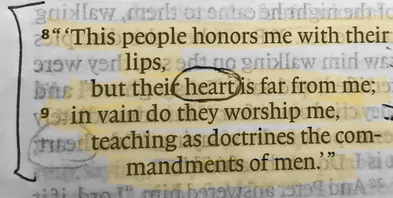
Holiness rooted in the heart

Michael Reeves
The difference between an evangelical and a non-evangelical understanding of holiness can be seen well in a difference between the 17th-century Puritans and their contemporaries, the high-church Caroline Divines. Perhaps the most influential of the Carolines was William Laud (1573–1645), Charles I’s Archbishop of Canterbury.
Laud loved what he called “the beauty of holiness”, by which he meant liturgical orderliness. He strictly insisted that the clergy must follow all the rubrics of the Church of England’s prayer book, and was deeply concerned with clergy attire and the maintenance of church buildings and their physical beauty. And it was a particular sort of building he preferred: despising the Reformation – or “Deformation,” as he called it – he preferred new churches to be built in the pre-Reformation, Gothic style, with an architectural emphasis on an altar instead of a Communion table. For, he said, “the altar is the greatest place of God’s residence upon earth, greater than the pulpit; for there ’tis Hoc est corpus meum, This is my body; but in the other it is at most but Hoc est verbum meum, This is my word.”

How do we disciple Gen Z men?

Graeme Shanks
“If you’re not a liberal when you’re 25, you have no heart. If you’re not a conservative by the time you’re 35, you have no brain.” A friend reminded me recently of this quip often attributed to Winston Churchill. It is, of course, a massive generalisation. However, it is not one without a kernel of truth to it.
A quick glance at the way Britons voted at the 2024 general election would indicate that age was indeed a significant dividing line. It’s a trend that’s presented itself through the generations. To quote another group of influential wordsmiths from my childhood: "it’s like that and that's the way it is." Or is it?

Life is God's classroom: Receiving & sharing wisdom

Emily Lucas
“I’d love your advice on something.”
“Thank you so much for your wise words.”
“You really challenged and spoke to me through that.”
How sweetly words like these settle in our souls - meeting our longing for recognition, our need for validation, our desire to know that what we say matters.



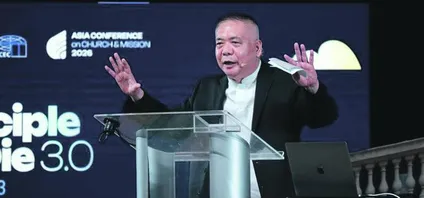






























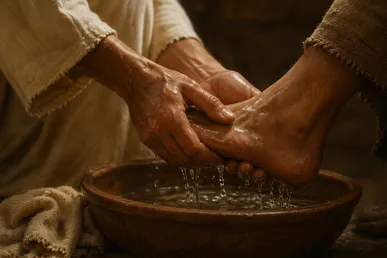


































































































Context is not a constraint. Be faithful where you are
Have you ever wondered why God brought you… here?
Not them.