'An angular Messiah is our only hope'

Niv Lobo  |  Comment
Date posted:  28 Mar 2026
Share Add       
'An angular Messiah is our only hope'

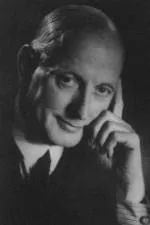
Otto Kiep. (Wikimedia Commons)

Having devoured Jonathan Freedland’s The Escape Artist (2022) with fascination, I wasn’t going to miss reading his latest, The Traitors Circle (2025).

The former was a harrowing account of Rudolf Vrba, the eponymous escapee from Auschwitz, and his attempts to testify to the world about the evils being done there. It raised the uncomfortable question: Why did it take the world so long to believe him, and act on it?

The Traitors Circle is animated by a similarly uncomfortable question: What would you have done? We flatter ourselves to think that we might have resisted rather than colluded, participated or condoned, when so few did.

The Solf Circle

But "few" is not "none". Freedland presents various members of the Solf Circle, a group of German intellectuals and elites who played an active part in resistance against Nazi Germany - and their betrayal.

The figures involved are fascinatingly varied, in terms of personality and temperament.

For some, resistance seemed a natural outworking of a contrarian streak; the fearless Baroness Maria von Maltzan joked "she found it easy to resist Nazi authority because she had defied her mother’s authority first", choosing to become a veterinary surgeon and marry a Jew against explicit maternal instruction.

But there was another strain that impressed me deeply: the spiritual and moral factors that led more hitherto conformist types, like headmistress Elisabeth von Thadden and diplomat Otto Kiep, to take a costly stand against Nazism.

What motivated them, Freedland points out, was their personal faith in Jesus Christ. For von Thadden, this appears to have been lifelong; for Kiep, this was returned to after a youthful dismissal.

I heartily recommend The Traitors Circle and, for those (like me) unfamiliar with the Solf Circle, I am unwilling to give too many details of this extraordinary story. But let me give three little vignettes, recorded by Freedland, of their discipleship.

Boarding school founded on Christian values

Elisabeth von Thadden ran a boarding school, founded on Christian principles and therefore less than full-throated in its affirmation of Nazism.

The daughter of a prominent Nazi reported this back to her mother, and a Nazi inspector was sent to evaluate it. Freedland records something that made me rejoice in the gospel: the inspector "made the fairly astute observation that if Nazism was not 'openly' opposed at the school, it was, in effect, 'abolished' by the continued assertion of other values and sources of authority. In the Thadden school, it was clear that both the traditional ethos of aristocracy and Christian belief still mattered, and that left little room for Adolf Hitler," (p. 72).

Otto Kiep's 'dilemma'

Kiep’s dilemma, as Germany’s Consul General in New York City, was whether to attend a dinner given in Albert Einstein’s honour; fail to attend, and he would distance himself from the great German Jewish scientist, and throw his lot in with the Nazis he personally rejected.

Attend, and he would be seen as positioning himself against his own Foreign Ministry in its persecution of Jews. Freedland underlines the clarity this crisis brought: "As the situation grew more tense, it also became clearer, to Otto at least."

Not only did he attend the Gala, but he gave a speech with bravery and integrity, saying to Einstein, "This company does not honour you, Professor Einstein. On the contrary, you honour this company, and I might say, every company of which you choose to make yourself a part." (pp. 27-28)

I find it impossible not to marvel at this courageous response to the clarity born of the crisis. And things "became clearer" spiritually, as well as morally.

As Kiep began to read the New Testament he kept by his bed, Freedland describes what he came to discover, "You could, it increasingly seemed to Otto, be faithful and obedient to Hitler or you could be faithful and obedient to Christ: you could not be both." (p. 49)

'You cannot serve two masters'

The Lord Jesus Christ is an uncompromising Master, who calls me to take up my cross and follow Him.

He issues either-or statements that leave me no wiggle room: "You cannot serve both God and Money", He says in Matthew 6v24. Not just, "You must not", but "You cannot".

He is an angular Messiah, who does not act like a liquid in my life, taking whatever shape He is poured into, when it comes to my decisions and choices.

It didn’t surprise me when Youthscape’s recent report concluded that, to its focus group of Gen Z teenagers, Jesus "is a troubling figure. Arrogant, powerful, religiously motivated and male".

There is an unmistakeable stamp of authority to what Jesus says and does. He does not offer Himself as another religious figure. He is an angular Messiah.

And that just deepens the mystery. How do we explain His warmth towards nobodies, His personal poverty and His trajectory towards death on the Cross? What IS it about Jesus?

Following Christ

Because, as Elisabeth von Thadden, Otto Kiep and many others since (not least Russian dissident Alexei Navalny) bear witness, an angular Messiah is our only hope.

May God give us spiritual courage and moral clarity to face the many crises around us (wars and rumours of wars, terrifying steps towards the decriminalisation of abortion - and we could name others) as faithful and obedient disciples of Christ.

In the end, we are left with a paradox worthy of G.K. Chesterton: we will only find the courage to rebel rightly, and against the right things, to the extent that we have conformed rightly, in this case to the Lord Jesus Christ.

Share
< Previous article| Comment| Next article >
Read more articles on:   discipleship  /  history
Read more articles by Niv Lobo >>
Comment
Truth, shame & the search for blame

Truth, shame & the search for blame

There was a stream of articles and commentary in the weeks leading up to Jason Arday’s resignation as Professor of …

Comment
Farage, Lowe, Polanski... pray for them

Farage, Lowe, Polanski... pray for them

Some swords are double-edged; they can cut both ways, not just at those against whom they are wielded, but also …

Need to advertise?

We can help you reach Christians across the country

Find out more

Subscribe

Enjoy our monthly paper and full online access for just £40/year

Find out more