
"Why are so many Jews atheists?"
I hear this a lot.
In Israel, for example, just under half of the Jewish citizens are atheists. In America, it sits at around a third. This doesn’t include Reformed and Progressive Jews, many of whom don’t hold belief in God in any traditional way.
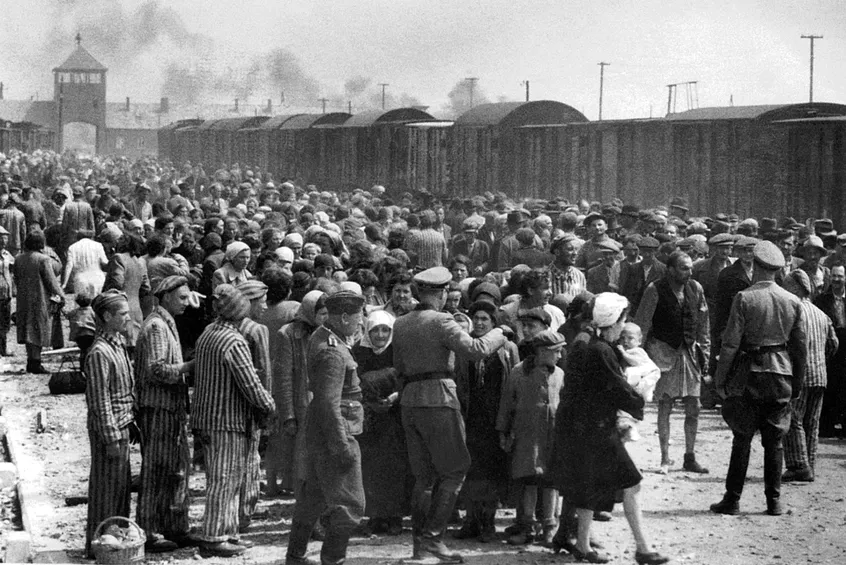
Growing up, my family didn’t believe in God and the reason was clear. “We don’t believe in God,” my grandmother would say, “because of the Holocaust.”
This is, I suspect, the reason for the widespread agnosticism and secularism in the Jewish world. God wasn’t there when we needed Him. This is a trend borne out in the wider world. After the horrors of the two World Wars, church attendance in Western Europe dropped by 50-70 per cent. How could we believe in a God who would allow these horrors?
'How could we believe in a God who would allow these horrors?'
On 27 January 2026, the UK marked Holocaust Memorial Day and that question became for many a reality again.
I sat in my local counsel for the Worshipful Mayor’s Holocaust Memorial Day commemoration and heard a man from the synagogue in which I grew up read these painful words from Elie Wiesel:
“Never shall I forget that night, the first night in camp, that turned my life into one long night seven times sealed. Never shall I forget that smoke. Never shall I forget the small faces of the children whose bodies I saw transformed into smoke under a silent sky. Never shall I forget those flames that consumed my faith for ever. Never shall I forget the nocturnal silence that deprived me for all eternity of the desire to live. Never shall I forget those moments that murdered my God and my soul and turned my dreams to ashes. Never shall I forget those things, even were I condemned to live as long as God Himself. Never.”
- Elie Wiesel, Night
'To suffer with'
The word "compassion" comes from the Latin, Compati, meaning to suffer with.
If you want to share any part of your life with someone, particularly something as loaded and poignant as faith, you need to build trust, and trust comes from authentic communion. This requires a willingness to enter someone else’s pain.
This is what Jesus modelled. How often are we told that Jesus was "moved with compassion"? John 11v35 is the shortest verse of Scripture; it is also one of the most remarkable. Jesus goes to His friend Lazarus’ funeral and He sees Lazarus' family and friends crying. Scripture tells us that Jesus "was deeply moved in his spirit and greatly troubled… Jesus wept.” (John 11v33, 35).
Now, Lazarus is practically a byword for "resurrection" so no prizes for guessing what Jesus does next - but why cry? Did He not know if He’d be able to raise Lazarus? Clearly, He did. But Jesus was moved by the suffering of His friends; He was willing to enter into their suffering with them and not jump to the resolution.
Jesus had compassion.
The joy of the resurrection required the pain of the cross.
The words we read above, Elie Wiesel's words, are ones of lament; the Bible gives space to words like this.
God is big enough to hear our cries of pain just as He heard David’s, and Job’s, and Jesus’ on the cross: “My God, My God, why have you forsaken me?”
"If we want to be heard by our friends about Jesus, we need to embody compassion the way that He did."
Loving our friends
Jews need compassion at the moment. Antisemitism is rearing its head across the world once again and Jews are frightened.
So, if we want to be heard by our friends about Jesus, we need to embody compassion the way that He did: hear Jewish stories and pain; stand with Jewish communities and synagogues against marginalisation - they notice; don’t rush through the pain to reach the resolution, sit with your friends in the pain.
Many horrendous things happen and many words of lament are heard everyday. Some, we will in time, have answers to. Some, we will not, this side of heaven. But either way, what most people need at their lowest ebb is someone to sit with them in the dust - for at least a while.
I want to leave you with these words of hope carved by the unknown hand of a Jew living under Nazi oppression: “I believe in the sun, even when it is not shining. I believe in love, even when I am alone. I believe in God even when He is silent.”







Why do I feel vulnerable when I evangelise?
What do you think the greatest fear in the Western World is? Death? Poverty? Climate Change? For decades, the number …