
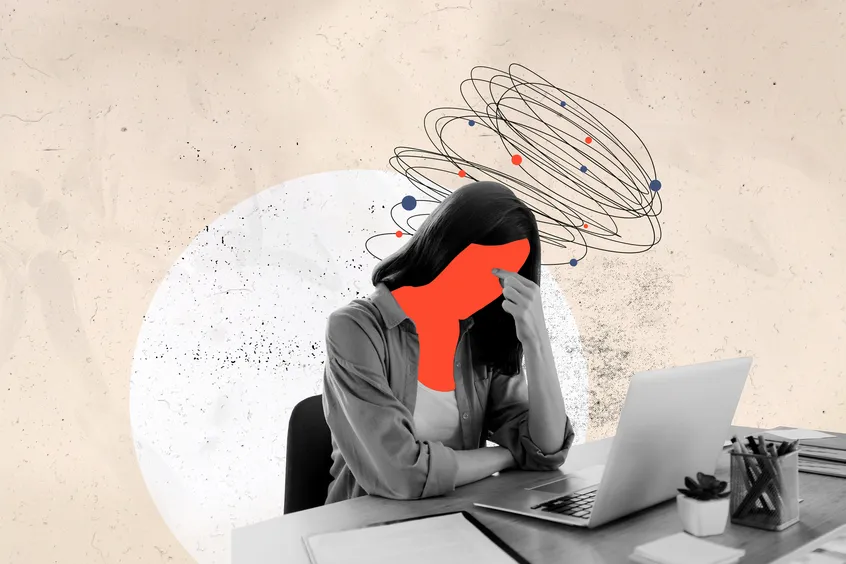
How are you? Being British, the correct answer is always: “Fine, thank you very much.” No, how are you? “Well, I had the ’flu last month, but I’m doing better now, thanks.” You look a bit low. “Well, it’s sad, my aunt died last week and it was a shock.” And how are you spiritually? “I’m struggling, actually…”
There is our physical health, our mental health or emotional state, and then there is our spiritual health. Different labels for different and distinct areas of life. It may come as a surprise, then, to discover that the Scriptures describe us holistically: we are physical and psychological and spiritual beings. There are different aspects to our life (physical, mental, emotional, spiritual) but all aspects are indissolubly and inseparably linked.
We like to distinguish our physical body from our spiritual life (or “soul”), but the New Testament uses physical and spiritual life interchangeably. Matthew 20v28 reads literally “… the Son of Man came … to give His soul as a ransom for many”. Barnabas and Paul risked their souls for the name of our Lord Jesus Christ (Acts 15v26). When Jesus died on the cross, He saved not only our “spiritual lives” but all of us, body and soul – rising from the dead to secure our hope of bodily resurrection from the dead.
There are some important implications of this unity. First, we should not be surprised if physical sickness causes us to feel depressed, and perhaps that we struggle to pray. Or if we are struggling spiritually (in the case of David with unconfessed sin), our bones may ache (Ps.32v3-4).
Second, our awareness of the spirituality of our physical bodies makes us realise the seriousness of sin – especially sexual sin (1Cor. 6v15). Positively, we are to regard our physical bodies as spiritual instruments to be used for works of righteousness (Rom.6v13). Specifically, our bodies are to be presented as living sacrifices in the service of God, and in particular in the service of His people (Rom.12v1ff ).
Third, we should not despise our bodies. If we neglect our physical health, we will be less able to serve the Lord, as Robert Murray M’Cheyne lamented before he died at the age of 29: “God gave me a message to deliver and a horse to ride. Alas, I’ve killed the horse and now I cannot deliver the message.”
From the moment of conception to the moment we draw our final breath we are embodied souls. That is why we are so concerned for the life of the embryo and the unborn, right through to the frail elderly patient in the last days of life.
Even in death, we should not denigrate the body. Christians bury their dead as a mark of respect for the body, and in anticipation of bodily resurrection. A cemetery is a “sleeping place”, awaiting the final trumpet. The departure of the soul from the body at death is only temporary. In the New Creation we will open the eyes of our resurrection body and see the Lord in His glorified body face to face.


We are in a battle
We are in a battle! We see that in a literal and physical way with the recent brutality of the …