

This is the second of a mini-series of articles looking at the four soils in the Parable of the Sower (Matthew 13v1-23).
There’s a phrase often used in our culture today. Apparently it derives from life in the American mines in the mid-19th century. Saltpetre (the common name for potassium nitrate) was an ingredient in the gunpowder used by miners to create explosions and make fuses. Dampness or wind often caused the spark to fizzle out before it reached the explosive. That experience became commonly known as “petering out”.
By God’s grace, I’ve been following Jesus for some 22 years. I’ve experienced many things during that time and cherish Him more as my Saviour and King as each day passes. Over the years, however, I can testify that the most disheartening experience by far is seeing someone who was once going strong for the Lord peter out. One minute they were on fire and the next minute they had grown cold and disinterested. Fraser, Julia, Ross, Ben etc. – the list goes on. Pain and perplexity abounds.
That is why I'm grateful for Jesus’ teaching in the Parable of the Sower.
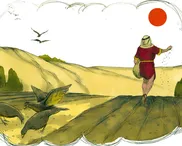
We thought previously about how Jesus is seeking to create expectations as to people’s responses to the preached Word. I’m always struck by the fact that Jesus could have simply told the parable featuring two types of soil. As the seed is sown, either the birds snatch it away or it grows and produces a crop. Binary and simple. However, the parable is a bit more nuanced than that.
Why does Jesus do it this way? Jesus must know that the disciples will soon observe people walking away from the life of faith having started it so well. It will be a deeply unsettling experience. Forewarned is forearmed, as they say.
"Forewarned is forearmed, as they say."
In fact, on a plain reading of the text, one could argue that the rocky ground gets the most explanation out of the four soils. This might suggest that Jesus knows that this is the response the disciples are most likely to encounter. If the problem of the “path people” is that their mind and soul were never responsive to the Word, the problem of the “rock people” is that their roots aren't very deep in the Word.
The rocky ground
There will be people who hear and initially respond to the gospel with joy. However, Jesus is keen to point out three things about their petering out. First, it is due to a lack of rootedness. Second, it’s closely connected with trouble or persecution. (It’s notable that Jesus uses the word when, not if, to refer to such hardships). Third, such persecutions are not general, but rather directly linked to their association with the Word.
We instinctively expect such petering out to happen immediately. But, it’s interesting to note that Jesus doesn't put a timescale on it. 'Petering out' could happen over a long period of time.
I remember going for a stroll once with a friend who had walked away from the faith. My friend had grown up following Jesus. He asked me if his life story was illustrative of the illogical nature of believing that once someone is saved they are always saved. That is a deeply sincere question, and I treated it as such.
Not only did I find this parable helpful to process his question, but it helped me formulate a better question to ask him in return. The question to ask wasn’t whether he was ever truly one of the elect. The question was how was he responding to the Word, not yesterday, but today?
Asking that question doesn’t undermine Jesus’ teaching that no one will snatch His sheep from His hand (John 10v28-30). On the contrary, it demonstrates it.
How should Christians and churches respond?
Of course, the Lord is sovereign over the impact of the seed. This truth alone calls for prayer and trust as we continually sow the Word. We should keep sowing and pray that the Lord would cause the Word to land on good soil.
However, perhaps there is a call here to do our best to see deep roots develop in the lives of young believers. Taking the time to show them how to read the Bible. Coming alongside them to explain the narrow path along which Jesus calls us to walk. Providing them with a relational network of people in the local church where they can safely ask questions.
This kind of rooted culture doesn’t happen by osmosis. There is a call here for deliberate discipleship and meaningful church membership. I take it there’s something of that in Paul’s words to the Thessalonians...
“Because we loved you so much, we were delighted to share with you not only the gospel of God but our lives as well.” (1 Thessalonians 2v8)
So who can you begin to pray for? Who could you take under your wing, as it were? How can you play your part modelling a life that embodies both doctrine and life?
There is another school of thought about the origin of the phrase petering out. Some believe it to be a reference to Peter’s denial of Jesus. If that is the case, then there is hope, for we know how Jesus transformed Peter’s story. If you are discouraged by your friends or family walking away from the faith, then take heart, and let’s play the long game with our sowing.







Is there a 'silver bullet' for the Christian life?
Friends, I have some bad news and some good news for you.The bad news first: there are no silver …