The murder that shocked medieval England

James Cary  |  Features
Date posted:  14 Nov 2025
Share Add       
The murder that shocked medieval England

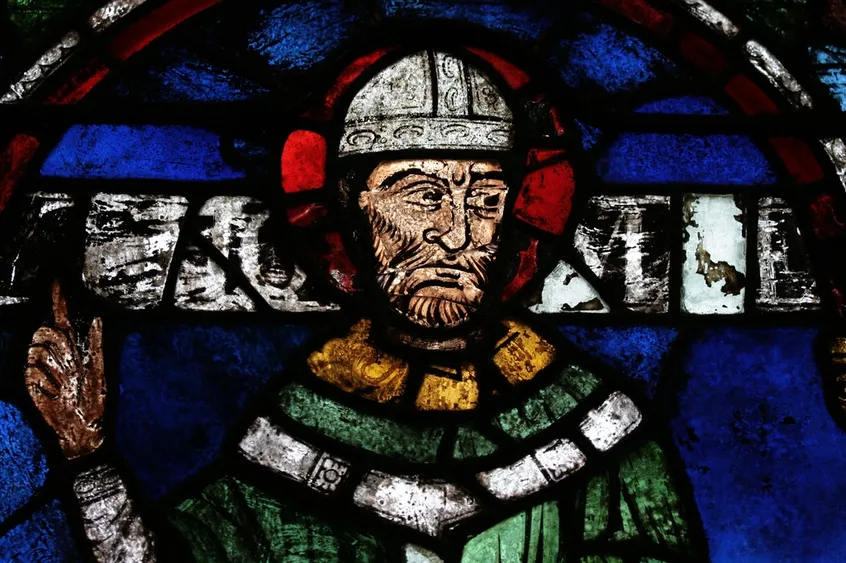
Thomas Becket. Photo: Wikimedia Commons

If the past is another country where they do things differently, as LP Hartley wrote, 12th century England is a foreign place indeed.

From diet to customs, and from clothing to life expectancy, the times in which Thomas Becket lived and, crucially, died, seem so alien we might be tempted to think that few lessons can be learned from these people who were part of a church that was doctrinally losing its way.

Thomas Becket

Becket was no theologian. In fact, he had not even been formally made a priest when he was appointed Archbishop of Canterbury by King Henry II.

That was done the day before he was consecrated as Archbishop by the Bishop of Winchester on 3 June 1162. But that’s not the date anyone remembers. I should know. I’ve been writing a musical about the life of Thomas Becket (seriously) and I had to look it up.

The memorable date is the year in which he was murdered by four knights in Canterbury Cathedral: 1170. This might be the one memorable date between two key moments in English history: the Battle of Hastings in 1066 and the signing of Magna Carta in 1215.

One might assume this brutal murder was par for the course back in the 12th century, given our assumption that life back then was brutish and short. Except it wasn’t that brutish. And it was not meant to be cut that short that way. Especially not in a church; in fact, it’s hard to imagine anything more shocking in an age soaked through with Christianity than the manner of Becket’s murder.

To kill someone in a church was not just wicked but sacrilegious. To do so in a Cathedral? Outrageous. And not just any cathedral: Canterbury, the historic heart of Christianity in England as well as the place of prayer for a monastic community.

On behalf of the King? During the twelve days of Christmas? When the man was unarmed? Unthinkable.

Without any offence meant to our Scandinavian friends, we might expect this poor behaviour from Vikings who did for Archbishop Alphege in 1012. After Canterbury was attacked and looted, Alphege was taken hostage, but refused to allow his ransom to be paid. While in captivity, he was pelted with animal bones by his captors and eventually came a cropper when he was struck by the butt of an axe.

One might also expect a murder of this sort by an angry mob who did for Archbishop Simon Sudbury at the climax of the Peasants’ Revolt in 1381. Dragged from the Tower of London, Sudbury was beheaded on Tower Hill. His head, initially displayed on London Bridge, was eventually placed on display in St Gregory’s Church, Sudbury where he was born. The head is still there. His body was buried in Canterbury Cathedral.

But neither the head of Sudbury nor the body of Alphege became the site of international pilgrimage. Thomas Becket’s did.

It is hard to overstate how significant a figure Becket was in the popular imagination of the English from 1170. Within a few years, he was canonised. Pilgrims from all over Europe – including kings of France and foreign diplomats – flocked to Canterbury and are marvelled at his tomb which contained half a ton of gold.

All over the world, you will find churches dedicated to Thomas of Canterbury. He eclipsed the fame of Thomas, the apostle of Christ Himself, after whom Becket was named, having been born on his saint’s day.

Why was he so popular? I’m not sure, even though I’ve spent several years thinking about this story as I’ve been developing this musical, Death in Canterbury.

Lessons for the modern church

But here’s what I think we can, at least, learn from his example – something sets him apart from Alphege and Sudbury. Becket did not just stand for the Church, he stood up for the Church; but he also stood against the unchecked power of the King, even though the King had been his close personal friend. Henry had made Thomas Archbishop so that his old hunting mate could hand the institution over to him.

Once leader of the Church in England, however, Becket had a new master. He would not serve it up to the king on a silver platter, because he understood that the Church is something special, a prophetic witness against raw, secular power.

In some ways, Becket went ahead of those barons who forced King John to accept limits on his despotic rule at the signing of Magna Carta, a foundational document about English freedoms (which contains a surprising amount about fishing as well).

Like many who lead the charge, Becket perished. But he did so in the manner of the true head of the Church, Jesus Christ. Unarmed and unguarded.

Church leaders were at the frontline of forging a nation. That’s probably a lesson we should heed today.

For more about Thomas Becket, and other people in church history, check out Cary’s Almanac.


Share
< Previous article| Features| Next article >
Read more articles on:   Church of England  /  history
Read more articles by James Cary >>
Comment
The liberty of exclusivity: Choice, freedom and Jesus

The liberty of exclusivity: Choice, freedom and Jesus

I was born in the mid-1970s when there were three television channels in the UK: BBC1, BBC2 and ITV. That …

Comment
Why the medieval Church was 'terrified' of John Wycliffe

Why the medieval Church was 'terrified' of John Wycliffe

Have you ever wondered why heretics were burned in England during the 15th and 16th centuries? We can thank John …

New here?

Register and get three free articles each month!

Register

Give a subscription

Our monthly newspaper is the perfect gift for those who love to think deeply

Give here