Today (23 April) is St. George’s Day! Let the pageantry begin. Let the joy be unconfined. Get the dragon down from the loft!
No. That’s not happening. The English take little pride in St. George.
In fact, I suspect the majority of English people could not tell you the exact date of the day of their patron saint. But no one seems to mind. The English take great pride in how little pride we take in our national saint.
St. George, a dragon, and the Reformation
Photo by Different Resonance on Unsplash
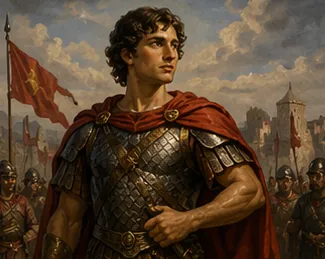
To be fair to my kin, St. George is not even English. He was a Roman soldier – ethnically Turkish – who became a Christian. Refusing to sacrifice to the pagan gods, he paid with his blood, which is the red of the cross of the English flag.
St. George used to be celebrated with gusto in many parishes and cities during the medieval period going back to the ninth century. The Norman church in which I was baptised may have Saxon origins and is named after our patron saint.
The stock of St. George rose in the 13th century. The Synod of Oxford in 1222 is said to have placed St. George’s day on a par with other feast days. This has been challenged since some records of that Synod don’t mention it. But if you follow the money, you will see large sums being spent on St. George’s Day celebrations in wealthy cities like Norwich along with Chester, York and Coventry.
At some point, a dragon became St. George’s nemesis. Perhaps St. George the soldier was mingled with St. Michael, the dragon-slaying archangel.
For a celebration at Westminster Abbey, Henry III (1216-1272) ordered the construction of an elaborate silk dragon “the tongue of which should be made to resemble burning fire”. These kinds of celebrations grew and continued until the reign of Henry VIII. St. Margaret was also thrown into the pageantry for good measure. I’m not sure why.
When the Reformation came, George’s days were numbered. Being a saint, he was not to be venerated or worshipped any longer. But St. George could not be scrubbed out of existence; his name and flag were everywhere. His cross was embedded all over the place. He was the special patron of the Order of the Garter.
Queen Elizabeth tried to revive St. George’s fortunes without success, as did James I and his son Charles. But St. George was, to all intents and purposes, dead. Again.
So if not George, then around whose banner can we rally?
Do you believe in the dragon?
Today, our patron saint might as well be Winston Churchill. He is our patron saint because he defeated the Nazis - which we actually believe to be real. Hence the many documentaries about the Second World War and annual commemorations of Dunkirk, D-Day and anything else that happened between 1939 and 1945.
But to us in the West, George’s adversary is mythical if not downright fictional.
But the death of that dragon is, I think, very significant.
In Merry Old England, dragons were, according to The Dictionary of English Folklore, believed to be “real but rare”. It is said that the Bishop of Wells killed a dragon in some nearby woods in the 14th century. No one is quite sure how, and details are sketchy. But the tale isn’t presented as an elaborate and embellished fantastical myth; more like a form of pest control. There is a village near the site called Wyrminster, a "wyrm" being a word for a serpent-like creature.
There are quite a few local legends of dragons in England. But no one believes them anymore. Why not? Who killed the dragon? If the Reformation killed St. George, was it the Enlightenment that killed the dragon? Did rationalism kill the mysticism?
Satan knows well that those who deny his being will not be afraid of his power and influence; will not watch against his wiles and devices; will not pray to God for deliverance from the Evil One; we conclude that we have no need of a dragon-slayer.
Come back, St. George! We need to be reminded of a true hero who defeated evil, and be pointed to the ultimate Dragon-Slayer who defeated sin, death and the devil: Jesus.
Happy St. George’s Day.
The liberty of exclusivity: Choice, freedom and Jesus
I was born in the mid-1970s when there were three television channels in the UK: BBC1, BBC2 and ITV. That …