
The most significant Synod motion in forty years?

John Dunnett  |  Comment
Date posted:  25 May 2026
Share Add       
The most significant Synod motion in forty years?

Helen King, elected lay member of the Church of England General Synod for Oxford Diocese. Image: Westcott House

In July this year, the Church of England could see the most significant Private Members Motion (PMM) on sex and marriage in the last 40 years being brought to General Synod.

The PMM in question reads as follows: “Same-sex relationships compatibility with Christian discipleship. Professor Helen King (Oxford) to move: ‘That this Synod affirm that there are no fundamental objections to being in a committed, faithful, intimate same-sex relationship, and that such a relationship can be entirely compatible with Christian discipleship.’”

A PMM functions in a similar way to those used in Parliament. Any member of General Synod may table a motion, and if it gains enough signatures of support it can be considered for debate. While PMMs do not automatically change policy or doctrine, they can carry substantial symbolic and political weight by expressing the “mind” of Synod on a particular issue.
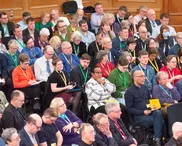
Although this motion does not explicitly seek to alter the Church of England’s doctrine of marriage or sexual ethics, many believe its intention is clear. The wording appears carefully framed to avoid direct doctrinal language while still signalling support for further revision in relation to marriage and sexual ethics. Revisionist supporters are likely to argue that the motion simply affirms inclusion and expresses support for LGBT+ members of the Church. Those of us who hold to the existing and Biblical doctrines of the Church of England, however, believe it would represent another significant step in moving the Church away from its historic teaching.

It is important to recognise that, even if passed, the motion would not itself change doctrine, authorise same-sex marriage, or introduce new liturgies. Formally speaking, it would simply record a view “expressed” by General Synod. Yet, as we have seen before, symbolic votes can have major consequences. They help establish momentum, shape expectations, and create pressure for future action.

The last comparable moment was arguably the 1987 Higton Motion, which affirmed the Church’s traditional teaching on sexual ethics and marriage. While there have been many Synod debates on these subjects since then, the Higton Motion remains significant because it clearly expressed Synod’s theological position. For that reason, some now see this latest PMM as an attempt to establish a new trajectory in the opposite direction.

The prospects of the motion passing are difficult to predict in full. Given the outcomes of recent Living in Love and Faith (LLF) debates, it is possible that the motion could secure majorities in both the Houses of Clergy and Laity. The greater uncertainty lies within the House of Bishops. Much attention will inevitably focus on the role of the new Archbishop of Canterbury and whether the bishops collectively wish to encourage, resist, or carefully manage further change.

It is widely believed that Archbishop Sarah wishes to see LLF “over the line” and to that extent she might take a very pragmatic view, such as: “It would be helpful to allow General Synod the opportunity to express its mind as the new House of Bishops group is being formed to carry things forward."

Conversely, she may wish any future initiatives to be led and steered by the House of Bishops, and not by the General Synod, in which case she may encourage her fellow bishops to vote against the motion in a vote by Houses. This will be consistent with previous debates where the House of Bishops have attempted to keep control of the process.

If the motion were passed, groups advocating further revision, such as Together, would almost certainly present it as a major moral and political victory, claiming that the General Synod has once again expressed a commitment to its own definition of full inclusion, and pressure would likely increase on the bishops to move more quickly towards clergy same-sex marriage and standalone services.

Sadness and despair

Across the wider Anglican Communion, however, the response would almost certainly be one of sadness and despair. The Global South Fellowship of Anglicans and GAFCON would undoubtedly indicate their complete disapproval for the decision, and it would increase the impaired nature of relationships between the majority Anglican Communion and the Church of England.

Back here, if the motion were to be passed, there would likely be various specific outcomes.

Firstly, it will be clear to those who have been recently lulled into a false sense of security that our contending for the apostolic and inherited faith must continue.

Second, it is an indication of the way in which the revisionists will find new and different ways to continually push the revisionist agenda – even when the House of Bishops is not doing so.

Thirdly, it is likely to inspire Together to table motions at diocesan synods and elsewhere to build a ‘chorus’ of support for further and faster change.

Finally (in this article), it will increase the tension within a number of dioceses where the diocesan bishop (should they choose to) supports the motion at General Synod. The degree of impaired fellowship being experienced in dioceses like Oxford and Chelmsford will only increase, but in other dioceses where bishops openly support such motions for the first time, there will be a new and inevitable rise in tensions within the diocese.

Readers are reminded that the February 2026 General Synod motion [see en article here] has committed the House of Bishops to forming a group which will carry forward the LLF trajectory (a new name/title/brand has not yet emerged) – an initiative which could be of even greater threat to the apostolic understanding of marriage and sexual ethics upon which the Church of England has always been built.

For evangelicals committed to the Church’s historic and apostolic teaching, the debate serves as a reminder that the LLF process is far from over.

Share
< Previous article| Comment| Next article >
Read more articles on:   Church of England  /  Living in Love and Faith
Read more articles by John Dunnett >>
Comment
The ‘black hole’ at the centre of the Church of England

The ‘black hole’ at the centre of the Church of England

It is easy to think that the Living in Love and Faith (LLF) can is being perennially “kicked down the …

Comment
Have the Prayers of Love and Faith stalled? Not at all

Have the Prayers of Love and Faith stalled? Not at all

This month’s General Synod will receive an update from the Living in Love and Faith Programme Board, but there will …

Need to advertise?

We can help you reach Christians across the country

Find out more

About en

Our vision, values and history

Read more