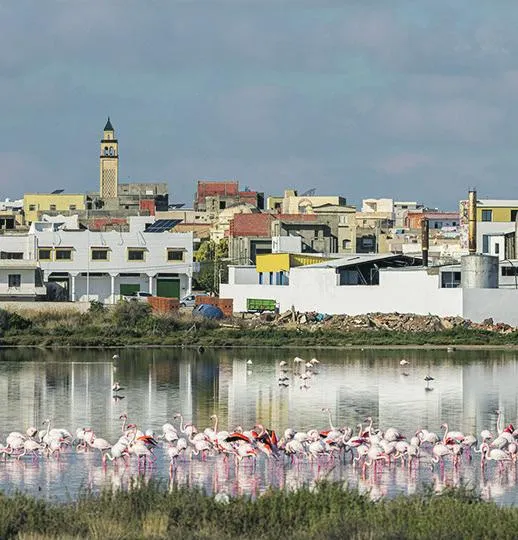
The church in North Africa was a leading centre of Christianity throughout the Ancient World. It was only with the conquests of Islam in the seventh century that this witness was quenched forever. Thankfully, much of the literary witness of the Christian authors of those centuries – from men and women like Tertullian, Perpetua, Cyprian, and Augustine – has survived.
In this column this year, we have been thinking about the matter of martyrdom in the Ancient Church. This month we think about the witness of the Carthaginian Cyprian, or, to give him his full name, Thascius Caecilius Cyprianus (c.200‒258). He had been radically converted from a lifestyle of public prominence, luxury and wealth in his early forties and subsequently served as the bishop of Carthage for about a decade. His leadership was especially important during the first empire-wide persecution of the church, initiated by the Emperor Decius (c.201‒251).
In the late summer of 257, he was exiled from Carthage and placed under house arrest. He was arraigned before the Roman proconsul Aspasius Paternus, who informed Cyprian that he had been instructed by the emperor Valarian (c.199‒264) and his son and co-emperor, Gallienus, to require all within the empire to engage in the traditional worship of the Roman state. Cyprian was asked where he stood on this matter. The bishop of Carthage replied: “I am a Christian and a bishop. I recognise no other gods but the one true God who made heaven and earth, the sea, and all that is in them. This is the God to whom we Christians pay homage; night and day we pray to Him for you and for all of humanity, as well as for the health of the emperors themselves.”