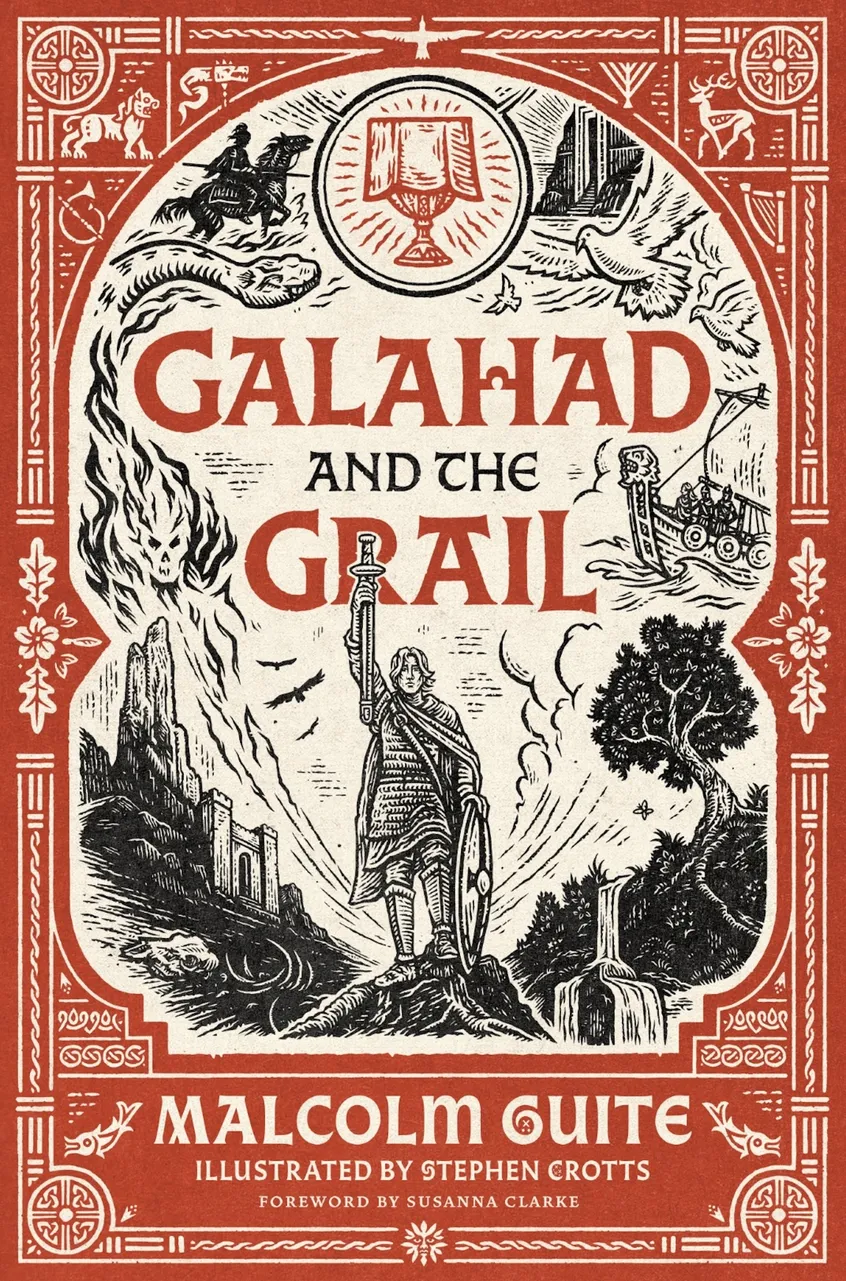
In the past month, I found myself ricocheting between two conflicting visions of virtue.
On the one hand, Malcolm Guite’s astonishing and luminous poem Galahad and the Grail (2026), which takes us into the heart of the Arthurian quest for life at its fullest and purest. ["Arthurian" refers to anything connected to the legends of King Arthur.]
On the other, the peerless The Rest is History’s podcast series on the rise of the Ku Klux Klan.
'The Ku Klux Klan: The Rise of Evil'
What struck me, in the latter, was the way that chivalric motifs proved so potent in gathering, aligning and directing members of the Klan towards their racist ends.
There are two angles to this: for one thing, the Klan in its various incarnations offered a sense of "fraternity", with its secrecy, dressing up, and absurd titles. For another, the Klan had a moral mission: its members thought civil liberties for freed slaves an outrage, and the cause of white supremacy righteous.
'Galahad and the Grail'
Arthurian romance, of the Walter Scott variety, provided an imaginative trellis on which their warped understanding of purity could grow, and bear fruit in profoundly evil deeds.
All the while, these Knights Errant of the South rode out in support of the Lost Cause of the Confederacy, thinking they were doing good.
This is one of the lessons modern history could not teach more clearly. Yes, much evil in our world is done when we deliberately seek to act corruptly—the wickedness we do "for the hell of it", as the saying goes. But much more is done—and done much more fervently, vigorously and thoroughly—by those who think they are doing good. And these acts of evil are much, much harder to detect.
But at exactly this point, the gospel is such a lifeline, because it is the story which frustrates my prideful attempts to position myself as straightforwardly good, and therefore justified in taking the fight to my enemies.
"If we say we have no sin, we deceive ourselves and the truth is not in us," John warns us (1 John 1v8). "But who can discern their own errors? Forgive my hidden faults," David entreats (Psalm 19v12).
If we take the first as the truth about us, and make the second our own in prayer, then we will be characterised by a healthy, even life-giving, humility.
'Virtue'
This is where I found Malcolm Guite’s Arthurian labours such a striking contrast; here (as in many of the source texts), deeply Christian intuitions complicate and eventually clarify questions of nobility and virtue.
Guite’s achievement is immense, and you don’t even have to be a poetry lover to love it.
I began reading some of it out loud one afternoon, and my daughters (ages five and four) came, sat and listened to stanza after stanza of verse they couldn’t fully understand, the English ballad form cantering along irresistibly to their ears. I have, in the weeks since first encountering the poem, read and re-read Guite’s ravishing articulation of the gospel’s events and implications, and of wider Christian metaphysics—I won’t soon forget his description of God the Creator as "a Source behind the source" of creation’s life, beauty and goodness.
In working with a portion of Arthurian myth which occurs around Pentecost, Guite also presents a worked example of how the gospel can inhabit, bless and fulfil the longings of a particular nation, bringing its riches under the life-giving Lordship of Christ, which makes the Englishness of the story distinctive and rich without implying any narrowness or chauvinism. The gospel can do that in and for every culture.
But perhaps best of all is his depiction of holiness as ennobling and humanising, and of a moral purity fed by God’s grace and quickened in penitence and humility. It is a strong—and to my mind, successful and elegant—bid to claim Arthurian myth for a truly good and beautiful cause.
Galahad and the Grail simultaneously exposes the KKK’s claim to this source material as so much anachronistic costume, and reveals the gospel’s electrifying impact on culture: raising narrative stakes, cultivating virtues of courage and humility with real depth, and pointing the questions and longings of our hearts to the One who can satisfy.
Truth, shame & the search for blame
There was a stream of articles and commentary in the weeks leading up to Jason Arday’s resignation as Professor of …