The Iran war: An evangelical economist writes

Andy Hartropp  |  Comment
Date posted:  6 May 2026
Share Add       
The Iran war: An evangelical economist writes

Image: Wikimedia Commons

It is striking that the current war in the Middle East is having such a major and immediate impact on people’s lives here in the UK – on your life and mine. I am talking here especially about the economic impact.

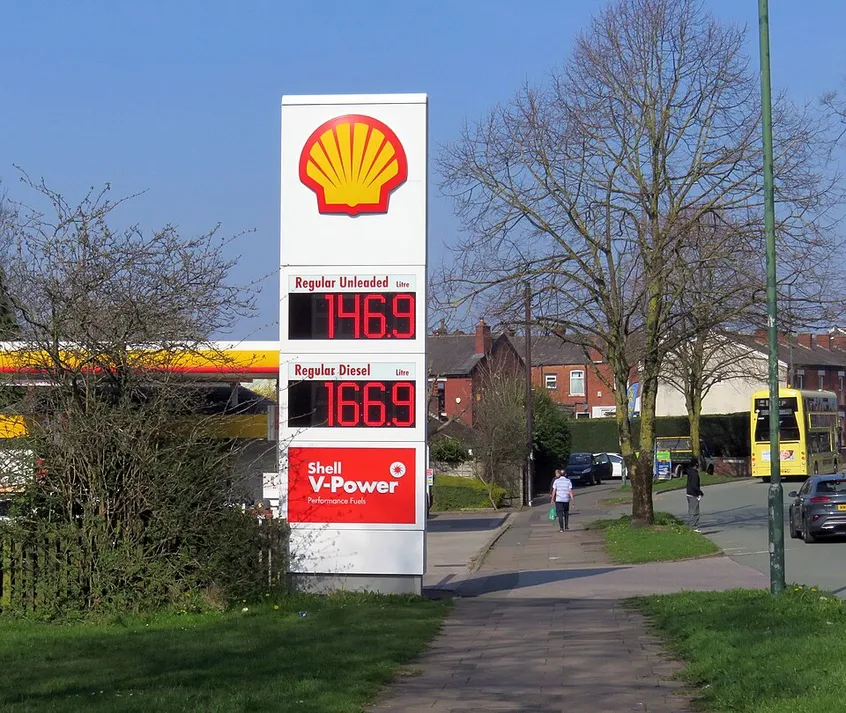
It was on 28 February this year that the USA and Israel began a series of military strikes against Iran. Less than three weeks later, the average price of petrol in the UK had already risen by 10p per litre – and diesel prices were up by 20p per litre.

That is a rapid impact.

By late April, fuel prices had risen much more than that. The increase in the price of heating oil has been even bigger. These are very large increases, and they are having a major effect on all of us – including our purses, wallets and bank accounts. There will be plenty of knock-on effects as well, for example on the price of fertiliser and the prices of many food items.

Why is this happening? For many people this is a puzzle. How is it that events far away in the Middle East have these consequences? What are the connections? As an economist, I will try to explain here, briefly, the reasons for these impacts. But another question is this: Is God interested in these economic impacts? Does it matter to Him? So, as a Christian economist and theologian, I would also like to point us towards a Biblical perspective.

A Biblical perspective

It is, of course, important that Christians think about the rights and wrongs of this war, and indeed any war. But that is not the purpose of this article, and I won’t be making any comment at all about those aspects. Readers will find other articles in en [visit en's In Depth section and search for the relevant tags such as "Iran", "Israel", and "USA"], and elsewhere, which do address those issues.

Economic impacts

First, then, let us consider the economic impacts of the current war.

There is a market for petrol, and for oil. A market simply means that there are some people and organisations who are willing to purchase petrol; and there are also organisations – companies – who are willing to supply and sell petrol. There is demand and supply. The market is not, normally, limited to one particular geographical place. Instead it is a global market: those who demand petrol, and those who supply it, are spread across the world. Similarly for oil. And because there is a global market for oil, then there is a global price for oil. So, at any given time, companies which purchase a particular type and quality of oil will pay approximately the same price, wherever they are located.

Economists say that, for any given product – such as petrol – the price will fluctuate in such a way that demand and supply are continually brought into line with each other, more or less. This is a key insight.

Think of a fruit and vegetable stall at a market near you. At the start of the day the seller will offer, say, carrots at a certain price: perhaps 30 pence for a pound of carrots. At this price they will expect that they more than cover their costs, and they will be aiming to make some profit as a result. But if you have ever been to such a market towards the end of the day, you may well have noticed the sellers cutting the price – perhaps to 15 or 20 pence per pound. Why? Because they want to clear their stocks – and they know that if they cut the price, then some people will buy more carrots than they would otherwise.

In other words, when the price falls, then demand normally rises.

So, the price adjusts to bring demand and supply more or less into line with each other.

For most products and services, if the price falls, then demand increases. People are willing to buy more of something if the price is lower. Similarly, if the price goes up, then demand goes down. In other words, the demand is inversely proportional to the price.

Consider now one immediate consequence of the war in the Middle East: the supply of oil from the Middle East has been drastically reduced.

This has happened partly because Iran has attacked the production and supply of oil in nearby countries such as Oman and the UAE. But it is also because Iran has acted to reduce greatly the number of oil-carrying ships sailing through the Strait of Hormuz. That Strait is a fairly narrow channel (between Iran and Oman) and is a key route for oil to travel from the Persian Gulf to the rest of the world. Prior to the current war, about one fifth of global petroleum and one fifth of liquefied natural gas traversed the Strait each year. In other words, since the start of this war the supply of oil has been cut, almost at a stroke, by about one fifth.

As a result, the price of oil, and of liquefied natural gas, increased rapidly. The price adjusted so as to bring demand and supply more or less into line with each other. That is what happens in markets. The demand for oil fell, and demand was thus brought roughly into line with supply.

Just prior to the start of the USA and Israel attacks on Iran, the key oil price was about 72 US dollars per barrel. (This is the “Brent Crude” oil price, widely regarded as the international benchmark price.) Only a week later, this price had risen to above 90 US dollars per barrel. It has remained at about that level, and sometimes higher, since then.

Indeed, in late April it was around 115 US dollars per barrel.

These are rapid and large increases in the oil price.

Since oil is an important component of the petrol which goes into many vehicles, then this shows us why petrol prices have risen rapidly and substantially as a result of the current war in the Middle East. The supply of oil and petrol has been reduced rapidly and substantially, and so their prices have risen sharply.

The same underlying reasoning also explains why the prices of diesel and heating oil have also gone up so much.

Availability

As well as the impacts on price, there are also potential consequences for the availability of oil and gas, and related products such as jet fuel.

There may be shortages of these products – at least in the short-term, until the market mechanisms which I have just been describing take full effect.

At this stage there is an important point for us to note regarding markets and the “price mechanism” which we have been looking at. Most economists say that this price mechanism is a very useful feature of markets. For one thing, when the price of oil rises this serves as a kind of “signal” to other suppliers of oil in other regions: these other suppliers now have an incentive to increase their own supply, knowing that they will receive a higher price and income. So that in turn will help bring the global price back down, sooner or later – which is a further beneficial feature of the market price mechanism. (The same kind of signalling process also operates, in the opposite direction, when prices fall in response to, for example, an increase in supply.)

Although it is, of course, problematic for many of us to face higher petrol and other fuel costs, most people are able to make some adjustments to their budgets, at least for a while: for example, to economise on other purchases, and some people will economise on their use of their vehicle. This is part of the process of demand for petrol falling as the price goes up.

Applying Biblical wisdom

What about a Biblical perspective on all of this?

One key point is about markets and the price mechanism in general terms – putting to one side, that is, the specific features and impacts of the current war in the Middle East.

I suggest that the overall Biblical revelation encourages us to see these helpful features of the market mechanism as part of God’s provision for humankind. This is part of His “common grace”, as some theologians put it – for a fallen world at least.

So, farmers who grow carrots are not expected to act in a totally selfless manner – to give all their produce away for free, for example. Instead they can operate with a high degree of confidence that they will be able to make a profit from doing so and thus make a living. Why? Because the market exists. These market processes operate in a way which leaves room, as it were, for farmers to look to some degree to their own interests. So in this way markets take account of the fallen nature of human beings – about which the Bible is very clear from Genesis 3 onwards.

Now, of course, markets are susceptible to more malign manipulation – and that is why it seems right to have some boundaries around markets and how they operate. These boundaries can include regulations around, for example, the quality of products and availability of clear information to consumers about products and services.

A second point of connection to the Biblical revelation goes further back from Genesis 3, to creation itself.

God commands human beings to act as stewards of His world: and this stewardship includes economic activity – farming, mining and metalworking, for example, are described in Genesis and elsewhere in the Old Testament.

The existence of markets means that producers can sell their produce, and this in turn helps those who buy to meet their needs and to flourish.

Finally, the Bible continually emphasises the plight of the poor and needy. So, we must always be especially alert to ways in which the poor and vulnerable might be badly impacted by economic events – such as a rise in fuel costs; and we should find effective ways to ensure that they are helped and supported.

We worship a God who acts for the poor and needy, and He calls His people to do the same.

Share
< Previous article| Comment| Next article >
Read more articles on:   Iran  /  Israel  /  USA  /  money  /  war

Give a subscription

Our monthly newspaper is the perfect gift for those who love to think deeply

Give here

Need to advertise?

We can help you reach Christians across the country

Find out more