Martyrdom and schism

Michael Haykin  |  Features  |  history
Date posted:  1 Apr 2026
Share Add       
Martyrdom and schism

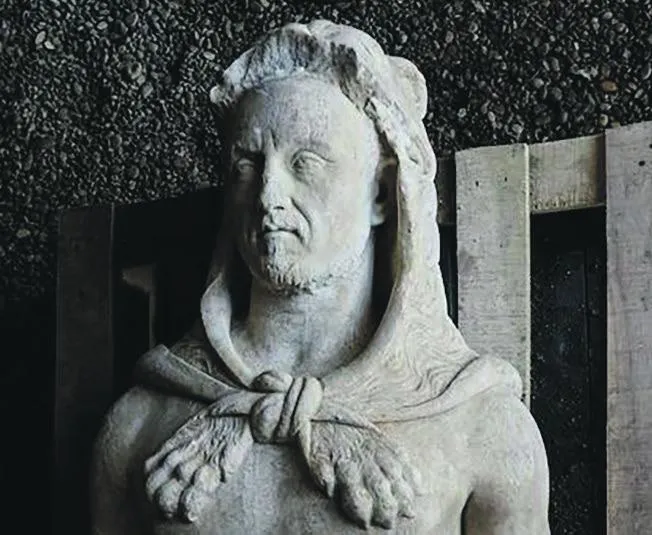
Statue of Roman emperor Decius dressed as Hercules that was found in January 2023 during sewer repair works in Rome.

Tertullian (c.160/170–c.220) had a genuine knack for pithy sayings that stick in the mind. For instance, there is his well-known take on the antithesis between ancient philosophy and Christianity: “What has Athens to do with Jerusalem?” Or the equally famous quip: “The blood of the martyrs is seed.”

Later generations expanded this to “The blood of the martyrs is the seed of the church”, which may well bring out what the North African theologian originally had in mind. Tertullian, who was an advocate for never fleeing from persecution or seeking to evade arrest for one’s faith, here pictures the church flourishing through her martyrs.

This pithy saying recognises that martyrdom was one of the ways that God grew his Son’s church in this early period of her history. As men and women watched the martyrs die, some wondered as to why they were willing to give up their lives in such a brutal manner. This statement also rightly captures a key truth about the early church up until the embrace of Christianity by the emperor Constantine: the church defined herself as a church of the martyrs. Ideally, she consisted of those men and women who had counted the cost in following Jesus and were prepared to die for Him. While the actual number of martyrs in these early centuries was not enormous, nonetheless, all who were baptised into Christ had to reckon with the possibility that they might be called upon to die as a martyr.

And it would be an easy assumption to make from these truths that persecution and martyrdom helped to unify the church. In fact, this assumption does not follow. As the North African church soon discovered, persecution can split the church. Within a few years of another North African, Cyprian (c.250–258) becoming the bishop of Carthage, a vicious, empire-wide persecution of Christians was unleashed by the Roman emperor Decius (201–251), not long after he became emperor in 249.

The persecution, which saw numbers deny Christ, was soon over: it ceased when Decius was killed in 251 fighting the Goths in what is now Bulgaria. In the wake of the persecution, though, there was deep division in the churches of the West as to how to deal with those who had denied Christ and then wished to be restored to full communion in the church. Rigorists like Novatian (c.200–258) of Rome refused to accept the possibility of such men and women ever being fully restored to church fellowship. They needed to come to church for the rest of their lives weeping for their sin and possibly they might be granted a place in Christ’s kingdom in the world to come. But they could never again partake of the Lord’s Supper nor serve in leadership. Novatian and those like him took seriously the holiness of the church and genuinely feared the pollution that repentant apostates would bring to their church fellowships in Rome. There were also like-minded men and women in North Africa who were quite prepared to split the church if the African churches and their leaders did not see things their way.

Now, Cyprian was also concerned about the holiness of the church, but he was conscious that Christ had fully restored the Apostle Peter after his three-fold denial of his Master. The church needed then to stress both the seriousness of the sin in denying the Lord Jesus as well as recognising that the demonstration of true repentance over time merited full restoration to the life of the church. The Novatianists refused to recognise the wisdom of Cyprian’s approach and a major schism ensued that was never healed. Persecution had clearly brought a deep measure of disunity.

There is much that I love about Novatian. He wrote a treatise, for example, on the Trinity that is a gem and one of the earliest texts on this central subject of the Christian Faith. And his concern for holiness should not be lightly dismissed. But his rigour needed to be tempered with and balanced by an equal concern for empathy and mercy.

Share
< Previous article| Features| Next article >
Read more articles by Michael Haykin >>
Features
The martyrdom of Cyprian

The martyrdom of Cyprian

The church in North Africa was a leading centre of Christianity throughout the Ancient World. It was only with the …

Features
The courage of Perpetua

The courage of Perpetua

In the year 201 the Roman Emperor, Septimius Severus, who had become the head of the empire in 197, issued …

Give a subscription

Our monthly newspaper is the perfect gift for those who love to think deeply

Give here

Looking for a job?

Browse all our current job adverts

Search