The sword and doctrine: Killing in the name of God?

Michael Haykin  |  Features  |  history
Date posted:  1 Jun 2026
Share Add       
The sword and doctrine:  Killing in the name of God?

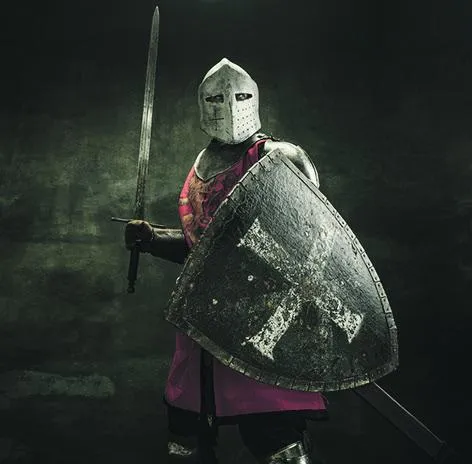
Photo: iStock

The acceptance by Constantine the Great in 313 of Christianity as a legal religion within the Roman Imperium was a truly revolutionary event.

The New England theologian Jonathan Edwards, in A History of the Work of Redemption, was convinced that Constantine’s “great revolution” was “like Christ’s appearing in the clouds of heaven to save His people and judge the world.” It was, in Edwards’ fulsome words: “the greatest revolution and change in the face of things on the face of the earth that ever came to pass in the world since the flood. Satan, the prince of darkness, that king and god of the heathen world, was cast out; the roaring lion was conquered by the Lamb of God in the strongest dominion that ever he had, even the Roman empire”.

Whether or not one agrees with Edwards here, there is little doubt that the Constantinian revolution was a turning-point in church history.

Christians soon had power and within 70 years of being martyred by the hundreds, maybe thousands, in the Diocletianic persecution – the last major persecution of the church by the Roman Imperium – professing Christians used the power of the state to kill a so-called heretic, Priscillian of Avila (d385), and then stooped to the brutal murder of a pagan philosopher, Hypatia, in Alexandria in 415.

These were but the forerunners of horrific murders and killings done in the name of the God and Father of our Lord Jesus Christ over the next thousand years. In the Middle Ages, there was the killing of Muslims and Orthodox Christians during the Crusades, spurred on by the watch-cry Deus vult (“God wills it”). And then in the Reformation, there was the killing of the Anabaptists by the Zurichers and other Reformers, as well as the killing of Protestants by the Roman Church and adherents of the latter by their Protestant opponents. The Thirty Years’ War (1618–1648) and the British Civil Wars (1638–1651) were, in some ways, the culminating events of this religious violence.

However, what Sebastian Castellio told John Calvin after the latter’s approval of the burning of the Unitarian Anabaptist Michael Servetus in Geneva, which happened in October of sint 1553, is true. In his De haereticis, an persequendi (On heretics and whether they should be persecuted; 1554), written in response to the Servetus affair, Castellio said: “To kill a man is not defend a doctrine but to kill a man. When the Genevans killed Servetus they did not defend a doctrine; they killed a man. The defence of doctrine is not the affair of the magistrate but of the doctor [of theology]. What has the sword to do with doctrine?”

Here Castellio goes to the heart of the matter. While the New Testament clearly indicates that the experience of religious violence – what we have examined as martyrdom in the last few months through this column – is to be expected and is indeed a gift to the church (see 1 Corinthians 13v3), the committing of religious violence – the killing of people made in the image of God by professing Christians on the grounds of their affirmation of a different religious code – is nowhere justified by the New Testament texts nor by our Lord. What indeed does the sword have to do with orthodoxy?

Share
< Previous article| Features| Next article >
Read more articles by Michael Haykin >>
Features
Martyrdom and schism

Martyrdom and schism

Tertullian (c.160/170–c.220) had a genuine knack for pithy sayings that stick in the mind. For instance, there is his well-known …

Features
The courage of Perpetua

The courage of Perpetua

In the year 201 the Roman Emperor, Septimius Severus, who had become the head of the empire in 197, issued …

Give a subscription

Our monthly newspaper is the perfect gift for those who love to think deeply

Give here

New here?

Register and get three free articles each month!

Register