There was a great division in the ranks of the Reformers over an issue of spirituality.
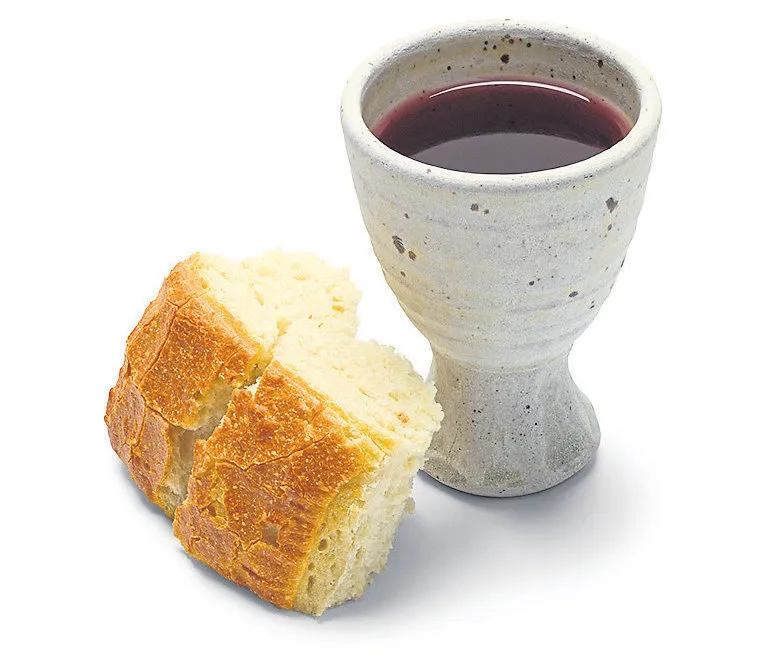
It concerned one of the means of grace, namely the Lord’s Supper. While all of the Reformers clearly rejected the Roman Catholic dogma of transubstantiation and the superstitions that had arisen with it, they were deeply divided over the answer to the question, ‘How is Christ present at the Table?’
Views of Luther and Zwingli
In the view of Martin Luther, Christ’s body and blood are present ‘in, with and under’ the bread and the wine. Just as when an iron poker is placed within the flaming fire of a forge, it becomes red-hot if left in the fire long enough, so do the bread and the wine actually contain Christ’s body after the prayer of consecration. Contrary to the Roman dogma of transubstantiation, the bread remains bread and the wine remains wine. But they now contain the body and blood of Christ.
The Swiss Reformer Huldreich Zwingli, on the other hand, regarded the bread and the wine as mainly signs of what God has accomplished through the death of Christ and the Supper therefore as chiefly a memorial. In recent discussions of Zwingli’s perspective on the Lord’s Supper it is often maintained that Zwingli was not really a Zwinglian, that is, he saw more in the Lord’s Supper than simply a memorial. Be this as it may, a tradition did take its start from those aspects of his thought that stressed primarily the memorial nature of the Lord’s Supper.
Attempted reconciliation
The German ruler Philip of Hesse, who had embraced the convictions of the Reformation, was deeply concerned that such a division among the Reformers would jeopardise the political future of the Reformation. He was concerned that Roman Catholic princes would seek to exploit this division to politically roll back the advance of the Reformation. Philip thus arranged for a colloquy to take place at Marburg in the Autumn of 1529 that would heal this division between the two Reformation giants, Luther and Zwingli.
Luther, it needs to be noted, went unwillingly to the meeting, though Zwingli was eager to end their division.
On the first day of the conference, 1 October, Hesse arranged for Luther’s co-worker, Philipp Melanchthon to meet with Zwingli, and for the Swiss Reformer Johann Oecolampadius to confer with Luther. The following day Zwingli and Luther met. It was an explosive meeting that failed to unite the two Christian leaders.
Luther insisted that ‘this is my body’ means simply that: the word ‘is’ needs to be taken literally – the bread is the body of Christ. Zwingli, convinced that the risen body of Christ had ascended to heaven and could not be literally present in every locale where the Lord’s Supper was being celebrated, insisted as vehemently that the elements must therefore be symbols that were designed to prompt remembrance.
The legacy of division
Luther refused to recognize the Swiss Reformer as a genuine Christian and thus their division remained unhealed. And as Philip of Hesse had feared, Roman Catholic princes took advantage of this division.
Two years later, in October 1531, some 7,000 Roman Catholic soldiers attacked the canton of Zurich. Zwingli marched out to meet them at Kappel, where he and around 500 other Protestants were killed in battle. The Roman Catholic troops had been confident that the German Lutheran princes would not support Zwingli, and thus the boldness of their attack on Zurich.
The division between these two German-speaking Reformers and its sad legacy is a sobering reminder of the danger of dividing over issues that cannot be biblically demonstrated as being primary. When facing Christian division, we all still need to pray the prayer that Zwingli uttered before the Colloquy of Marburg: ‘Fill us, O Lord and Father of us all, we beseech thee, with thy gentle Spirit, and dispel on both sides all the clouds of misunderstanding and passion.’