Six ways people experience exile in the UK

Neil Robbie  |  Comment  |  migration & the Bible
Date posted:  9 Feb 2026
Share Add       
Six ways people experience exile in the UK

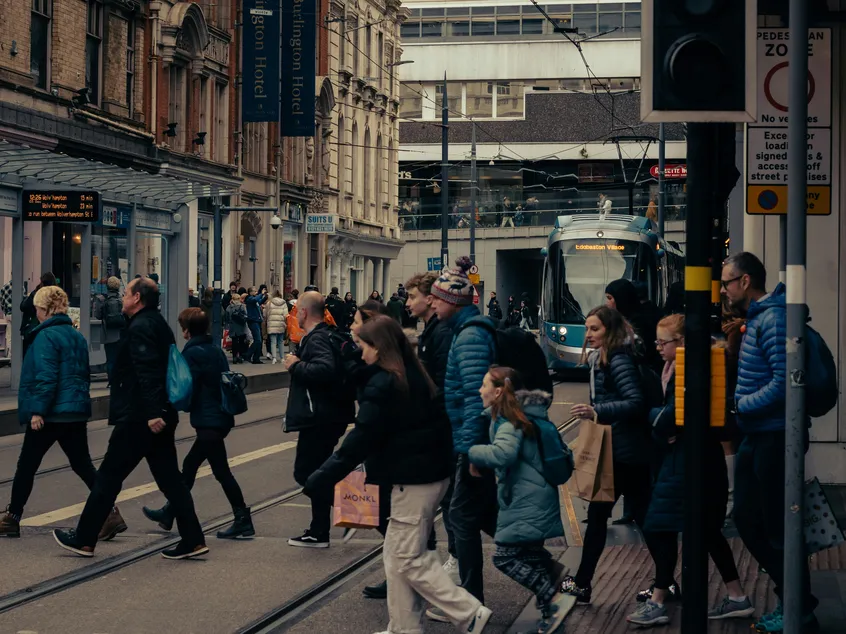
Photo by Adwitiya Pal on Unsplash

"By the rivers of Babylon we sat and wept
when we remembered Zion."

The words of Psalm 137 are familiar to most Christians around the world. The sentiment, however, was largely unfamiliar to conservative evangelical Christians in Britain - mostly, though not exclusively, white - who until recently felt at home both in the church and in the nation.

In this second of a series of articles on developing a Biblical theology of migration (read article one here), we will consider the different ways people experience exile in the UK.

Exile

In a 2024 en article, Tim Vasby-Burnie defined exile as being "scattered to a place you do not really call 'home.'"

Being scattered to a place you do not really call home can occur in one or more of six ways.

  1. Universal human exile: Exile from the glorious, life-giving presence of the Lord.

    Paul writes in 2 Corinthians 5v6-8: "We are always confident and know that as long as we are at home in the body we are away from the Lord."
  2. Physical exile: Refugees and migrants; displacement from the land.

    The United Nations defines refugees as those who are forcibly displaced from their homes; 70 million people around the world are displaced within their countries and 40 million souls are displaced to foreign lands, just as Nebuchadnezzar carried all Jerusalem into exile (2 Kings 24v14).

    Migrants, on the other hand, have moved voluntarily. As of 2020, the number of international migrants worldwide stood at 280.6 million (or 3.6 per cent of the world’s population).
  3. Cultural exile: Minority cultures in a majority place.

    Cultural exile relates to traditions, music, food, language and/or history. The experience of exile can be mitigated or exacerbated by public policy; David Cameron’s "British Values for British Children" increased the sense of exile for migrant communities. Children of migrants grow up between two cultures and feel exiled from both.

    Settled communities can also experience exile as shared traditions, music, food, language and/or history are subsumed through high levels of migration. The proliferation of St George’s flags and Union Jacks was, in part, a reaction due to an increased feeling of cultural exile in settled communities.
  4. Economic exile. The slums of Kolkata or Nairobi are obvious places of economic exile.

    Slum residents are prevented from escaping deprivation by all kinds of social, economic and cultural obstacles. The same dynamics are at work in the UK. Former manufacturing, mining and fishing communities became "left behind" economically, just as "only the poorest people of the land [of Israel] were left" (2 Kings 24v14).
  5. Political exile: Exiled from decision making and power in the land.

    Political exile occurs when decisions are made which are contrary to the interests of minorities. The tyranny of the majority causes minorities to be exiled.

    The Scots experienced Margaret Thatcher’s poll tax experiment a year before the unpopular tax was introduced in England. Frederick Douglass spoke up for enslaved African Americans on 4 July 1852 due to the horrors of political exile. Recent political debates and decisions in Westminster have increased the sense of political exile for evangelical Christians in the UK, so we cry with the Psalmist: "Why do the nations conspire and the peoples plot in vain?" (Psalm 2v1).
  6. Ecclesiastical exile, which is caused by schism in the church - something John Calvin had first-hand experience of.

    Calvin writes: "Let them [the ecclesiastical hierarchy] now go and clamour against us as heretics for having withdrawn from their Church, since the only cause of our estrangement is, that they cannot tolerate a pure profession of the truth. I say nothing of their having expelled us by anathemas and curses." Calvin was exiled not only ecclesiastically, but physically, politically, economically and culturally after fleeing for his life.

Every individual Christian can experience exile in one or more of these six ways. Whole communities in the UK are experiencing exile from one another culturally, politically, economically, ecclesiastically, even while we live in the same space.

Evangelicals experience exile in different ways as Anglican, Free Church and minority ethnic congregations.

With all these experiences of exile in mind, we will turn in my next article to consider ways we can live well as Christians - as the church - in exile.

Share
< Previous article| Comment| Next article >
Read more articles on:   migration  /  theology
Read more articles by Neil Robbie >>
Comment
Why I took a stuffed parrot to CofE Synod

Why I took a stuffed parrot to CofE Synod

The General Synod of the Church of England has engaged over decades in a cycle of groundhog-day debates about human …

Comment
Christians and culture: Where do we draw the line?

Christians and culture: Where do we draw the line?

Four young exiled Hebrew men, Daniel, Hanniah, Mishael and Azariah, had been transported from their homeland of Israel into exile …

Need to advertise?

We can help you reach Christians across the country

Find out more

Give a subscription

Our monthly newspaper is the perfect gift for those who love to think deeply

Give here