
Gen Z: what now… and where do we go from here?
If there was a prize for the number of key people you’ve influenced before you are 18, Greta Thunberg would probably be a strong contender. She has had an extraordinary time in the last year, speaking at major conferences, going to key places, and meeting so many important world leaders. It’s sometimes hard to remember she will only be 18 later on in 2020. She is part of the Gen Z generation.
The large numbers of people born after the end of the Second World War, especially in the US and the UK, caused the phrase ‘baby boomer’ to be popular for a while, quickly shortened to just ‘boomer,’ and usually taken for simplicity as those born between 1945 and 1963. Those coming afterwards were far fewer in number; they ‘stopped the boom’, or ‘busted’ it, and so for a while were called the ‘baby busters’. This is a disparaging title, however, and when Douglas Coupland published his book Generation X: Tales for an Accelerated Culture in 1991 his phrase instantly stuck and they became ‘Gen X’ (born 1964 to 1982) from then on.


























































































































































































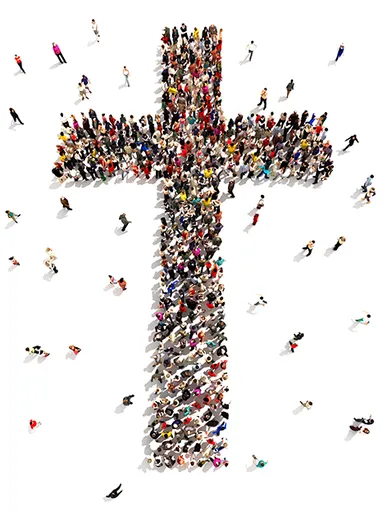























The changing face of UK evangelicalism
"Who do you actually represent?" It’s a question I am often asked in my role at the Evangelical Alliance. Usually it is followed by another: "How many evangelicals are there in the UK?" Then, "What actually makes someone an evangelical?"
For years, those questions did not have straightforward answers. We pointed to our 30,000 personal members, and to our more than 3,000 church members. We might mention charity Tearfund's research from 2007, which estimated there were around two million evangelicals in the UK. It was the best answer that we had, but it was almost 20 years old.