Remembering Jesus is the Gardener-King

Paul Kunert  |  Features  |  earth watch
Date posted:  30 Apr 2026
Share Add       
Remembering Jesus is  the Gardener-King

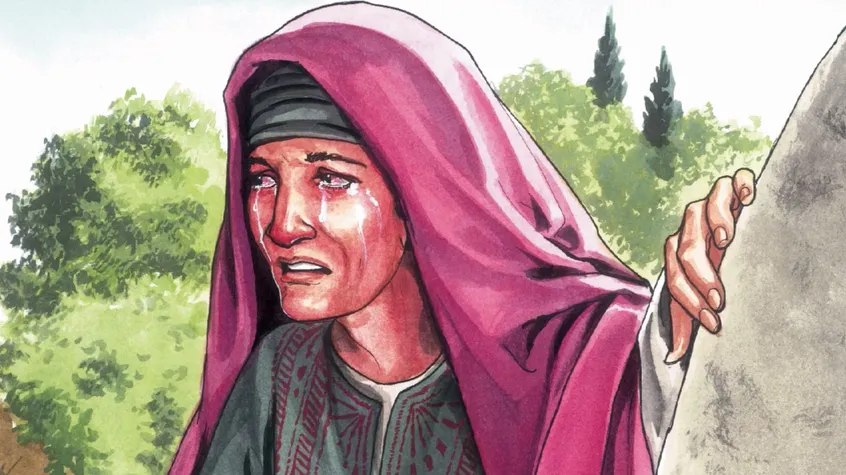
Source: Good News Productions International and College Press Publishing via freebibleimages.org

“Jesus said to her, ‘Woman, why are you weeping? For whom are you looking?’ Supposing him to be the gardener…” (John 20v15). Many of us in the last few weeks will have heard or read these words. But how many will have paused to ponder this significance of Mary’s supposition?

What is it about Jesus’ resurrection body that the first witness takes Him for “the gardener”? Why not the caretaker or security guard or a passerby? One might speculate. Perhaps Jesus had been tending a budding vine. Or, His hands in the soil, a sprouting mustard seed. Or, among the trees, a fruiting orange. Perhaps, perhaps not.

But either way, why would John mention it at all? That should give us pause. This is after all John’s Gospel, renowned both for eyewitness detail not found elsewhere and for rich theological reflection. Nothing is included by accident.

So, attentive to his intention, what do we find? John begins by evoking the first chapters of Genesis (“In the beginning…”), chapters which, when read with the eyes of the ancient near east for which they were written, clearly depict God as a Gardener-King. God fills the barren earth with life. God “plants a garden” (Gen.2v8). And the Gardener-King gives humans, made in His image, the charge to be His gardener-rulers (Gen.1v26-28, 2v15).

John goes on to structure his Gospel around seven signs, representing the “week” of creation. It is for the whole cosmos, he says, that God sends His one and only Son. Jesus’ cry on the cross almost certainly echoes the completion of creation in Genesis 2v2. And Jesus is raised “on the first day of the week, while it was still dark”, again (surely not accidentally!) evoking the first day of creation. John means, surely, to tell us not just the identity of the Christ, but also that, in His resurrection, new creation has begun.

With all that in mind, it’s actually not surprising at all that Mary should suppose Jesus to be the gardener. He is after all the true image of the Gardener-King. If this eyewitness detail is omitted in the other gospels, isn’t it just like John to include it? Mary’s supposition, which at first sight seems a mistake, is in reality a truer understanding than she realises of the One who calls her name. That’s just the kind of irony John loves to include.

Now, you don’t have to buy into the significance of Mary’s supposition to get the point. Scripture widely attests to God’s renewal of the whole of creation, and to the restoration of the image of God – the mandate to work for the flourishing of all things – in us as we turn to Jesus. Either way, the question to us remains: how will we exercise our restored authority and responsibility?

How will we, with all we know about carbon emissions and industrial agriculture, make our choices – exercise our responsibility? Switching to an EV or installing a heat pump, changing my employer’s travel policy, or cutting beef from my diet, may not on their own change the world. But they are a genuine exercise of our role as God’s image in the world. And, who knows, maybe they can change the world. Perhaps the Spirit of God will lend weight to our actions, making more than we could imagine of our faithful choices.

The flourishing of all creation is both an Easter message and a Pentecost message. Jesus has made peace with all creation on the cross. Resurrection marks the beginning of the new creation. And the outpoured Spirit is making us new. So, fresh from celebrating Easter, children of the resurrection of the Gardener-King, looking ahead to Pentecost, filled with the Spirit of the Creator-Restorer, be encouraged! Isn’t this the perfect time to step into the fullness of the image of God restored in you: assistant-gardener to the resurrected Gardener-King?

Share
< Previous article| Features| Next article >
Read more articles by Paul Kunert >>
Comment
A national briefing

A national briefing

The tail-end of last year saw over 1,200 politicians and leaders from business, faith, culture, sport and the media gather …

Features
The beginning of the end of the polycrisis

The beginning of the end of the polycrisis

We will have been thinking about the coming of the true King. Through the Advent season, we’re sure to have …

About en

Our vision, values and history

Read more

New here?

Register and get three free articles each month!

Register