Is it just me, or is it getting hot in here? Up and down my street, blinds are down and curtains drawn against the midday heat. Overnight, from bedroom windows, strangely alien aircon flues dangle. Parks and lawns are Sahel-brown, hosepipes are banned across the South [of England], and with warm, dry weather forecast for August, we’re all beginning to hope for a spot of rain. Maybe by the time you read this we’ll have had some.
This year is shaping up to be a record-breaker. In May, we had the hottest day ever recorded for the month, and then in June, the same again. Globally, June was the second-hottest on record, just slightly below record-holding 2024. And there’s an intense El Niño brewing in the Pacific that looks like it’s going to set yet more unwelcome records. Phew, what a scorcher.
Almost nobody now says climate change isn’t happening. I mean, it’d be hard to argue, wouldn’t it? And hardly anyone thinks it isn’t caused by us – a scientific consensus stretching across all major universities and scientific associations, again hard to argue. And nobody at all is saying we shouldn’t do something about it. The only question is “what?”
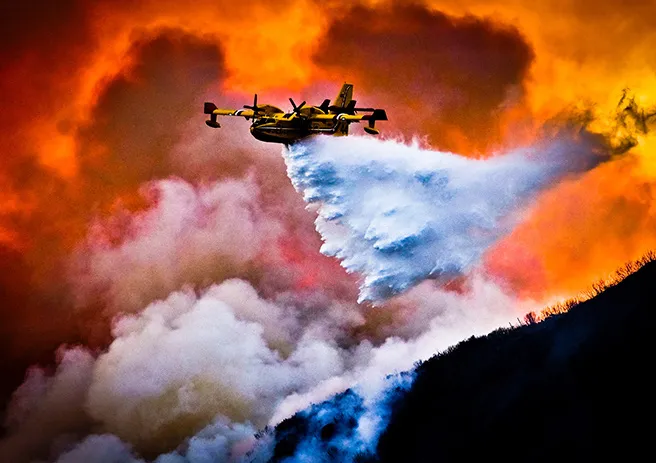
To be clear, a small minority say the only thing we need to do is adapt. And we absolutely do need to do that. Homes that stay cool in heat waves, as well as warm in winter. Heat-resilient railways (and other infrastructure). Flood defence systems, firefighting capacity. Green spaces and tree canopies. Reliable water supply. Air conditioning. There’s lots we need to do to adapt to the climate change that’s already happening.
But it’s not enough. The problem with just doing adaptation, without dealing with the cause (mainly coal, oil and gas), is that it’s just going to go on getting hotter and hotter, the problems bigger and bigger, the adaptation more and more expensive. All the less scary climate forecasts – from all the university modelling teams working on this – rely on us dealing with the cause fairly quickly. Adaptation isn’t enough. But the reality is we’ve still got our global foot down hard on the accelerator.
What then to do? Climate change is, as Sir Paul Marshall, hedge-fund manager and a committed evangelical Christian, put it a few years ago, a “classic collective-action problem”. Everyone knows what needs to be done (simplifying only a little: switch everything to electric, get all our electricity from renewables and nuclear, and ease off on our cattle and dairy farming); but it requires not just me to do it, or just the UK to do it. To fix the problem, almost everyone needs to do almost all of it. Marshall went on to argue that as China isn’t doing its part, the UK shouldn’t bother either.
I wonder if Jesus would agree. Should we do only as our neighbour does to us? Should we seek only the good of our neighbour as she seeks ours? No, of course not. One of Jesus’ key themes is taking the initiative in doing good. Seek her good as much as your own. Do as you would have him do to you. A specifically evangelical Christian response to the classic collective-action problem is to take the initiative in doing good. It breaks the eye-for-an-eye deadlock. And just might bring the change we need.
By the by, Marshall’s wrong about China. They’re as worried about climate change as we are, and they’re investing as heavily as anyone in the all-electric future, in renewables, electric vehicles, forestation, long-distance high-speed rail. And he’s wrong that the UK doesn’t count for much. We’re one of 30 or so countries that put out around one per cent of global emissions each – together we make up a third of global emissions, more than China’s. What we do matters.
Ultimately, though, the Christian question is not “Will what I do fix this problem?” But rather it is “What does the Lord require of me?” What does the Christ, who died and rose to redeem, reconcile and renew all things, who calls on us to take the initiative in doing good, require of us?
I'm a Christian, and I'm Green - here's why
en does not support any one particular party. However, we are interested in evangelicals within each of our political …