Pilgrimage is having a moment. Everyone seems to be doing one. From our new Archbishop’s pre-enthronement six-day walk from St Paul’s to Canterbury Cathedral, to the 14,000 people registered in the first 24 hours that applications opened for the annual Pentecost Paris–Chartres Catholic pilgrimage on Palm Sunday, the ancient tradition of journeying to a place of special spiritual significance is going through a renaissance. And the BBC is running with it.
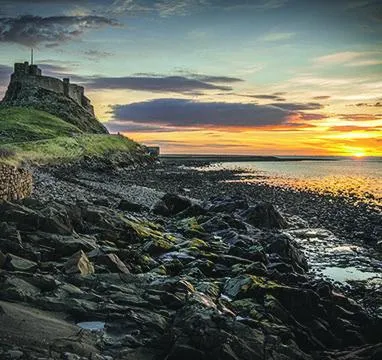
This spring we have the eighth series of its Pilgrimage show, this time sending semi-celebrities off to trace the footprint of legendary Celtic Christian saints from the seventh century, learning about Oswald, Bede and Cuthbert. From Whitby’s cliff-top Abbey to Durham Cathedral and then onto their final destination, the Holy Island of Lindisfarne. There is one Anglican-evangelical Christian, one observant Muslim and an agnostic Jew, along with an “à la carte Catholic” as well as an atheist, who moves to become agnostic over the course of the pilgrimage – although there are no dramatic conversions to be seen. This show is about the slow burn – and slowing down, taking time to walk, to talk, to think deeply, away from the hurry and busyness of modern life. Sweeping northern landscapes draw in the pilgrims, and us as viewers.
Christian Ashley Banjo observes that the pilgrimage teaches “something about simplicity of nature” which helps him to connect to his faith and feel “more at home, internally”. Others reference the eternal nature of the landscape, and how they believe that Mother Nature contributes to their experiential faith, and suggest that the divine feminine has been stripped out of life. They discuss the difference between religion and spirituality, and the issue of believing in God in a world full of suffering. There has been some critique of their pilgrimage being part-bus rather than purely walking, but then even Chaucer’s Canterbury Tales had a monk riding a palfrey (a type of horse).