Talking Tourette’s

Rebecca Chapman  |  Features  |  culture watch
Date posted:  22 Mar 2026
Share Add       
Talking Tourette’s

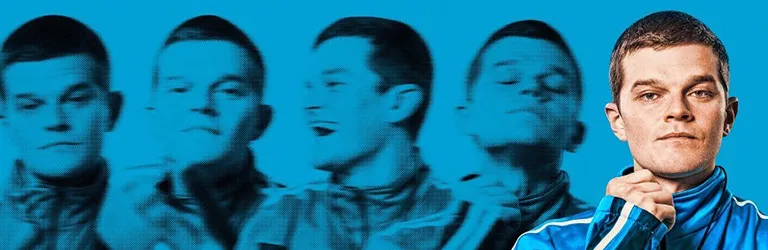
Robert Aramayo. Photo: Tempo Productions and One Story High

We live in a noisy world, where the demands on our time and attention from social media, culture, the press are myriad, even if much of it can feel like “sound and fury, signifying nothing” when stories often come and go quickly.

Yet the fallout from the recent British Academy Film Awards has stuck around. This star-studded annual event celebrates the best of the year’s big-screen films. The film expected to pick up multiple awards was Hamnet, a powerful depiction of grief loosely crafted around Shakespeare’s Hamlet. In one of the night’s biggest surprises, the Leading Actor award (and the Rising Star Award, the only one voted for by the public) didn’t go to anyone from that film, but to Robert Aramayo for playing Tourette’s campaigner John Davidson in I Swear.

I Swear is already available to watch on Netflix and is two hours of tough but joyful viewing that has the power to transform how you see those who have Tourette’s – but potentially also those who struggle with any sort of visible disability.

It contains very strong language indeed, throughout. It takes you on the journey of John, a young man with Tourette’s whose symptoms include coprolalia – involuntary outbursts of obscene language. We first see this in the film as it is directed at Queen Elizabeth in the moments before she is to award John with an MBE. From his teens, John finds as his tics develop, teachers are angry, his family disappointed and despairing, and he becomes increasingly isolated. But having just one person come alongside him makes a transformative difference, enough for him to go on and change the lives of others himself. The Bible tells us again and again of the power of the tongue and the importance of self-control in our speech; yet Tourette’s is a genetically-determined neurological condition and its tics are involuntary, including swearing or socially inappropriate speech.

To help us understand

The acting is well worth every award it receives. And I Swear is delightfully feel-good by the end – and worth bearing with the discrimination, prejudice and violence you see John subjected to again and again. This is a film crafted to both move us deeply, and to help us understand. But when Tourette’s itself had an impact at the BAFTA’s, that understanding has been less than hoped for. John shouted out a racial slur during the Best Visual Effects award presentation by Michael B. Jordan and Delroy Lindo. Host Alan Cumming was quick to remind the audience in the room that Davidson’s tics were involuntary and something that he has no control over. But the moment was not edited out of the BBC One broadcast, despite it being shown on a two-hour delay. Such an edit was possible, as comments about Palestine during the award for Outstanding Debut by a British artist were edited out by the BBC before it was shown. John was not unaware of the impact his tics had during the event, saying subsequently that he “chose to leave the auditorium early into the ceremony as I was aware of the distress my tics were causing”. Yet having had the incident broadcast, clips and comments went viral, many accusing him of racism. I Swear depicts John at one point hollering ‘Half-price heroin!’ at some passing police while attempting to act as a drug mule – his coprolalia might be influenced by what he can see – but it certainly isn’t conscious!

So there have been accusations of racism, those wanting an apology, seeking justice for a slur, and responses defending John due to his disability, seeking mercy for something that wasn’t conscious. Do we have a hierarchy of discrimination, and if so where do race, disability and even religion sit relative to one another? How can we encourage grace and forgiveness in a world where the temptation is for minority groups to start slugging it out with one another on social media – and is justice better served by asking questions of the BBC’s choices about what they broadcast? They have now apologised to staff that the slur was broadcast.

Faith isn’t specifically addressed in the film, but how might a similar incident be received in your church? The old adage that all publicity is good publicity may no longer be true, but with what transpired again at the BAFTAs, John Davidson has again taken one for the team in raising awareness of a difficult condition that affects many people. It’s a cracking film, and informs a thought-provoking debate that is potentially just beginning.

Share
< Previous article| Features| Next article >
Read more articles by Rebecca Chapman >>
Reviews
Authentic inside and outside

Authentic inside and outside

Looking around today’s world, we can see we have something of an issue with integrity. As we polish our public …

Features
Cults and critical thinking

Cults and critical thinking

Netflix’s latest dark but glossy psychological thriller Unchosen starts with the staggering statement that “over two thousand cults exist in …

New here?

Register and get three free articles each month!

Register

Subscribe

Enjoy our monthly paper and full online access for just £40/year

Find out more