Ann Droid: A comedy, but profound

Rebecca Chapman  |  Features  |  culture watch
Date posted:  24 Aug 2026
Share Add       
Ann Droid: A comedy, but profound

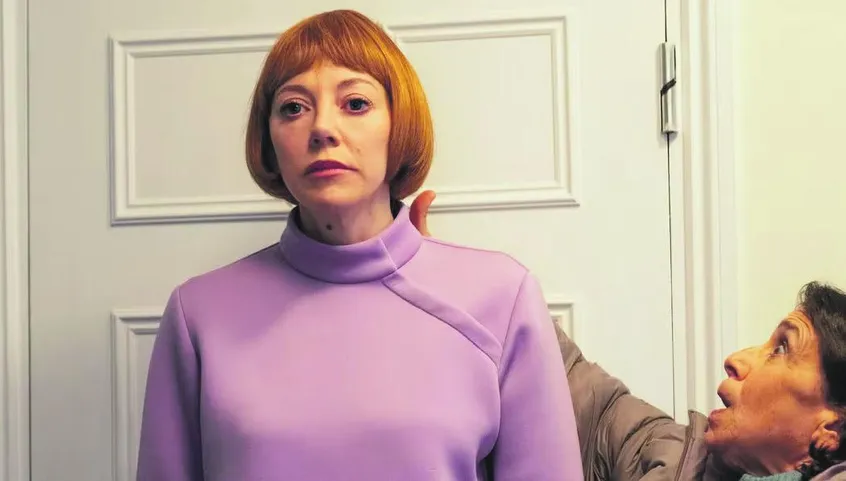
Diane Morgan stars in the new BBC comedy Ann Droid, which raises profound questions (photo: BBC)

Britain now has a Minister for Artificial Intelligence. Kanishka Narayan became minister for AI when Andy Burnham created the role in his new Cabinet.

Narayan has warned that “people are right to worry” about the impact of technological change, but that he was “going to work every hour, every day to try to make sure it goes right”. Meanwhile, our new Prime Minister has himself promised to fix adult social care. If you put these two issues together, you get the BBC’s new surprisingly moving six-part comedy drama Ann Droid. At a time of polarising political views that can feel like they lack nuance, this is a show that provokes laughter, and tears, that will make you ask questions about AI’s value as well as its risks, and what it means to be human.

Diane Morgan, the brains and face behind fictional and satirical “journalist” Philomena Cunk, created the show after reading an article about robots providing elder-care in Japan. She also plays Linda, the human-like robot who has been bought to support widowed Sue – played by The Royle Family’s Sue Johnston – and enable her to keep living at home when her son Michael wants to move out. Linda is far from the latest model – she’s a refurbished, cheaper option, who means well but makes a mess, literal or emotional, wherever she goes. There are misunderstandings and literalisms all over the place. She is jerky, irritating… and oddly likeable. It is possible she is loveable – or compassionate?


This is a world where call centres are open for about an hour a week. Where delivery drivers have a PhD in Chaucer. Where robots can tell if you’re pregnant – and then tell everyone you know. Elon Musk has said he thinks every home will have a humanoid robot by 2050. Even in regular, suburban settings like those we see in Ann Droid. Sue expresses concerns about her humanoid carer spying on her. Her son pushes back that human care would “cost a fortune and what happens on their day off ”. Sue is fiercely independent, and only too aware of her age and mortality; “I don’t know how I’m going to do this last bit, alone. But whatever life I’ve got left, I do not wish to spend it with a robot.”

This leaves Linda’s monotone voice asking “restart search – what is the meaning of a human life?” Humanity and AI have been powerfully reflected on recently by both the Pope and the Archbishop of Canterbury. Pope Leo’s first encyclical, Magnifica Humanitas, observed that technology takes on the characteristics of those who devise, finance, regulate and use it, rather than being neutral. As Linda adapts to Sue’s person and needs, we can see in a small, whimsical way how this could look. Then in Archbishop Sarah’s House of Lords debate on the impact of AI, she asked questions about our vision for how this technology will serve human flourishing – calling for AI to be “designed, built, regulated and used to serve our glorious humanity and not to diminish it”. With an aging population and the increasing prevalence of AI, this show perhaps pragmatically plays down the threat of tech in a way that the recent statements by religious leaders did not. It poses some difficult questions through its retro-style physical comedy. However, both church leaders are clear that humanity – in all its grandeur and woundedness, must never be replaced or surpassed.

Ann Droid contains language and some jokes that some may find offensive; but it is a dry, quirky original show. Such creativity is part of our humanity, and God-given. Every slightly stilted android bot that we see on screen is juxtaposed by yet another incredibly unique, quirky individual human. Humans who feel pain, physically – Diane Morgan has said that bending over her back to “robot” really hurt. Humans who can’t help but create community – Morgan also observed that when her family put googly eyes on their robot vacuum cleaner, they began talking to it! Humans who experience death and loss, and feel lonely, bringing a bittersweet aspect to this series. And humans who cling to traditions and ritual. When a birthday party is held (albeit mainly attended by robots), when a funeral service needs a reading as part of remembrance, how do we explain why we do what we do?

God has placed creation under our stewardship, including our own creations like AI. And AI has brought many benefits – and the hope of many more. Like Linda the humanoid carer, it is a tool. It is not a source of authority in and of itself, nor does it have moral responsibility. Instead, it is dependent on our human inputs, our biases. It is fear of the Lord that is the beginning of wisdom, not fear of AI. For those of us without the desire to wrestle with a papal encyclical or House of Lords debate, Ann Droid provides a way to ponder both where we are with AI, and what the future might hold. As well as what it means to be human. Our new Minister for AI might be planning to work all the hours God sends to “make sure it goes right” with this human innovation – but it is God who will help us to have the integrity and wisdom to steward it well.

Share
< Previous article| Features| Next article >
Read more articles on:   Artificial Intelligence  /  TV & film
Read more articles by Rebecca Chapman >>
Features
Glamazon women?

Glamazon women?

Reality TV has not had a good summer. Married at First Sight has been in the media for all the …

Reviews
Authentic inside and outside

Authentic inside and outside

Looking around today’s world, we can see we have something of an issue with integrity. As we polish our public …

Looking for a job?

Browse all our current job adverts

Search

Subscribe

Enjoy our monthly paper and full online access for just £40/year

Find out more