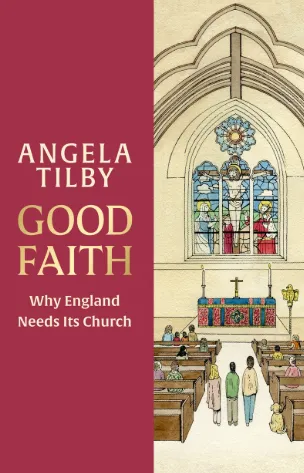
GOOD FAITH
By Angela Tilby
Hodder and Stoughton. 368 pages. £25
ISBN 978 1 399 801 638
If you’re despairing of the Church of England, especially in recent years, and want to understand more of the history and theology behind its current tribal mess, this might be the book for you.
This tour de force takes the reader from the beginnings of the English Church right through to the present day. We see the evolution from Bede, via Anselm, church architecture, through the Elizabethan settlement right up to Welby. If you ever wondered how any of the complex historical context of the Church of England fits together, this will hugely help get the jigsaw pieces together in the right place.

Heroes and heroines of the Church are expounded including the now-neglected Hooker, as well as Wycliffe, the Wesleys and Cranmer. Angela Tilby, the author, is not only an experienced author and broadcaster, but she also taught Church History for the Cambridge Theological Federation for ten years. She is a self-confessed “liturgical geek”, and critical of what she sees as evangelicals “adopting Americanised versions of Christianity with their stress on a celebrity-focused ministry and a commercialised approach to mission and growth”. Those of us who have followed the Pilavachi fallout, and watched friends crumble under a focus to get “seats on pews” may have some sympathy.
There is much here that we can learn from as evangelicals – and even learn about our own history. Tilby unpacks what she sees as the three tribes within the CofE – the Catholics, the liberals and the evangelicals. There is, she argues, huge good within each of them, and yet huge flaws too.
Her most stinging critique is perhaps reserved for the latter, for the HTB network in particular, and for former Archbishop Justin Welby, which she described in a chapter called “The Revenge of the Puritans” warning against a careless dismissal of the history and polity of the Church of England. Her experience on the Liturgical Commission is just one personal example of how the three tribes have jostled and juggled difference over the years, a reminder that our current muddled mess isn’t only about sexuality. From Cranmer to the Clapham Sect and on to Bebbington and Billy Graham, Tilby has done a deep dive into evangelical history.
She maintains that the historic faith of the Church of England is a good faith to live and die in. Reader, I do too! Tilby doesn’t offer easy answers here – God knows, maybe there are none, at least until the eschaton. She calls us to consider a return to common liturgical prayer – and who can disagree with the solid scripture held within the Book of Common Prayer? Her chronicle of our history and take on present perspectives may not feel hugely encouraging, but its sweeping scope has the potential to be edifying, increasing understanding of our national church’s current context. If that makes for better informed prayer, then perhaps we will all be able to believe that there is hope for the “good faith” in England, whether you consider it a middle way, or just muddled mess.