It’s COP season again. COP30 – or to give it its full title, the 30th Conference of the Parties under the United Nations Framework Convention on Climate Change – gets underway imminently.
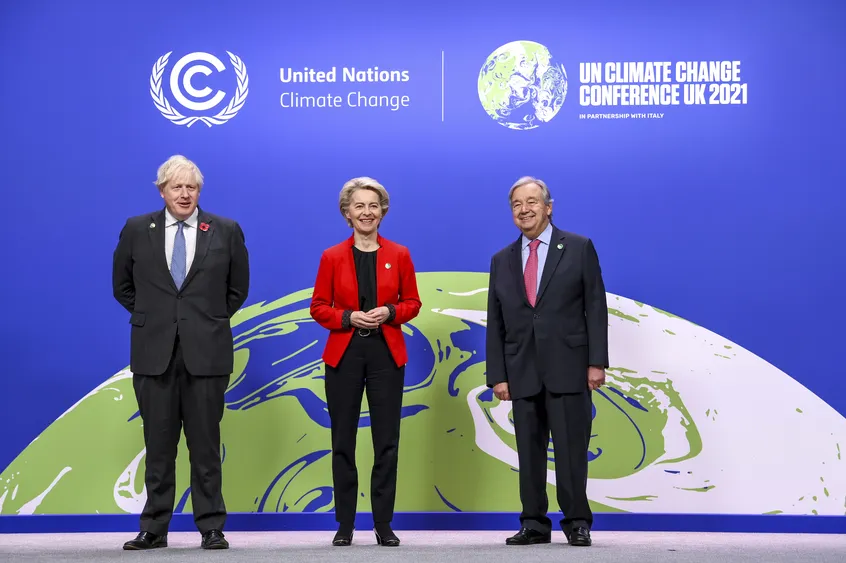
Dimly we might recall COP26 hitting headlines in the UK four years ago when Glasgow hosted it. Boris Johnson’s one minute to midnight speech, perhaps? Maybe “keeping 1.5 alive”? Or Alok Sharma’s tears when India pulled the rug on his deal to phase out coal?
For all that it didn’t achieve everything it hoped for, the Glasgow COP was the last one to make a significant difference. Since then COPs 27, 28 and 29 in Egypt, Azerbaijan and UAE have come and gone. So, what can we expect from Brazil’s COP30? Apart from a flurry of articles on the carbon footprint of all those flights, Brazil’s new highway through the rainforest and/or some earnest handwringing on the urgent need for international leaders to step up. Honestly, I don’t know.
But I do know it’s possible. A world of prospering humanity and a flourishing earth is possible. God has provided us in creation with all we need. Even today, with 8 billion or even 10 billion people, it’s possible.
So, I’d like to invite you for a few moments to come to a future where things have gone well. Come with me to the near future, say 15 years from now, to a world where, back in the day, COP30 was an undiluted success and, following it, pledges were turned into policy and policy into action.
It’s not an unrecognisable world. In fact, at first glance, it looks more or less the same. A teeming office complex, a school raucous at lunchtime, an emergency care unit overworked, and a weekend high street, bustling with pubs and cafés. I still enjoy a pint at The Jolly Woodman.
But look more closely, and you see that almost all the cars – and there are still lots of them, some futuristic, some retro, fashions change – now glide quietly by. In fact, almost everything’s electric now – heating, cars, buses, even trucks – and, if you choose to check, all our electricity’s renewable and nuclear. Our homes are warmer in winter and cooler in summer, solar panels on most roofs. Industry is thriving, a clean tech revolution. And there’s more green – courtyards, gardens, revived rivers and tiny forests, the trees a welcome shade when it’s hot. (And it does get hot, much hotter than it used to.)
If you should stray into the British countryside, it too is the same-but-different. Farmers partnering with ecologists, rightly grown food properly valued, and a decent living to be had. Woodlands, heathlands, hedgerows, peatlands, wetlands and waterways swarming with life. Fewer cattle, and marginal land – mostly in our national parks – returned to nature. Rivers run clear. Returning salmon and beavers in our streams. In the north, perhaps even lynx on the moors.
In international news, we hear China’s emissions have fallen for the thirteenth year running. America’s too. The Global Oceans Treaty has seen a revival of the seas, the Amazon rainforest expanded by a tenth in the last seven years, and Exxon decommissioned yet another oil platform.
Now, this isn’t a perfect world. Far from it. We blew through 1.5° and are having to work hard to keep below 2°. We haven’t avoided all the challenges, but it does at least look manageable. If COP30 can get things right, this near-future world is within reach. A prospering humanity and a flourishing creation, both together, is possible.
It is, however, not only possible. But inevitable. Not necessarily in this near-future. But one day. And not because humanity will get its act together. But because – we read again and again in Scripture – God wills it. It is His purpose in the cross and resurrection of Jesus Christ: the reconciliation, redemption, renewal and restoration of all things. COP30 may or may not nudge us toward prosperity and flourishing. But when Christ returns, and God again dwells among us, His rule at last uncontested, then it will, as a matter of joyous reality, be so.
Perhaps then this month we might pray with confidence for the COP30 negotiators, for the strengthening of those who work for the common good, and that the Spirit would lead them to the one who died and rose for the renewal of all things.
A national briefing
The tail-end of last year saw over 1,200 politicians and leaders from business, faith, culture, sport and the media gather …