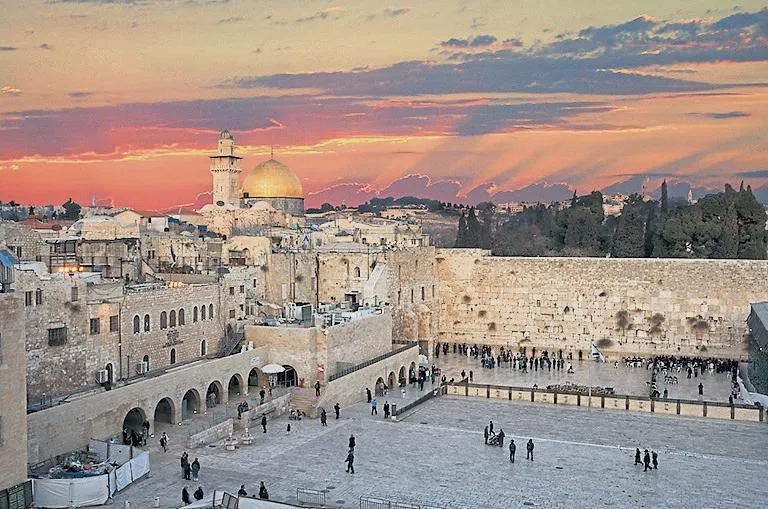
One of the most important biblical locations is the temple in Jerusalem. It features prominently in much of the history of the Old Testament monarchy and would have been one of the most significant monumental buildings in the region.
So where is the evidence for its existence? It has been a tradition in some Muslim circles to deny that such a temple ever existed. Yasser Arafat, the former leader of the PLO, claimed that the temple was actually in Nablus and not in Jerusalem at all. For political reasons, even UNESCO has issued resolutions that give oxygen to this spurious temple denial and such scepticism has found its way into the rhetoric of those who wish to dismiss the reliability of the Bible.
The irony is that we now know far more about the temple area than ever before. Important archaeological excavations around the area called the City of David, and at the base of the Temple Mount, have provided good evidence for the houses, palace, roads, shops, baptistries and walls for the entire biblical period from the time of the conquest to the destruction of the temple in 70 AD. A sacred walkway leading from the Pool of Siloam to the temple has recently been uncovered along with a tiny golden bell which may be associated with the priestly garments.
Overwhelming evidence
The evidence for the second temple, as it was at the time of King Herod and Jesus, is overwhelming. It was situated on what is presently known as the Temple Mount, or what Muslims call the Haram al-Sharif (‘Noble Sanctuary’), where the Dome of the Rock now stands. Leen Ritmeyer, in his magnificent book The Quest, has documented in detail the material evidence for the temple and its location. This includes the trumpeting stone, warning inscriptions against Gentiles, and even the possible location for where the Ark of the Covenant would have rested in the Holy of Holies. Other details from his meticulous survey of the site provide a clear basis to reconstruct how the temple developed over the centuries.
Well-meant but unsubstantiated
However, despite this evidence, some well-meaning Christians have been promoting the idea that the temple was at a different site altogether. Following the claims of authors Ernest Martin and Bob Cornuke, they have suggested that the Temple Mount structure was actually the location for a Roman military fortification (the Antonia fortress) and that the temple itself was built further south over the location now considered King David’s palace.
This claim seems to have caught on in some popular apologetics. For some Christians, part of the reason for its appeal is that it would enable a new temple to be constructed here, something quite impossible on the Temple Mount. The claim is primarily based on a misreading of the descriptions given by Josephus and the Bible, but it simply does not fit with the overwhelming archaeological evidence. The Temple Mount compound remains the most likely area for the successive building, and rebuilding, of the biblical temple.
But what about direct evidence for the earlier temple of Solomon? The difficulty of going this far back is that archaeology has not been possible on the Temple Mount since it has been under the control of a Muslim authority, the Waqf. Therefore, archaeologists have had to tread carefully on this sensitive site and interpret what material evidence is accessible. The primary evidence is that the temple of Herod which certainly had stood here was clearly a development of a much more ancient tradition of worship at the site. Leen Ritmeyer, one of the few scholars who has been able to engage in archaeology on the Temple Mount, has demonstrated conclusive evidence that Solomon’s temple once stood at the site of the Dome of the Rock. He has even identified a stepped stone that only makes sense as part of the first temple structure.
The evidence continues to confirm this identification of the temple location. Sadly, promoting obscure and unlikely theories about an alternative location fly in the face of all the mainstream archaeology and scholarship. All that such theories do is confuse those who are interested and provide fuel for those who want to deny the credibility of archaeological scholarship. We have no need for such alternate theories; the empirical evidence from the ongoing excavations confirms the reliability of the biblical record as a witness to Jerusalem through the centuries. And we can look forward to a new year of fresh discoveries as those excavations continue.