
Opening the Bible G.A.T.E.

Chris Sinkinson  |  Features  |  defending our faith
Date posted:  12 Aug 2026
Share Add       
Opening the Bible G.A.T.E.

photo: iStock

There is clear evidence of an upsurge in Bible purchases. More people want Bibles. Younger people are buying Bibles. Bibles are being eagerly sought particularly by those who have never read them and may feel that they are missing out.

We see anecdotal evidence for this at our church and no doubt plenty of stories can be shared around the country. A teenager visited our church for the first time recently, desperate to buy a Bible. He didn’t want to be given one for free. He wanted to pay for it, having never had a Bible before.

Growing Bible sales are not the same as more Bible reading. That’s the real challenge. Our first-time readers may quickly come across apparent contradictions whether through their own reading or what sceptical and hostile friends or social media point out. Here are four ways starting with the letters G.A.T.E. that we can help new readers deal with apparent contradictions.
1. The problem of Genre. Not all books of the Bible are written in the same style. Some are more straightforward history (Chronicles), some are more poetic (Psalms) and others heavily symbolic (Revelation). These differences of style are not clear cut – you can express historical events using poetry. But being aware of genre can help explain apparent contradictions.

An example is found in the creation accounts of Genesis 1 and Genesis 2. In Genesis 1 people are created after the plants whereas in Genesis 2 they are created before (2v5). But the two chapters of Genesis are written in a very different style. Chapter 1 is a highly structured account of creation from a global or cosmic perspective, chapter 2 zooms in on the details of the garden that form the setting for Adam and Eve. There is no contradiction, but the two chapters are written in a very different style.

2. The problem of Author’s intention. The author of a Bible book has a purpose, an audience and an agenda. The author conveys truth, but they do so with particular concerns. While Luke writes an orderly account of the life of Jesus to help the enquirer, Paul writes a letter to a church in Corinth to rebuke their behaviour. The author’s intentions also reflect their perspective. They will describe the sun rising and the sun setting not because they intend to teach astrophysics but because that is their perspective on the world around them (just like ours!).

Author’s intention often explains why two texts may seem to clash when taken out of context. Paul clearly tells us that a person is “justified by faith apart from observing the law” (Rom.3v28) whereas James is clear that “a person is justified by what he does and not by faith alone” (James 2v24). But Paul and James are writing with very different audiences and intentions. Paul explains the gospel, James applies the gospel: salvation is through faith (Paul), and saving faith works (James).

3. The problem of Translation. Differences between translations are inevitable, reflecting different intended readers and the changing way that language is used. Differences of translation or poorly chosen words often lie behind apparent contradictions. We are told in James 1v13 that God does not tempt anyone and yet Genesis 22v1 tells us that God tempted Abraham. The Hebrew and Greek words that lie behind our English word “tempt” can be translated in multiple ways. For the NIV, Genesis 22v1 tells us that God “tested” Abraham which resolves the contradiction.

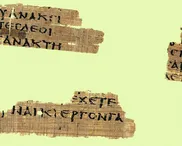
4. The problem of manuscript Editions. Many early papyrus manuscripts quickly wore out and disappeared. Scholars can identify traditions of manuscript copying which explain where variations in the text emerge. Some of these variations lead to contradictions. They are not part of the original writings.

A clear example is the age of Ahaziah when he became king. 2 Kings 8v26 tells us he was 22 years old whereas 2 Chronicles 22v2 tells us he was 42 years old. Given that his father was 40 when he died Ahaziah cannot have been 42 years old! Numerical errors can easily creep into copies of manuscripts, and alternative traditions of 2 Chronicles exist to demonstrate that this is what had happened. The NIV translation of 2 Chronicles 22v2 departs from the Hebrew manuscripts (which gave his age as 42) at this point, as the mistake is so obvious, and uses other ancient editions to give his age as 22.

Opening the Gate

These four areas help us explain many apparent contradictions: Genre, Author, Translation and Edition. That neatly spells GATE. So, when someone new to the Bible gets stuck with a problem passage try and remember the GATE and see if one of these four insights helps them open the gate of meaning!

Share
< Previous article| Features| Next article >
Read more articles on:   apologetics
Read more articles by Chris Sinkinson >>
Features
The New Testament’s P45

The New Testament’s P45

Have you ever held a P45 in your hand? Most likely you have, and it is the document you were …

Features
Migration – lessons ancient and modern

Migration – lessons ancient and modern

I’m writing this from the island of Crete where I am filming with the Christian Television Association. It’s a land …

Subscribe

Enjoy our monthly paper and full online access for just £40/year

Find out more

About en

Our vision, values and history

Read more