In Old Testament history, Judah and Israel were relatively small in contrast to some of the more wealthy superpowers around them. This reflects the more modest ter-ritorial interests of Judah and Israel (to occupy a land given them by God) in con-trast to the aggressive ambitions of empires like Egypt, Assyria and Babylon.
But because these great empires sought to expand their borders, they all had need of the land bridge of Israel to help them in their conquests. A fortunate consequence of this military need is that we find records of Israel and Judah in the histories of these empires and opportunities to correlate what we read in the Bible with what we find in these accounts.
Lots of these corollaries exist in such non-biblical records, sometimes even naming Israelite leaders or towns, other times at least describing the same event that we read about in the Bible.
A good example is the military campaign of Pharaoh Shishak from Egypt (1 Kings 14:25; 2 Chron. 12:1-12). The biblical account describes Shishak attacking and looting Jerusalem at the time of Rehoboam, presumably as part of his wider campaign against the ‘fortified cities of Judah’, to reassert dominance after the time of King Solomon.
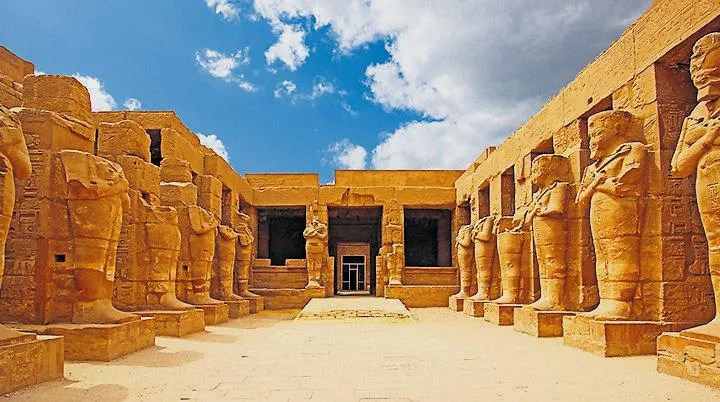
At the Temple of Karnak, on the banks of the Nile, is a remarkable corroboration of this biblical reference. In an inscription dating to 925BC, Pharaoh Shishak I (or Shoshenq) describes his military campaigns in the region, during the time of Rehoboam, and refers to biblical cities such as Megiddo and Gibeon. The inscription is damaged and incomplete (which could explain no mention of Jerusalem) but enough is preserved to correlate what we read in the biblical text with this Egyptian account.
Incidentally, if you watch the Indiana Jones movie Raiders of the Lost Ark, look out for the reference to Pharaoh Shishak as a claim is made that he took the Ark of the Covenant from Jerusalem. It’s a neat reference from a Hollywood blockbuster – but a more useful cross-reference was found by Oriental Institute of Chicago archaeologists in 1925 at Megiddo, where they unearthed a broken commemorative stone of Shishak. This was additional confirmation for the biblical and Egyptian record of the military campaign of 925BC.
So far, so good. References like these are part of over 50 Old Testament personal names that we are able to confirm from outside of the biblical text. However, some forms of well-meaning Christian apologetics are inadvertently undermining this evidence. In well-produced videos and glossy full-colour hardback books, claims are made that traditional dates for ancient history are badly flawed and that, with a shift of a few hundred years, better correlations can be made.
Caution: thin ice!
While there is some credible debate over the exact dating of ancient history, there are some cautions to keep in mind before we adopt a radically unconventional view.
First, despite years of debate these revised chronologies have never been accepted in mainstream scholarship.
Secondly, the proponents of these chronologies rarely agree with each other. For example, those who wish to deny that biblical Shishak is Pharaoh Shoshenq I (because of a revised chronology) propose Thutmose III, Rameses II or Rameses III as alternatives.
Thirdly, notice the unforeseen consequences of such shifting of dates. The correlation of biblical history with the ancient world does not simply rely on Egyptian records. There is a harmonisation of chronologies from elsewhere in the ancient world, including Babylon and Assyria. If you shift the dates of one ancient empire all the rest have to shift as well.
What may seem like exciting new claims in popular apologetics that rely on ignoring most scholarship are often built on thin ice and we should all tread carefully if we use them!