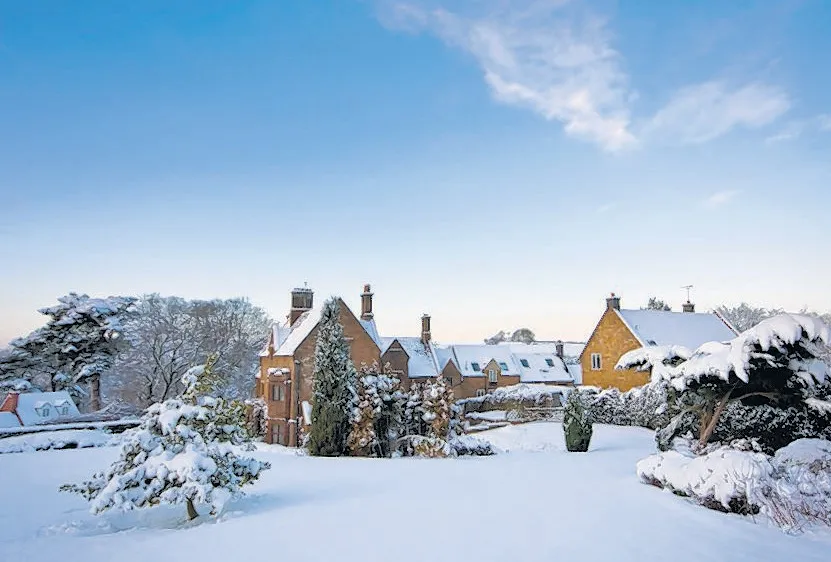
Chris Sinkinson reports from deepest Hampshire
Town centre churches tend to get all the attention!
They can show strong growth, engage with the latest cultural changes and become well known as popular places to visit. So most church growth literature focuses on urban evangelism. Much of that good advice is inappropriate in a rural setting.
What advice there is often focuses on a traditional Anglican parish church structure. P.G. Wodehouse’s caricature of the role of the country vicar as ‘the running of fetes, the governing of schools, and the extracting of money from the wealthy for charitable causes’1 remains valid.
There are 10,700 churches in rural locations in the UK, of which half are Anglican. However, many are facing closure and the overall number continues to decline.
Village church
For 12 years I have been pastor of an evangelical church in a village with a population of 3000. During that time we have had the usual mixture of challenges and encouragements, but have seen God grow this work despite our weaknesses and mistakes. The congregation has tripled in size, there has been a regular stream of conversions and we have completed a major million-pound building work.
I don’t think there are any secrets to church growth. Whether we are in an urban or rural environment, our challenges are always the world, the flesh and the devil and our tools are always gospel preaching, biblical lifestyle and regular prayer. However, what follows is my personal view on what has mattered in a rural ministry.
1. Reaching critical mass
We must be realistic about our numbers. Somewhere in the region of 30 people, with a mixture of ages, can really start to have an impact. Less than this and we may lack the critical mass to be a really effective church. We need to reach the point where we have at least some younger families, older servants and a variety of gifts in administration, teaching, music and pastoral ministry to be a viable church. Until we reach critical mass some very serious questions have to be asked. Is it time for our chapel to shut up shop?
This is a hard question to ask, and being able to honestly discuss it will help to reveal a congregation’s heart. Just prior to my ministry in Alderholt, a local chapel closed and amalgamated with ours, bringing four or five new members to our church, including one who became an elder. I thank God for the boldness of that handful of believers to be willing to join the witness of another small church and enable us to pool our resources.
2. Have clear vision
The danger in a small church is that it can be led by committee, or, worse still, by a couple of families who have a multi-generation loyalty to the building. A small church needs clear vision. Allow those who are leaders to have pastoral authority (Hebrews 13.17). Give them encouragement and allow them to lead. Aim for a consistent preaching programme. A church can be crippled by inconsistent teaching or mixed messages. It is possible that ‘all must have prizes’ but it is not possible for all to preach or lead! We lost a few people in our early years who did not share the vision of where God was taking us.
3. Be united in diversity
Don’t major on the minors. Town-based churches have the luxury of representing a sub-culture (perhaps, ‘We only use the King James Version!’ or, ‘Our church only sings the latest songs!’). In a town the membership is likely to be gathered from a wide geographical area and people may choose their church like they choose a supermarket. Rural churches do not have this unbiblical luxury.
We must be robustly evangelical but broadminded on non-gospel issues. The mode of baptism, extent of spiritual gifts and preferred Bible translations are matters to discuss and debate but not to get in the way of our unity in Christ. Some think this is a ‘lowest common denominator’ view of church. It is not. It’s the ‘highest’ common denominator. It is the gospel that unites us. And it is the eternal salvation of people in your village that is at stake.
4. Why should the city have all the good music?
Every member ministry should be evident in the rural church. However, this is perfectly compatible with the desire for excellence. Quality in music, well-put-together services, clear Bible teaching and attention to detail all matter. Good coffee after the service is worth having. Instant coffee in a thin plastic cup that melts in the hand is just not good enough.
One of our elders, who has a farm in the New Forest, hosted a barbeque last summer. It was in support of one of our young people who was raising funds for a mission in Bulgaria. A large field in beautiful surroundings was the enviable location. His tractor was available for children (under supervision!) to have fun operating. It made me think: rather than replicating what town-based churches may be able to do, let us draw from the rich resources of our rural community!
5. If we build it, they will come!
Having cleared away unnecessary activities, we should still plan for growth. A crèche and a Sunday school programme need preparation. If you don’t have one, then start to develop one. You may say: ‘But we have no kids!’ This is the typical chicken-and-egg dilemma. If you don’t have one, they won’t come. Or if they do, they won’t come back. So be ready.
Can an impromptu crèche facility be made available at a moment’s notice? Could a child-friendly sermon outline be available if children remain during your service? Do you avoid ancient jargon and ensure your meeting is easy for a non-Christian to follow? Do you have tracts available and offer a Christianity Explored course?
6. Real church, real community
All the members of your church have a mission field. It may be their neighbours, their place of work, or those they meet out dog walking or at the local stables. How can we simply, and honestly, share our faith with those friends? If we invite them along on a Sunday morning will they come and will they follow what is being said?
Our ministries have multiplied in recent years as we increasingly recognise areas of need. Groups offered to both young people and isolated older people find a ready reception. A lunch club for the village is oversub-scribed and holiday clubs always prove popular. There is a great deal of rural poverty not helped by poor bus services and lack of facilities. We at Alderholt work closely with the Trussell Trust and its food bank programme to try and engage with these needs.
7. Motivation for ministry
I do not think that there is a one-size-fits-all answer to church growth. My experience and church family is not yours. But the words of Paul are timeless: ‘I have become all things to all men so that by all possible means I might save some. I do all this for the sake of the gospel, that I may share in its blessings’ (1 Corinthians 9.22-23). When God calls us to a ministry in the country the work may sometimes seem slow, frustrating and overshadowed by urban success stories, but our rural communities also need the gospel.
On this final point I must add the need for long-term commitment. Rural communities are less transient than the urban. As a pastor I did not feel that my first few years were all that productive in our village. Significant change probably came after about five years. Be committed for the long term and do not be discouraged that the growth may be slow in coming!
Chris Sinkinson is pastor of Alderholt Chapel in Hampshire.