evangelicals & catholics
The Antichrist? Don’t ask tech boss Peter Thiel...

Leonardo de Chirico
Date posted: 17 Oct 2026
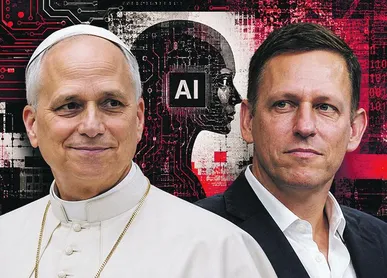
In March 2026, the Antichrist became a viral topic in the Italian media. The sudden surge of interest in apocalyptic themes stemmed from Peter Thiel’s secret and mysterious visit (to a certain extent, since everyone was talking about it) to Rome.
Thiel is one of the most powerful and wealthy figures in the global tech-finance scene. He is a co-founder of PayPal and Palantir, but he also aspires to be the leading thinker of an ideological movement that intertwines eschatological ideas with post-democratic and plutocratic political narratives.
evangelicals & catholics
A year with Pope Leo
Leonardo de Chirico
Date posted: 21 Jul 2026
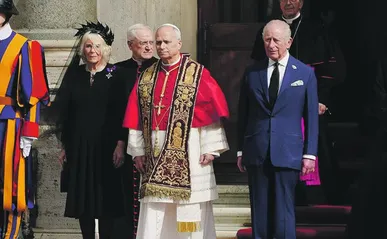
One year after his election in May last year, is it possible to discern some key themes of Leo XIV’s pontificate?
Here are three remarks.
evangelicals & catholics
Ecumenical or evangelical?
Leonardo de Chirico
Date posted: 6 Apr 2026
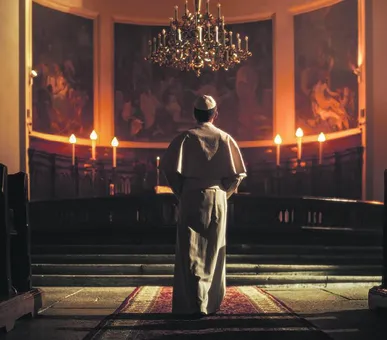
As expected, the highlight of the 1,700th anniversary of the Council of Nicaea was the ecumenical prayer presided over by Pope Leo XIV at the ruins of the church of St Neophytus in Nicaea (today the name of the town is Isnik), where the Council meetings were held in 325 AD.
The Pope was symbolically at the centre of the scene, the point of connection between everyone, flanked by the Patriarch of Constantinople Bartholomew and other ecclesiastical dignitaries seated behind him in lesser roles.
evangelicals & catholics
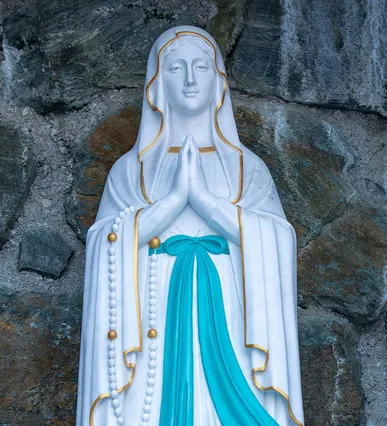
Mary, quite contrary ...
Leonardo de Chirico
Date posted: 8 Feb 2026
This is the final instalment of five articles in which I have been looking at Dan Strange’s five magnetic points – the five fundamentals that all human beings are looking for and to which they are magnetically drawn, and which can be seen in the lives of Catholics.
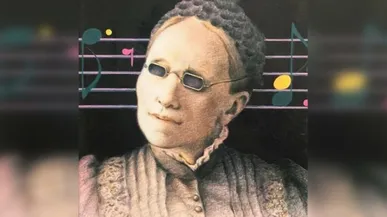
The fifth magnetic point is the reality of a higher power: a way to measure up to the supernatural. From a Biblical viewpoint, we must remember what Jesus said: “I am the light of the world. Anyone who follows me will never walk in the darkness but will have the light of life” (John 8v12). He is the Highest Power who became a human being we can know and love personally. He is also the only mediator between God and us (1 Tim. 2v5). He is the only one who died, rose from the dead and can intercede for us.
‘Blessed assurance’? Sadly not for Catholics
Leonardo de Chirico
Date posted: 20 Oct 2025
In my conversations with Catholic friends, I have found it useful to reference the five “magnetic points” expounded by British theologian Daniel Strange. There are five fundamentals that all human beings are looking for and to which they are magnetically drawn. Because of their universal presence in people’s lives, they can be seen in Catholics.
According to Strange, each religion responds in various ways to these five questions. Their responses are points of attraction for people to be drawn to them. The questions are:
evangelicals & catholics
Beware the mild view of sin
Leonardo de Chirico
Date posted: 3 Jul 2025
In my conversations with Catholic friends, I have found it useful to reference the five “magnetic points” expounded by British theologian Daniel Strange.
There are five fundamentals that all human beings are looking for and to which they are magnetically drawn. Because of their universal presence in people’s lives, they can be seen in Catholics.
evangelicals & catholics
Reaching Catholics: The need for a norm
Leonardo de Chirico
Date posted: 2 Apr 2025
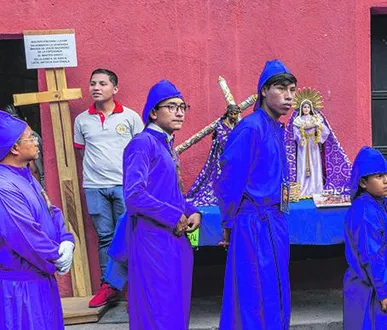
In my conversations with Catholic friends, I have found it useful to reference the five “magnetic points” expounded by British theologian Daniel Strange. There are five fundamentals that all human beings are looking for and to which they are magnetically drawn. Because of their universal presence in people’s lives, they can be seen in Catholics.
According to Strange, each religion responds in various ways to these five questions. Their responses are points of attraction for people to be drawn to them. The questions are:
evangelicals & catholics
Catholics and ‘totality’
Leonardo de Chirico
Date posted: 27 Dec 2024
In my conversations with Catholic friends, I have found it useful to reference the five ‘magnetic points’ expounded by British theologian Daniel Strange.
There are five fundamentals that all human beings are looking for and to which they are magnetically drawn. Because of their universal presence in people’s lives, they can be seen in Catholics too.
evangelicals & catholics
A new theological critique of Roman Catholicism
Leonardo de Chirico
Date posted: 1 Oct 2024
Opening a book by Henri Blocher is like being invited to a wedding dinner. It is a theologically and culturally rich, tasty, and challenging experience. So, the release of his latest book La doctrine de l’Église e des sacrements, vol. 1 (Vaux-sur-Seine: Edifac, 2023), is a feast of theology.
The book consists of two parts. In the first, Blocher expounds on the Biblical data, while in the second, he analyses three types of church conceptions and models: the Catholic, the Reformed (paedobaptist), and the Confessing (credobaptist). Attention will be concentrated on the section regarding Roman Catholic ecclesiology.
evangelicals & catholics
Aquinas for all?
Leonardo de Chirico
Date posted: 1 Jul 2024
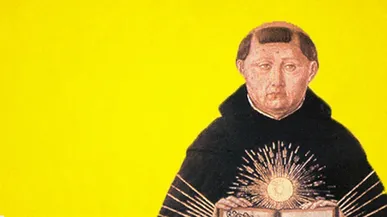
Thomas Aquinas died on 7 March, 1274, 750 years ago. This year and next (the eighth centenary of his birth) there will be special occasions to reckon with his legacy.
To approach Thomas Aquinas (1225– 1274) is to encounter one of the all-time giants of theology. Thomas is second only to Augustine in his influence on Western Christianity.
evangelicals & catholics
Mission impossible?
Leonardo de Chirico
Date posted: 1 Apr 2024
Evangelicals have known for centuries that Rome is a ‘mission field’.
It is no coincidence that as soon as the breach of Porta Pia opened in 1870 (when Rome was liberated from Papal power and the Pontifical State ended), Bibles and Christian tracts were immediately smuggled in to further the evangelisation of the city. Rome was a mission field because it prevented the free circulation of God’s word in the vernacular language and suppressed any attempts to bring about a Biblical reformation.
evangelicals & catholics
Catholic confusion?
Leonardo de Chirico
Date posted: 1 Feb 2024
The publication of Fiducia supplicans (18 December 2023) is stirring a hot debate. Some say that nothing changed; others say that all changed. The declaration came from the Congregation for the Doctrine of the Faith (the former Inquisition), with explicit approval from Pope Francis.
It provides ‘the possibility of blessings for couples in irregular situations and for couples of the same sex’ (n. 31). The Vatican document also says that there is no question of recognizing gay unions as marriage, that Catholic doctrine on marriage, sex and sexuality does not change, that the blessing is not a sacrament but a sacramental, that it has no liturgical official setting … all important, yet secondary, doctrinal clarifications that do not modify the main point. What had never been officialised in a magisterial document is now part of Rome’s teaching.
evangelicals & catholics
Relic religiosity
Leonardo de Chirico
Date posted: 1 Oct 2023
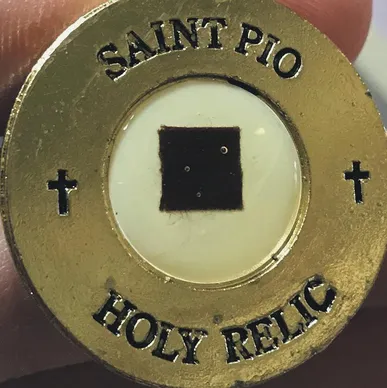
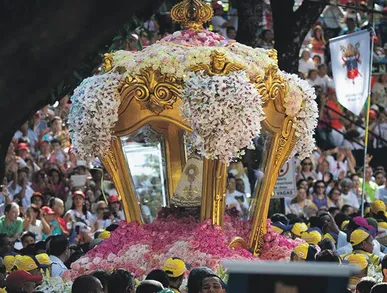
The veneration of relics is tragically alive and well.
This September, a relic of the heart of Saint Pio (Padre Pio) will be exposed for veneration in San Giovanni Rotondo (southern Italy), where Saint Pio (1887–1968) lived most of his life and is buried.
evangelicals & catholics
Tell a Catholic – part two
Leonardo de Chirico
Date posted: 1 Jul 2023
Because of the massive number of Roman Catholics around the world (1.3 billion people!), there is a high probability that all of us have neighbours, friends, family members and colleagues who are such.
Wherever you are in the world, Roman Catholics will likely to be your next door neighbour. Many Catholics believe and behave like most Western secular people do: without any sense of God being real and true in their lives. In other words, they are not born again, regenerated Christians.

evangelicals & catholics
Should evangelicals pray with Roman Catholics?
Leonardo de Chirico
Date posted: 1 Jan 2024
As I speak at conferences on Roman Catholicism worldwide and how Evangelicals should relate to it, a question often arises: ‘What about joint prayer? Could or should Evangelicals pray with Roman Catholics?’
Let me offer my rules of thumb as I wrestle with the issue.
evangelicals & catholics
Top tips for telling Roman Catholics about Jesus
Leonardo de Chirico
Date posted: 1 Apr 2023
We may well know people who are professing Roman Catholics. They may be friends, colleagues, family members, neighbours.
They may be practicing or just nominal. They may be disconnected from their church or serious about their loyalty to it. They may be interested in starting a ‘spiritual’ conversation or indifferent towards religious things. They may be consistent with what they profess to believe or have their own ‘fruit salad’ type of belief system where elements of Roman Catholicism are combined with Eastern religions or secular practices. That is to say that Roman Catholics can be very different people. How can we communicate the gospel to them?
evangelicals & catholics
Paradigm shift?
Leonardo de Chirico
Date posted: 1 Feb 2023
It was the historian Paolo Prodi (1932– 2016) who coined the expression ‘Tridentine paradigm’ to indicate the set of identity markers that emerged from the Council of Trent (1545–1563) and which shaped the Catholic Church for centuries, at least until the second half of the 20th century.
Prodi explored the self-understanding of the institutional Church of Rome which, in the wake of and in response to the ‘threat’ of the Protestant Reformation, closed hierarchical and pyramidal ranks up to the primacy of the Pope. The Church consolidated its sacramental system, regimented the Church in rigorous canonical forms and parochial territories, and disciplined folk devotions and the control of consciences. It promoted models of holiness to involve the laity emotionally and inspired artists to celebrate the new vitality of the Church of Rome in a memorable form.
evangelicals & catholics
Who might be the next pope?
Leonardo de Chirico
Date posted: 1 Dec 2022
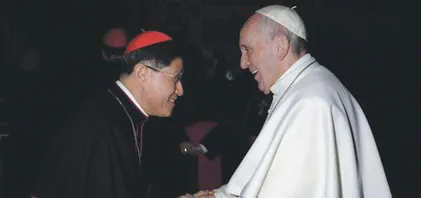
When the reigning pope creates new cardinals, it is because he is thinking not only of the Roman Catholic Church of today but, above all, that of tomorrow.
Cardinals are those who, in addition to assisting the pope with governing the universal Church, meet in conclave and elect the successor once the reigning one has died or, as in the case of Pope Ratzinger, resigns.
evangelicals & catholics
Eating God? A glimpse of Roman Catholicism
Leonardo de Chirico
Date posted: 1 Aug 2022
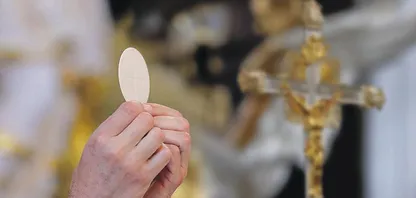
At first glance, it seems like a cannibalistic gesture, even if it is addressed to God and not to a human being. Yet it is the quintessence of Roman Catholicism.
We are talking about ‘eating God,’ an act that is at the heart of the Roman Catholic understanding of the Eucharist. Can Roman Catholicism really be thought of as the religion of ‘eating God’? Exploring it is Matteo Al-Kalak, Professor of Modern History at the University of Modena-Reggio, in his latest book, Mangiare Dio. Una storia dell’eucarestia (Eating God. A History of the Eucharist).
evangelicals & catholics
The liquid Pope?
Leonardo de Chirico
Date posted: 1 Jun 2022
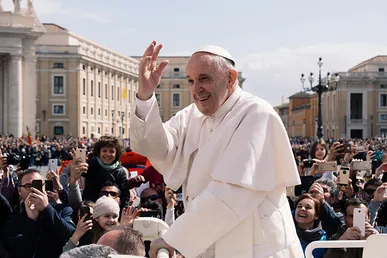
Since the sociologist Zygmunt Bauman coined the expression Liquid Modernity (2000), the adjective ‘liquid’ has been applied to almost all phenomena, e.g. liquid society, liquid family, liquid love, etc.
In our world, liquidity seems to describe well the vacillating, uncertain, fluid and volatile feature of contemporary life. To the already wide range of associations, liquidity has been added as a descriptor for a specific religious tradition, i.e. liquid Roman Catholicism. George Weigel, a conservative American intellectual, talks about it in a worried tone in his article ‘Liquid Catholicism and the German Synodal Path’ (First Things, 16 February 2022).
evangelicals & catholics
Puzzling over the Pope
Leonardo de Chirico
Date posted: 1 Apr 2022
Among the many puzzling things introduced by Pope Francis, his teaching (magisterium) is perhaps the level that was most impacted by the Argentinian Pontiff.
Many Roman Catholics (and also many non-Catholic observers), accustomed to associating the papal magisterium with an authoritative, coherent and stable form of doctrinal teaching, are perplexed if not dismayed by a Pope who seems both to say and not say, to argue for something and to undermine it, to state one position and then contradict it the next breath.
Rome & Mary: Fresh clarity, or further confusion?
"Roma locuta, causa finita est!" ("Rome has spoken, the issue is over").
This phrase taken from Augustine (Sermo 131.10) has often been used to highlight the solidity of the Roman Catholic authority structure and the finality of its decision-making process. Well, forget it.
After the Note of the Vatican Dicastery for the Doctrine of the Faith “Mater Populis Fidelis” (4 Nov), Rome has spoken (yes), but in doing so, is seemingly contradicting what was authoritatively said earlier, thus leaving the issue an open-ended one.