
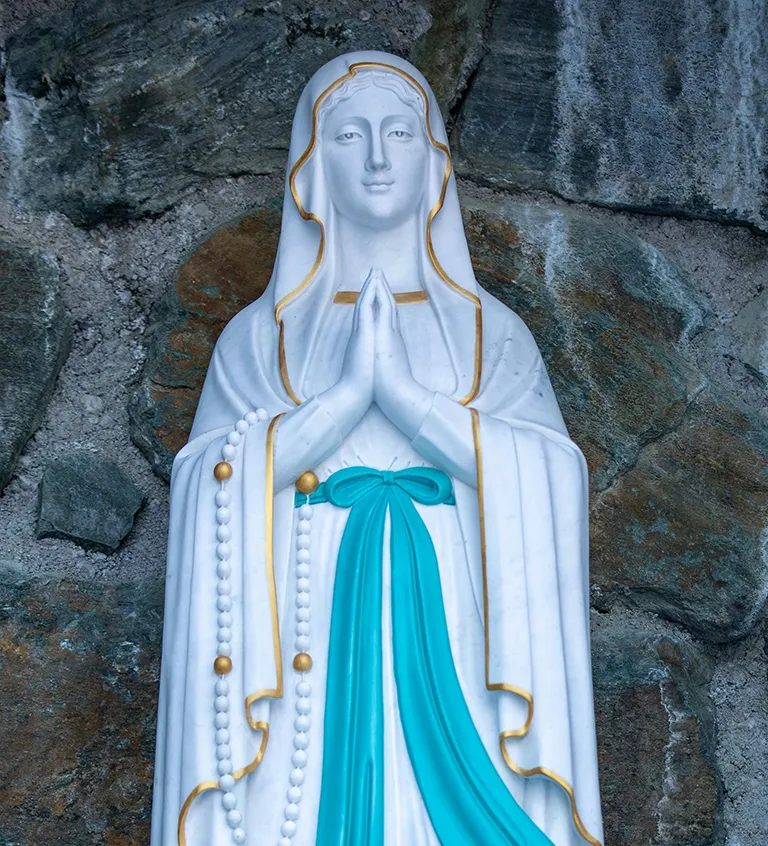
This is the final instalment of five articles in which I have been looking at Dan Strange’s five magnetic points – the five fundamentals that all human beings are looking for and to which they are magnetically drawn, and which can be seen in the lives of Catholics.
The fifth magnetic point is the reality of a higher power: a way to measure up to the supernatural. From a Biblical viewpoint, we must remember what Jesus said: “I am the light of the world. Anyone who follows me will never walk in the darkness but will have the light of life” (John 8v12). He is the Highest Power who became a human being we can know and love personally. He is also the only mediator between God and us (1 Tim. 2v5). He is the only one who died, rose from the dead and can intercede for us.
There is a sense in which Roman Catholics relate to the supernatural through Jesus Christ, at least to a certain extent. They formally recognise Him as the mediator. Practically though, that relationship happens through the mediation of Mary and the saints and in the context of ritual acts or ceremonies such as the “sacramentals”, e.g. blessed water, holy oil.
In the Roman Catholic faith, access to the supernatural (e.g. miracles, visions, the afterlife) is mediated by other channels than Christ alone and is often intertwined with superstitious practices like touching the tombs or relics of the saints.
In his address to the Congress of the Pontifical Marian Academy (6 September 2025), Pope Leo XIV said: “As the perfect cooperator with the Holy Spirit, she [Mary] never ceases to open doors, build bridges, break down walls, and help humanity to live in peace and in the harmony of diversity.”
Mary as “Co-Redeemer”?
In this view, Mary has a providential role in humanity’s history and destiny. It looks like an unduly inflated task for the Biblical Mary. The Bible teaches nothing about her role after her presence among the early Christian community in Acts 2. The Father’s providence is in the hands of the risen Son and applied by the Holy Spirit through living agents and multiple factors. Mary is among the myriad of Christians awaiting the resurrection, but has no providential role whatsoever. The Roman Catholic view is entirely based on non-biblical traditions accrued in time, having become central, and never reformed in the light of the gospel. While a recent Vatican document froze for the time being the possibility for Mary to be invoked as “Co-Redeemer”, she and the saints are always sought after for intercession and mediation of graces.
The Roman Catholic universe is full of co-mediators and sub-mediators who infringe the view that Jesus Christ alone is our Saviour and Lord. This participatory mediation also undermines the truth that it is faith alone in Jesus alone that opens the door to God the Father. All other ways to the supernatural need to be avoided because they don’t have Christ as mediator.
The gospel invites us to fear God alone who is the Lord of all, and presents Jesus Christ as the only one who died, rose again and is now seated at the right hand of the Father interceding for us. Jesus has conquered death (1 Cor.15 v55-57) and has given us a spirit not of fear but of power, love and sound judgement (2 Tim.1v7).



Rome & Mary: Fresh clarity, or further confusion?
"Roma locuta, causa finita est!" ("Rome has spoken, the issue is over"). This phrase taken from Augustine (Sermo …