Tell a Catholic – part two

Leonardo de Chirico  |  Features  |  evangelicals & catholics
Date posted:  1 Jul 2023
Share Add       
Tell a Catholic – part two

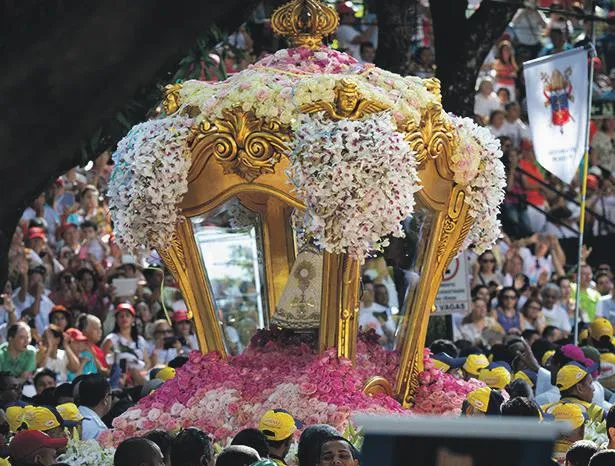
Crowds follow the statue of ‘Our Lady of Nazareth’ at Círio de Nazaré, the largest Marian procession in the world, every October in Belém, Brazil |

Because of the massive number of Roman Catholics around the world (1.3 billion people!), there is a high probability that all of us have neighbours, friends, family members and colleagues who are such.

Wherever you are in the world, Roman Catholics will likely to be your next door neighbour. Many Catholics believe and behave like most Western secular people do: without any sense of God being real and true in their lives. In other words, they are not born again, regenerated Christians.

Devout Catholics may be religious, yet entangled in traditions and practices that are far from the Biblical faith. This brings wide-open evangelistic opportunities. The gospel can and must be taken to them too. We must try to enter the Roman Catholic mindset and gently challenge it with the gospel.

In the first part of the article (en April 2023), we suggested two tips. Here is a summary:

Practical Tip #1: Don’t assume or rely on common language.

Roman Catholics share much of our vocabulary, but they understand it differently. Let the Bible define your language and lead your conversation: engage your Roman Catholic friends in Bible reading, Bible study, and Bible conversations as much as possible.

Practical Tip #2: Be prepared to wrestle with the exclusive nature of the gospel.

As you read or share Scripture together with your Catholic friends, interesting conversations will revolve around the sharp edges of the gospel. Be sure to clearly present the ‘Christ alone’, ‘faith alone’ and ‘grace alone’ teaching of the gospel.

Here are the other two suggestions on how to communicate the gospel to them:

Practical Tip #3: Be ready to show the personal elements of the Christian life

In reading the Bible together, make sure to share how the Bible impacts your life. In other words, combine Biblical reading with your personal testimony. This step will be very helpful because it will encourage your friends to move:

• Beyond religion: Nominal Roman Catholics tend to separate ‘normal life’ from religion. Make sure you carefully show the impact of the word on daily life, e.g. personal experience, work, church, and society.

• Beyond tradition: Roman Catholics tend to see religion as a set of practices to be repeated. Show the centrality of the relationship with Jesus who is the Lord of the whole of life.

• Beyond the divide of the clergy/laity: Many Catholics tend to consider religion as a responsibility of the clergy that lay people don’t have. Show the fact that we are all responsible to nurture our Christian life in personal devotion and witness.

Practical Tip #4: Be prepared to integrate personal witness and church life

Engaging in Bible reading and showing the power of the gospel in life cannot be limited to our individual lives only. Invite other Christian friends into the conversation to show how the gospel creates communities of followers of Jesus. Remember:

• Believing and belonging go together. Roman Catholics tend to emphasise the latter at the expense of the former. Show the reality that the gospel forms a new community (i.e. the church). Invite them to church to see what a community of the gospel looks like.

• The importance of the ordinances instituted by Jesus Christ for the church, especially the Lord’s Supper. Catholics are not used to ‘listening’ as their primary way of receiving a message; their religious mindset is shaped to see and experience through the other senses (e.g. sight, touch, taste) and in the context of community. Your local church services are wonderful evangelistic tools to invite your friends to see and experience.

Every conversion to Christ is a miracle. As you communicate the gospel to your Roman Catholic friends, pray that God will move in their hearts to open them to see the truth of the gospel and to respond to its message in obedience and faith.


Leonardo de Chirico is pastor of the evangelical church Breccia di Roma and Director of the Reformanda Initiative (www.reformandainitiative.org) which equips evangelical leaders to engage with Roman Catholicism to communicate the gospel.

Share
< Previous article| Features| Next article >
Read more articles on:   Catholicism
Read more articles by Leonardo de Chirico >>
Features
Ecumenical or evangelical?

Ecumenical or evangelical?

As expected, the highlight of the 1,700th anniversary of the Council of Nicaea was the ecumenical prayer presided over by …

Features
Mary, quite contrary ...

Mary, quite contrary ...

This is the final instalment of five articles in which I have been looking at Dan Strange’s five magnetic points …

Looking for a job?

Browse all our current job adverts

Search

Give a subscription

Our monthly newspaper is the perfect gift for those who love to think deeply

Give here