
The pain of loss and heartbreak

Mike Wakely
I have been married for 53 years, a happy and fulfilling life in partnership with a wonderful lady from Sweden. I met her on a summer Christian mission in France in 1967. We were going door to door selling Christian books and sharing the gospel. We were married in Sweden in April 1972, our name and the date of our marriage engraved on our simple gold wedding rings.
My wife fell ill in 2022 and commenced a slow decline in health both in body and mind. I became her full-time carer. We had made our vows “in sickness and in health” and it was my privilege to look after her, learning new skills in shopping, cooking, gardening, cleaning and many other household chores. The specialists and nurses of the NHS were superb. We installed a stair lift and I bought a bath lift, but she became weaker until one day (on my birthday) she fell and broke her leg. It led to five weeks in hospital and she finally died on 7 October 2025.
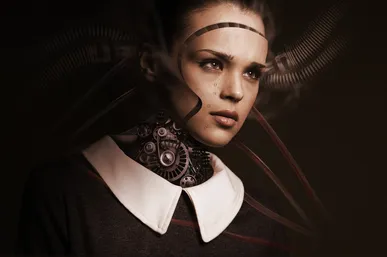
What are AI 'deathbots' and how should we respond?

Andrew Drury
It is natural for people to grieve for loved ones who have died. One of the ways that people have tried to cope is through artificial intelligence (AI), with the creation of "deathbots" (also known as "griefbots").
The process of developing deathbots includes inputting all the words that the deceased person would use into the computer programme by using personal material such as e-mails, texts, voice notes, and social media posts. One limitation is the inability to portray the nuances made in communication (such as stress or tone), so the resultant speech can be monotone. Nevertheless, while the interaction may lack authenticity, the emotion for the bereaved person will be undoubtedly real for there will be a psychological buy-in.
the Bible in action
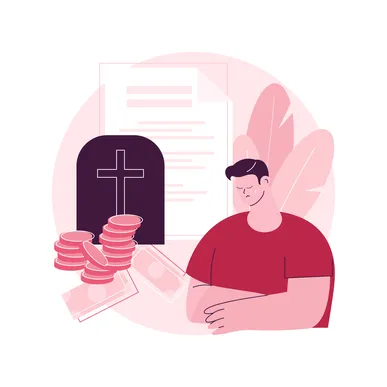
Death and money

Martin Horton
“When he’d died, I didn’t like people saying ‘Oh, he’s passed’. Or ‘You’ve lost your dad,’ as though I’d let go of his hand in the supermarket.”
That was Simon Armitage, the Poet Laureate, speaking on Radio 4 about the sudden death of his father.






What can we learn from death doulas?
There is increasing interest as to what death doulas (who are also called end-of-life doulas, soul midwives, death coaches, dying guides, death midwives, and palliative care doulas) do. For example, there's this article on the BBC website; Nicole Kidman and Ruby Wax are reportedly undergoing training for this role, whilst Davina McCall has announced that she is planning to do so when she retires from her television activities.
Like birth doulas, who support mothers during pregnancy, childbirth and early parenthood, death doulas support people at the end of life. They help the dying person and their family in the final months and may be present at death, assist with funeral arrangements, and sometimes simply offer company.