
pastoral care
Why we shouldn’t assume

Steve Midgley
“Do not assume” is a rule that can serve us well in pastoral care. It is an exhortation not to jump to conclusions. That we should not let prior assumptions determine the view we take of the person or situation before us.
There is, of course, a counter balance. Gaining experience in pastoral ministry is valuable. The more people we have met who struggle with anxiety or addictions, or anything else really, the better we will understand those struggles and the wiser we will be in giving support.

pastoral care
Out of our depth?
Steve Midgley
When caring for others, it’s important to know when we are out of our depth. In most lines of work, there will be limits to a person’s competence. On a day-to-day basis, I am happy finding my way around my laptop. But that doesn’t make me competent to open the Windows Registry and start making changes. (Actually, I wasn’t even sure I meant the Windows Registry. I had to ask someone if that illustration worked!)
So, what about pastoral care? In our efforts to support someone, might we might find our way into the pastoral equivalent of their Windows Registry and not even know it? Is that a real danger and, if so, how do we avoid it?

pastoral care
The darkest of all sins?
Steve Midgley
What would you identify as the most damaging and disturbing of all sins? Of all our failings and missteps, what has the deepest, darkest and most long-lasting negative impact?
There are, sadly, many contenders. Personally, I think a strong case can be made for the sin of lying – those times when we deliberately mislead others by communicating something false. It’s probably not the most obvious choice. It’s also a sin we trivialise – referring to “little white lies” and being “economical with the truth” – phrases which suggest there are lies that are necessary, perhaps even loving.

































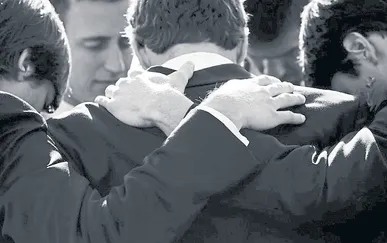







When trigger warnings are necessary
I suspect there is some confusion about trigger warnings. A confusion that exists in Christian circles as well as in wider society.
Increasingly, trigger warnings are being described – and used – as if they were a kind of worldwide version of film certification: "Today’s Old Testament reading is Certificate 12A, but the New Testament reading has a U certificate and is suitable for all." Now, if that is what we were dealing with – and if the basis for a higher certification was simply because the content was contrary to liberal Western thinking – then it’s not hard to see the problem.