Human beings are historical beings. Our lives are inextricably tied to the past, our own immediate past obviously, but also that of other humans. As Gilbert Beers, a past editor of Christianity Today, has noted: “We owe much to many whom we have never met.”[1]
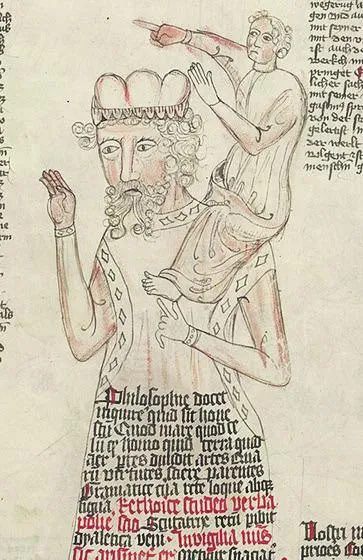
Beers goes on: “We live in a throwaway society; we dispose of things we consider a burden. My concern is that we do not add our predecessors to the collection of throwaways, carelessly discarding those who have made us what we are.” And as the 17th-century polymath Isaac Newton (1642/3‒1726/7) said in a letter to his scientific rival Robert Hooke (1635‒1703): “If I have seen further it is by standing upon the shoulders of giants.”[2] The study of church history informs us about our predecessors in the faith, those who have helped shape our Christian communities and thus make us what we are. Such study builds humility and modesty into our lives, and so can exercise a sanctifying influence upon us.
A significant part of my conversion was the faithful witness of a Baptist community in Hamilton, Ontario – Stanley Avenue Baptist Church – and of its pastor at the time, Bruce Woods (1931‒2022).[3]