AI’s assault on the press

Jenny Taylor  |  Features
Date posted:  2 Apr 2026
Share Add       
AI’s assault on the press

Photo: iStock

My father had a saying, an old Suffolk “saw”: “While fools go prating far and wide, we stops at ’ome, my dog and I.”

There is a certain truth in that. The world seems to be getting more “foolish”, and I am less convinced that prating far and wide – a public life of activism for its own sake, be it political or journalistic – makes much difference to the betterment of the human condition. And anything with “global” in its name makes me run for the hills.

For isn’t it in quietness – at ’ome – in the local places and with the little ordinary things – that goodness happens? And where goodness happens, change looks after itself.
A sense of futility hangs heavy over public and political endeavour right now. Above all, big media tech seems self-defeating. And AI is making things worse.

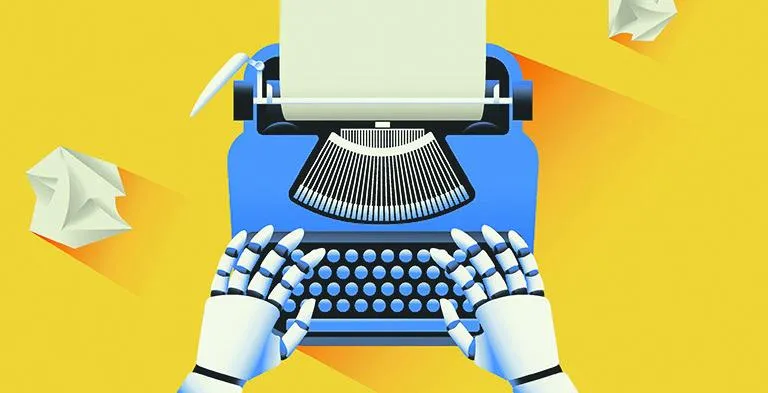
The journalism trade magazine Press Gazette (PG) has uncovered a fresh tranche of likely fake and AI-generated “experts” making their way into UK publications on subjects as diverse as health, holidays and sex advice. PG looked at 50 pieces each from five UK newsbrands which quoted “experts” and found that at least 10% of those experts were fake.

The Sun, Daily Express, Mirror, Daily Mail and Daily Star in late 2024 and 2025, all quoted “experts” who either did not exist, were impossible to track down/verify online, or were not named in the first place.

An organisation called NeoMam Studios helped PG with its research. Their managing director Alex Cassidy said bad actors were “abusing new technology” and becoming “one of the biggest risks to journalism”.

Busyness explained some of the vulnerability to this. And, uncomfortably the acceleration of AI fakery was promoting “an inherent failure of trust”.

Expertise needed to be treated as something to be proven not just stated, he added. What goes around comes around. A thousand years ago it is said that a Welsh monastery never trusted a message unless they had spent two weeks with the messenger first. Which is why I’m trying to reassess what matters amid the welter of rubbish assailing us.

Staying at ’ome may be a bit extreme, but isn’t it in the ordinary that truth reveals itself? Isn’t it better to tend the metaphorical vegetable patch with the dog, and sing the praises of the God I see in the everyday world around me?

This attitude began to seep into my soul about ten years ago when I started to realise that everyone has an agenda, and that few people are swayed by anything they hear because they listen through such thick filters of ignorance, prejudice, fear and fatigue. Now add to that the welter of distraction and deception. So I left London, retired to Suffolk and literally grew potatoes, while I looked after my dear father, of whom I had seen too little. Greed and power, fear and misogyny seemed to be winning the day then, and it’s surely worse now.

But real journalism survives – “public-interest journalism” – by starting at the bottom, and that’s where the Reformation pamphleteers started, as I have discussed in my book. After many slum tours of Asia for missions, seeing real change happen and lives transformed, I used to say that God is at the bottom of the world, bringing His Kingdom in. Which is where journalism began – and will begin again.

From a new online news hub in Suffolk to a community magazine in Govanhill, Glasgow, young media entrepreneurs, often with their own money, are rebuilding.

Like Oliver Rouane-Williams in Ipswich, they believe passionately in “strong, free, independent, local media that fights tirelessly for a better [town]”. He has sited the Ipswich.co.uk hub right in the heart of the town, off the busiest, most crime-ridden street, unfazed that a brick was chucked through the window before it was even open.

This is where journalists should be, and where journalism was born: rooted in prophecy in the time of the Pharaohs.

The prophets spoke up as outsiders, interpreting the will of God for the welfare of the nation. Journalism is the “prodigal son”, as Marvin Olasky put it, of those Hebrew prophets.

The prophets were not the spokesmen of the elite – and, if they were, they pretty soon got their comeuppance. They were the spokesmen to the King about the condition of the ordinary people on behalf of truth.

Big tech is counter-productive and we should regard it as mostly demonic, warring against truth.

As we retrain ourselves in discernment, we must wind in our focus, back to the local and the little, the abandoned particulars of place and heritage where God dwells. Christ will then lead us back into all the truth we need, helping to rebuild the nation.

Let the ordinary be in your hand:
Hold it open and imagine a bird landing,
Offering all it possesses in trust
To come to you.
Learn to look for the little things
That weigh nothing at all
But fill the heart with such light
They can never be measured.
1

  1. Poem by Christian poet Kenneth Steven, and re-published with permission of The Retreat Association.
Share
< Previous article| Features| Next article >
Read more articles on:   Artificial Intelligence
Read more articles by Jenny Taylor >>
Features
From Pentecost to press

From Pentecost to press

It is very easy to take the media for granted. To treat it like the weather. Or like a whining …

Comment
The BBC: What's wrong, and how it might be fixed

The BBC: What's wrong, and how it might be fixed

When top BBC journalist and Christian Robin Aitken put together a dossier of what he felt were glaring examples of …

About en

Our vision, values and history

Read more

Give a subscription

Our monthly newspaper is the perfect gift for those who love to think deeply

Give here