A new season starts soon, bringing with it a fresh school year. New classes, new schools, new friends. After a long hot summer, with protests across the country, increased restrictions on social media, and the narrative around migrants and the Middle East almost constantly across the front pages, can we expect a new narrative to emerge over the autumn?
My hunch is that we cannot. As more and more news becomes available across all kinds of online mediums, our newspaper (and wider media) industry comes under ever-increasing pressure to showcase what sells.
Weaponisation of the media
Sadly, what sells is rarely positive stories (this august publication being a notable counter-cultural exception!) Moreover, as temperatures increase and points of view get more extreme, accusations of the weaponisation of the media tend to fly about. How is a piece framed, what has been selectively omitted, how have heartstrings been pulled? Being completely objective is perhaps impossible (especially when attempting to craft a piece designed to generate comment!) but as the think tank Theos reminds us ‘nobody stands nowhere’.
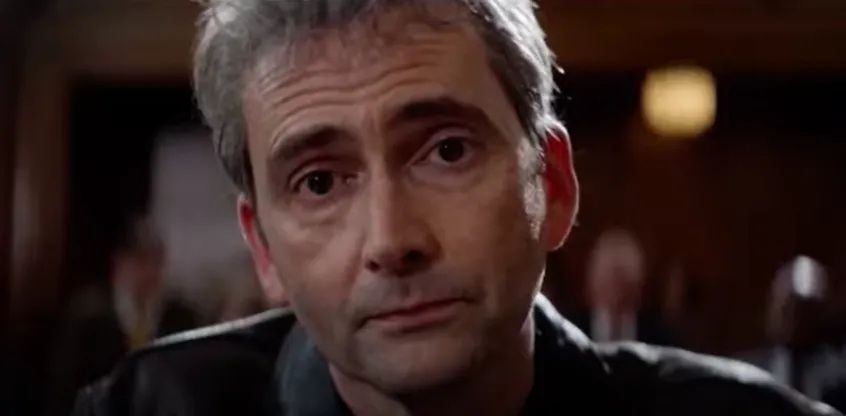
One thing that we can expect to see this autumn is the media providing us with some focus on… itself ! ITV will bring us The Hack, depicting the unravelling of the News of the World phone-hacking scandal, starring David Tennant, Robert Carlyle, and Toby Jones (everyone’s favourite justice-drama actor) as former editor-in-chief of The Guardian, Alan Rusbridger.
The phone-hacking scandal was huge – nearly 4,000 celebrities, politicians and crime victims whose phones may have been hacked; this is expected to be what is now called “appointment” television (where viewers intentionally set aside time to watch a programme at its scheduled broadcast time).
Over on Sky/Now will be The Paper, a mockumentary in the style of The Office (still inspiring wedding dances across the world) which will be showing us the struggles of local journalism by sending up a historic Midwestern newspaper and the publisher trying to revive it. The reporters are volunteers, and many of us in the church will know from experience how hard it can be to manage volunteers successfully at the best of times.
Apple TV will also bring us the fourth series of The Morning Show; with the strapline “In a world rife with deepfakes, conspiracy theories and corporate cover-ups – who can you trust? And how can you know what’s actually real?” This looks likely to include the impact of AI on journalism this time.
It seems unlikely that watching shows like this is suddenly going to give us all lots more sympathy for those in the media. But watching the legal wrangling around the phone scandal, and the very real (if sitcom-ed up) struggle to sustain local journalism, may help us to think again about working in the media as a calling.
Jack Thorne, the writer of Adolescence, and a showrunner on The Hack, described the phone-hacking scandal as “a fight for the truth that really shocked me. That is why it matters to tell this story now in an age where the truth seems more in danger than ever”.
Christians in the media
In a world where truth and trust can feel in short supply, it is more important to have Christians in the media than perhaps ever before. We may not see a new narrative on the front pages of our national newspapers anytime soon. The autumn may come and go leaving us feeling increasing despair at what is happening across the world, and also how it is being depicted in our media. We can pray for God to powerfully transform the geopolitics of our world. But we can also pray for Him to call Christians to work in and with the media – and for Him to strengthen those who serve Him in this way as they try to live out that call. This is likely to be a hard, long season for them. It might be tempting for us to judge, when what they need most of all is our prayers.
Churches, do you really know your communities?
Who is missing from your church?Who feels at home in your church? And who doesn’t?