Paradigm shift?

Leonardo de Chirico  |  Features  |  evangelicals & catholics
Date posted:  1 Feb 2023
Share Add       
Paradigm shift?

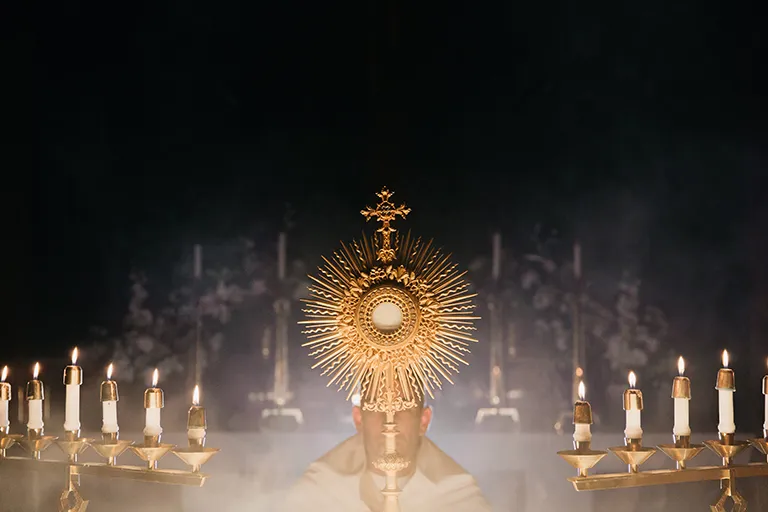
It was the historian Paolo Prodi (1932– 2016) who coined the expression ‘Tridentine paradigm’ to indicate the set of identity markers that emerged from the Council of Trent (1545–1563) and which shaped the Catholic Church for centuries, at least until the second half of the 20th century.

Prodi explored the self-understanding of the institutional Church of Rome which, in the wake of and in response to the ‘threat’ of the Protestant Reformation, closed hierarchical and pyramidal ranks up to the primacy of the Pope. The Church consolidated its sacramental system, regimented the Church in rigorous canonical forms and parochial territories, and disciplined folk devotions and the control of consciences. It promoted models of holiness to involve the laity emotionally and inspired artists to celebrate the new vitality of the Church of Rome in a memorable form.

With the same paradigm, Rome also faced a second push coming from the modern world: that of the Enlightenment (on the cultural side) and the French Revolution (on the political side) between the 18th and 19th centuries. With the same set of institutional, sacramental and hierarchical markers that emerged from the Council of Trent, Rome defended itself from the attack of modernity and counter-attacked. The Tridentine paradigm exalted the Church of Rome and condemned its enemies. It established who was in and who was out. It defined Roman Catholic doctrine and rejected ‘Protestant’ and ‘Modernist’ heresies. According to the Tridentine paradigm, it was clear who Catholics were, what they believed, how they were expected to behave, and how the Church functioned.
No U-turns but…

Then the world changed, and Roman Catholicism changed with it. The Tridentine paradigm gradually eroded with the Second Vatican Council (1962–1965), not in a frontal and direct way, but following the path of ‘development’ and ‘aggiornamento’ [updating] that Vatican II promoted. Of course, Rome does not make any U-turns or swerve sharply. Trent is still there, and the dogmatic and institutional structures of the Tridentine paradigm still stand. The Roman Catholic Church has begun to see its limits, wishing to overcome them by embracing a new posture in the world.

Blurring the distinctives

The Pope who seems to perceive the Tridentine paradigm in negative terms is Pope Francis. His invectives against ‘clericalism’ are directed at Roman Catholic people and practices nourished by the Tridentine spirit. The typical distinctions of the Tridentine paradigm are rendered fluid and are progressively dissolved: clergy/ laity, man/woman, Catholic/non-Catholic, heterosexual/homosexual, married/divorced, etc. If the Tridentine paradigm distinguished and selected things and people, Francis wants to unite everything and everyone. The first paradigm separated Roman Catholicism from the rest; this Pope wants to mix everything. The first worked with the pair white/black, inside/outside, faithful/infidel. Francis sees the world in different shades of grey and welcomes everyone into the ‘field hospital’ that is the Church.

Before, there were heretics, pagans and excommunicated; now we are ‘all brothers’.

It is not sin, judgment and salvation that occupy the discourse of the Church, instead its message today touches on themes such as peace, human rights, and the environment.

Synodal body blows

With its calls for the extension of the priesthood to women and the blessing of same-sex couples, the German ‘synodal path’ is effectively striking the Tridentine paradigm. The first results of the wider ‘synodal process’ in European dioceses are attacks on the Tridentine paradigm. It is true that there are conservative circles (in the USA in particular) who claim the Tridentine paradigm and would like to revive it. However, the point is that Roman Catholicism globally is at a crossroads. Has the Tridentine paradigm reached the end of its journey? If so, what will be the face of Roman Catholicism tomorrow? Neither the Tridentine paradigm nor the various synodal paths dear to Pope Francis indicate an evangelical turning point in the Church of Rome. The Church of Rome was and remains distant from the claims of the Biblical gospel.

Share
< Previous article| Features| Next article >
Read more articles on:   Catholicism
Read more articles by Leonardo de Chirico >>
Features
Ecumenical or evangelical?

Ecumenical or evangelical?

As expected, the highlight of the 1,700th anniversary of the Council of Nicaea was the ecumenical prayer presided over by …

Features
Mary, quite contrary ...

Mary, quite contrary ...

This is the final instalment of five articles in which I have been looking at Dan Strange’s five magnetic points …

New here?

Register and get three free articles each month!

Register

Looking for a job?

Browse all our current job adverts

Search