
When William Carey drew up his paradigm-changing book An Enquiry into the Obligations of Christians to Use Means for the Conversion of the Heathens in 1792, he included a mini-history of missions.
He cited examples of missionaries passionate for the expansion of the rule of Christ. In this mini-history, he referenced a remarkable missions-minded community, the Moravians. Carey’s words about this 18th-century body of believers are tantalisingly brief, but indicative of their influence upon him. ‘When I came to evangelism and missions,’ Carey noted, ‘none of the moderns have equalled the Moravian Brethren in this good work’.
At the close of the 1720s, under the leadership of Nicolaus Ludwig von Zinzendorf, a wealthy aristocrat and landowner in Saxony whose devotion to Christ dated from his early years as a child, the Moravians had experienced a powerful revival. They would later term it their Pentecost. And even as the Biblical Pentecost propelled the early church into mission, so did the Moravian Pentecost.
To the ends of the earth
From Saxony, where the Moravians were based, they sent out missionaries literally to the four corners of the earth: to the West Indies in 1732, to Greenland in 1733, to Lapland and Georgia in 1734, to Surinam in 1735, to South Africa in 1737, to Algeria in 1739, to the North America, Sri Lanka and Romania in 1740, and to Persia in 1747.
In the 19th-century, Anglophone world Carey was lionised as the father of modern missions. He knew better: he took his inspiration from the Moravians. By Zinzendorf’s death in 1760 no fewer than 226 missionaries had been sent out by this relatively tiny Christian community.
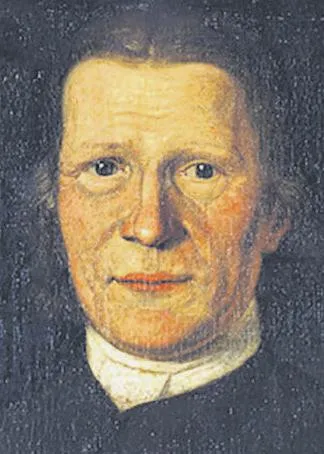
David Zeisberger
Here is one story from the early annals of these remarkable Christians. Early in 1745 a couple of Moravians were arrested by English soldiers in what is present-day New York state, but what was then the American frontier and fiercely-contested territory between the British and the French in their desire to dominate North America. They were incarcerated for 51 days in Albany on the charge of spying for the French.
They had been seized in a Mohawk village on what is now the Mohawk River, where they were seeking to learn the Mohawk tongue. When the Governor of New York, George Clinton, examined them, he specifically asked them why they wanted to learn this language. David Zeisberger, one of the two men, replied that eventually they wanted to be able ‘to preach among the Indians the gospel of our crucified Saviour, and to declare to them what we have personally experienced of His grace in our own hearts’.
In the course of divine providence, Zeisberger would spend his life—he lived into his 80s – preaching a crucified Saviour in the languages of the Onondaga, Iroquois, and the Delaware. His life – now 300 years exactly since his birth in Moravia – is an amazing model of missionary energy and passion.
The view of William Wiberforce
Looking back on this missions outburst, William Wilberforce, the great English evangelical politician and social reformer, could say of the Moravians at the end of this first century of the modern missionary movement: ‘They are a body who have perhaps excelled all mankind in solid and unequivocal proofs of the love of Christ and of ardent, active zeal in His service. It is a zeal tempered with prudence, softened with meekness and supported by a courage which no danger can intimidate and a quiet certainty no hardship can exhaust’.








Should the CofE pay slavery reparations?
During a recent trip to Ghana, Archbishop of Canterbury Sarah Mullally renewed her commitment to a £100 million reparation fund …