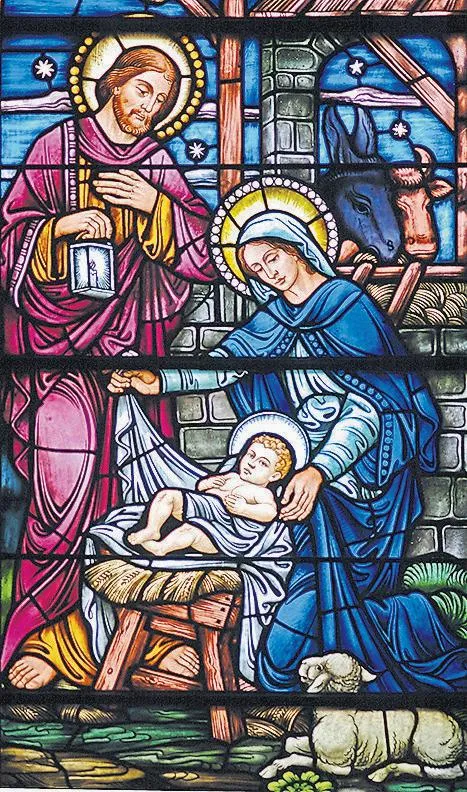
Still under the mantle of Mary?

Leonardo de Chirico  |  Features  |  evangelicals & catholics
Date posted:  1 Aug 2019
Share Add       
Still under the mantle of Mary?

photo: iStock

At the end of September 2018, in the midst of the annus horribilis for the Roman Catholic Church (with the deflagration of the sexual abuses and the growing spiral of inner conflicts within the curia), Pope Francis called his people to pray to Mary in order to ask for her protection.

He asked the faithful to conclude the Rosary with the ancient invocation Sub tuum praesidium (We fly to Thy patronage). The full Marian invocation is recited as follows:

We fly to Thy protection, O Holy Mother of God. Do not despise our petitions in our necessities, but deliver us always from all dangers, O Glorious and Blessed Virgin.
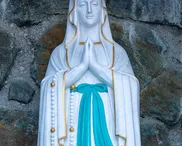
This Marian prayer, from a third-century Egyptian papyrus, ascribes to Mary functions that in the Bible are ascribed to God. Where does this prayer come from? And why is it part of the liturgical and devotional life of the Roman Catholic Church now?

The growth of Mariology

A recent book – Stephen J Shoemaker, Mary in Early Christian Faith and Devotion (New Haven, CT; London, UK: Yale University Press, 2016) – helps us to answer. ‘While there is practically no evidence of any Christian devotion to Mary prior to 150CE, a first boost to the process came from the Protoevangelium of James, a late-second-century biography of Mary. Here she becomes “the epitome of sacred purity, as perfect holiness embodied in a human being”.’

Particular stress is put on her virginity as ‘an emblem of her own sacred purity’ rather than a sign of the divine origin of the Son. For evangelicals wanting to ground spirituality on the canonical Scriptures, this in an important point to underline. Historically speaking, Marian devotions were fuelled by writings that were never considered as inspired and yet have played a formidable influence in generating the Marian cult.

A heterodox backdrop

This is the background out of which the Sub tuum praesidium prayer comes from. According to Shoemaker, this ancient papyrus suggests that ‘Marian piety initially emerged within a more popular and less culturally-elite context.’

Moreover, the fact that the prayer does not mention the Father or the Son may indicate that it may have been linked with ‘heterodox groups within early Christianity’.

The central chapters of the book are dedicated to a fascinating analysis of an important source, The Book of Mary’s Repose, that opens the tradition of the Dormition narratives. Here, Mary is revered for ‘her knowledge of the cosmic mysteries and her influence with her son’ and capable of receiving intercessions, performing wonders, and making apparitions.

The heterodox backdrop of the tradition depicts Jesus as the Great Cherub of Light, a typically gnostic title. The six books of the Dormition Apocryphon reinforce this insurgent tendency of making Mary the centre of a cult.

Mariology: an evangelical analysis

The historical and literary evidence persuasively presented by Shoemaker shows that Mariological devotions originated in heterodox (read ‘gnostic’) milieux and were later theologised and integrated in the corpus of the Mariological doctrine of the Church. The book stops at a careful historical analysis, but the evangelical theologian wants to go further in saying something more that is backed up by historical evidence.

Contrary to the idealised Roman Catholic view of the development of doctrine as organic unfolding of the truth (from John Henry Newman onward), Mariological ideas and practices were added from the outside and allowed to penetrate the faith of the people. While Church Fathers like Ireaneus were painstakingly fighting against the heresies of Gnosticism in order to protect the integrity of the Christian faith, other sectors of the church were being infiltrated by gnostic deviations through Marian devotions. Gnostic influences that were thrown out of the door of theology re-entered through the window of devotions, without the Church as a whole exercising enough biblical discernment to understand what was happening. Unfortunately, the lex orandi (in this case soaked in Gnosticism) eventually affected the lex credendi (which did not have enough biblical antibodies to reject them).

The fact that the reigning Pope still calls his people to pray the Sub tuum praesidium Marian invocation shows the deep and ongoing influence of this unbiblical framework of thought in the Roman Catholic Church.

Share
< Previous article| Features| Next article >
Read more articles by Leonardo de Chirico >>
Comment
Rome & Mary: Fresh clarity, or further confusion?

Rome & Mary: Fresh clarity, or further confusion?

"Roma locuta, causa finita est!" ("Rome has spoken, the issue is over"). This phrase taken from Augustine (Sermo …

Features
‘Blessed assurance’?  Sadly not for Catholics

‘Blessed assurance’? Sadly not for Catholics

In my conversations with Catholic friends, I have found it useful to reference the five “magnetic points” expounded by British …

Looking for a job?

Browse all our current job adverts

Search

Need to advertise?

We can help you reach Christians across the country

Find out more