The hymns of Isaac Watts and the conversion of George Thomson
George Thomson’s dates are 1698–1782.
He was the Anglican vicar of St Gennys, a windswept village in North Cornwall perched atop cliffs overlooking the Atlantic. Though an ordained minister in the Church of England, Thomson had come to St Gennys with little interest, if any, in spiritual matters and was one whose life was characterised by ‘debaucheries’ of various sorts. He was typical of far too many Anglican ministers of that day.
Awakened by a dream
In 1733 or 1734 Thomson was awakened from his benighted state by a dream, which was repeated three times in one night with ever-increasing terror. In the first instance of the dream, he was told: ‘This day month, at six in the afternoon, you must appear before the judgment seat of Christ, to give an account of the dreadful abuse of all your talents, and the injuries done the souls committed to your care.’ Thomson woke in alarm, but soon shrugged off the dream with the thought: ‘Glad I am it was no more than a dream; I am no old woman to mind dreams’ and promptly fell back asleep. The dream was repeated ‘with greater circumstances of terror,’ and Thomson awoke again, this time deeply shaken. After much tossing and agitation, he was able to go back to sleep once more, only to be awakened after the dream had been repeated yet a third time.
Now terrified and convinced that he had but a month to live, Thomson called together his friends and the leading individuals in the parish. He recounted his dream to them, told them to find someone to fill the pulpit, and to return to conduct his funeral in a month.
An evangelical conversion
Thomson then shut himself up in his home and for two weeks was in deep despair, since he was persuaded that it was not consistent with God’s honour for him to forgive one who had brought such dishonour upon his holy name. After a fortnight of such distress, however, Thomson was led by the Spirit of God to read Romans 3, where he clearly saw that God could be glorified in his salvation, through the propitiation of Christ’s most precious blood.
Thomson returned to his pulpit and began to preach those doctrines which in a few years would be the hallmark of the Evangelical Revival: the atoning death of Christ and the imputation of his righteousness, the necessity of the new birth, and the absolute need of the Holy Spirit’s power and presence to begin and carry on a saving change in heart and life.
Watts’s hymns: a means of grace
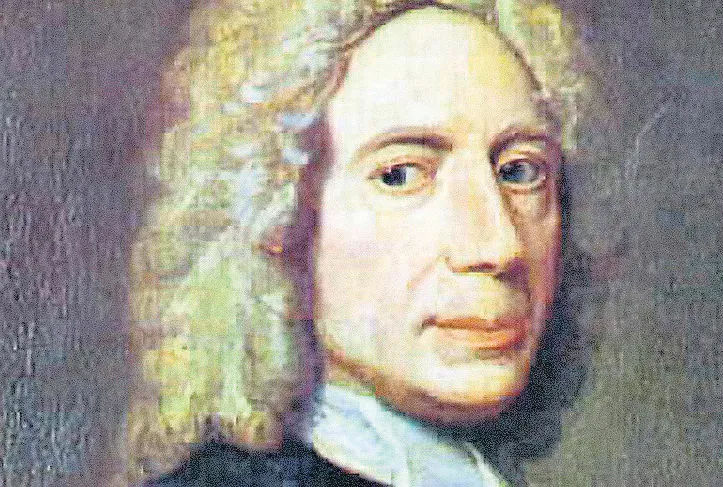
Soon after his conversion Thomson discovered the hymns of a certain well-known hymn-writer who, through the medium of his hymns, became something of a spiritual mentor to Thomson. The well-known hymn-writer? Isaac Watts (1674–1748).
Writing to Watts in 1736, Thomson said:
Poet, Divine, Saint, the delight, the guide the wonder of the virtuous world; permit, Reverend Sir, a stranger unknown, and likely to be for ever unknown, to desire one blessing from you in a pri- vate way. ‘Tis this, that when you approach the Throne of Grace, and lift up holy hands, when you get closest to the Mercy-seat, and wrestle mightily for the peace of Jerusalem, you would breathe one petition for my soul’s health. In return I promise you a share for life in my unworthy prayers, who honour you as a father and a brother (though dif- ferently ordered) and conclude myself, Your affectionate humble Servant, George Thomson.
It must have been something of a surprise to Watts to have received this ‘gushing’ letter of adulation from an Anglican minister. Thomson’s remark about his being ‘differently ordered’ reflects the difference in church communion between writer and recipient: Watts was a Dissenter and Thomson an Anglican. As such, the effusive, and by our standards far too flowery, praise that Thomson lavishes on Watts is particularly noteworthy.
In fact, Thomson confesses, Watts’s hymns were the medium by which God made him a ‘father’ and mentor in the Christian life of the Anglican vicar. Thomson was not the only one Watts mentored through his hymns. Countless others who have sung Watts’s hymns have blessed God for the life of this brother in Christ and his hymns. For Thomson, Watts’s hymns were nothing less than a means of grace.