Setting the record straight on climate 'alarmism'

Paul Kunert  |  Comment
Date posted:  25 Nov 2025
Share Add       
Setting the record straight on climate 'alarmism'

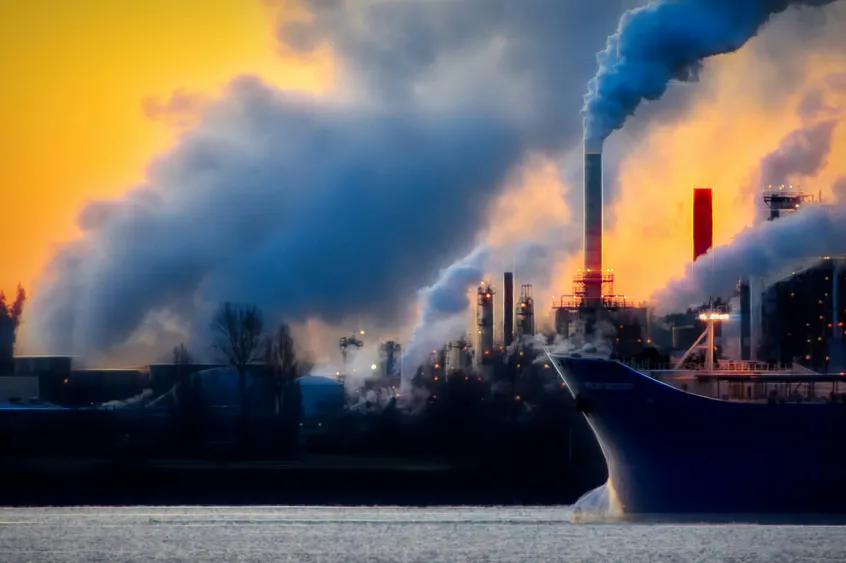
Photo by Chris LeBoutillier on Unsplash

"Peace, peace," they say, when there is no peace. [1]

"Don’t worry, everything’s fine, carry on as you are" – even a cursory reading of the Biblical prophets reveals this to be the very epitome of false prophecy. Yet this is precisely the counsel Paul Mills’ article, published earlier this year, offers us.

Rejecting the clear scientific consensus, he demands instead that we believe in a global "religious" conspiracy so wide-ranging as to make The Da Vinci Code seem a reasonable proposition. [2] And to justify his claim, he offers us an eclectic handful of lobby groups, popular press and fringe journals. But not a single renowned climate scientist, and no real analysis. It forces us to ask: is this really where we’re at as evangelicals? Jubilee Centre, I understand times are hard, but is this really the best we can do? [3]

Ordinarily this might not require a response, but, as it’s been uncritically reproduced on at least two evangelical websites, presumably trusting to Jubilee’s reputation, it seems to me in this case that it does. Perhaps even, if we as evangelicals are a bit prone to falling for this sort of thing, it’s an opportunity to take a breath, step back, reset our thinking.

For brevity and focus, we’ll concentrate on five key areas: sounding the alarm; evangelical leadership in climate science; Mills’ sources; the situation we’re in; and policy response. And then we’ll return to Mills’ theme of religion, offering, instead of "false religion", a truer evangelical response.

Sounding the alarm

Mills’ first big problem is that he consistently confuses "alarmism" and sounding the alarm. The former is a bad thing, exaggerating the truth. But the latter is most definitely a good thing. There’s an iceberg. We’ve found a tumour. The watch officer and the doctor may herald unwelcome news, but we most definitely want them to speak up. So, too, climate scientists.

Now, there may well be alarmists out there. Some protestors, too many newspaper articles perhaps, not least in Mills’ preferred newspaper. But not the UN Intergovernmental Panel on Climate Change (the IPCC), nor most mainstream climate scientists. They are at pains to distance themselves from alarmist exaggeration.

Katharine Hayhoe, whom Mills takes trouble particularly to mention, is the very opposite of alarmist. She is in fact one of the most moderate and considerate voices in the field. As a Texas-based evangelical Christian climate scientist, her Saving Us is a masterclass in clear, sympathetic communication, and well worth a read. [4] There’s no need to exaggerate, she would say – the plain truth is sufficiently alarming.

Mills relies heavily and repeatedly on creating this confusion. His problem though is that as soon as we make the common-sense distinction between "alarmist" (bad) and sounding the alarm (good), his argument falls away. Wouldn’t we be better, rather than tar them with the brush of a fabricated alarmism, to thank the officer of the watch and the oncologist for raising the alarm?

Evangelical roots of the IPCC

To sustain his accusations, Mills is forced to propose the most unlikely of conspiracies. We’ll come to that very shortly. But first, three things to give us confidence in the current state of climate science.

  1. Evangelical roots of the IPCC

    First, evangelical influence on the IPCC. One of the key figures in setting up the IPCC, back in 1988, was the (now late) eminent British evangelical Christian and climate scientist, Sir John Houghton. [5] The purpose of the IPCC, as he set it up, is not to conduct research, nor to do modelling, or even to make predictions, but simply to assess the state of scientific knowledge about climate change and its effects.

    The IPCC has reported six times since 1988, most recently with Assessment Report 6 (AR6) in 2022. Sir John played a major role in assessing the scientific basis of climate change for its first three assessments; and the sixth is dedicated to his memory. [6] He won many awards. He was, we could say, a modern-day Wilberforce, a committed evangelical, acting in the world for the common good.

  2. Rigour and integrity

    Second, the rigour and integrity of the work. The most recent assessment (AR6), was authored by over 200 leading climate scientists, supported by more than 500 coordinating authors and reviewed over 14,000 peer-reviewed scientific papers. [7] It was then subjected to extensive review, by all-comers. Before issuing its final agreed report, it received in total 78,000 expert and government comments.

    AR6, like previous assessments, is careful to say which matters it assesses as certain, and those which are just likely, or even very unlikely. [8] It is generally cautious in its conclusions. And it spells out its methodology in exhaustive detail. [9] I can think of no other process as scientifically conservative, comprehensive and rigorous as this one. It is a worthy legacy of British evangelical social engagement.

  3. Scientific consensus

    And third, consensus on the basic science. It is an established fact, says the [AR6] report, using the strongest possible language, that the increasing level of carbon dioxide (CO2) and other "Greenhouse Gases" (GHGs) in the atmosphere causes increasing global temperatures. [10] It has been so for decades, arguably going back to the late 19th century. Even in-house scientists at Exxon, one of the biggest oil companies, as far back as the 1970s predicted (remarkably accurately) that the carbon dioxide from burning coal, oil and gas would cause global warming. Notably today, no major publicly-listed oil and gas company disputes the scientific basis of climate change. Scientific evidence has only grown over the years.

    Furthermore, says the report, again in the strongest possible terms: "[H]uman activities, principally through emissions of greenhouse gases, have unequivocally caused global warming." [11] 97 per cent of climate scientists agree. To my knowledge, no significant university or scientific institution or association disagrees.

I feel embarrassed to say it, but it is here that Mills asserts a conspiracy. "Fabrication! Fraud! Manipulation! Censorship!" his article cries. A conspiracy, let’s be clear, of the 700+ authors of the IPCC reports, the 195 nations’ (including so-called petro-states) negotiation teams, the United Nations, the World Bank and the IMF, every major university, every significant scientific association institution – NASA, the Met Office, the Royal Society, the Nobel Prize assessors, etc – publicly-listed oil and gas companies, even national treasure David Attenborough, [12] never mind evangelical international aid charity Tearfund, and Christian conservation organisation A Rocha UK. How extraordinary! Truly it’s hard to believe Mr Mills is asking us to believe this nonsense, but it appears he is.

Mills’ sources

And on what basis does Mills ask it? Often he doesn’t back his claims at all, but where he does, he offers us the following...

To question the established science:

  • a US lobby group, the CO2 Coalition, substantially backed by owners of big privately-owned US oil and gas companies[13]
  • a paper co-authored by William Happer, who, it turns out, is the co-founder of the very same CO2 Coalition, together with Richard Lindzen, who is also associated with oil- and gas-funded lobby groups [14]
  • an online "declaration" of which "probably the most eminent" signatories, Mills says, are none other than Happer and Lindzen [15]

To question the consensus:

  • a lobby group set up specifically to undermine climate science, the Global Warming Policy Foundation, seemingly unaware that it has no requirement to fact-check, let alone peer-review, its output
  • a fringe academic paper, apparently unaware of the many peer-reviewed studies, using a number of different methodologies, confirming the consensus among climate scientists of between 97 per cent and 100 per cent. [16]

To question measurement of temperature:

  • in a rare reference to a credible website, he points us to a page on the US National Oceanographic and Atmospheric Administration (NOAA) website that appears to say the diametric opposite of the point he’s trying to make. He also seems unaware that there are four frequently cited datasets for global temperature – NOAA, the UK’s Met Office / Hadley Climate Research Unit, NASA, and Berkeley Earth – using up to 30,000 measurement sites globally, and that, despite differing methodologies, they are in remarkable agreement.

To question the accuracy of climate models:

  • a single article, the author of which has long been associated with the oil and gas industry, receiving over $1 million in funding for his "research" from the likes of Exxon Mobil. [17]

Again, to be clear: these are not peripheral, but key sources for his core claims. A handful of lobby groups and articles funded by an industry that has everything to lose. It’s hard to imagine sources less credible than these – was any work done to check their credibility? Mills’ paper shows no evidence that it was.

Mills’ paper likewise shows no evidence that he’s read any of the IPCC reports. If he had, he’d have found that all the questions of substance he raises are incorporated at length into them. Not selectively as his sources do, but comprehensively. If there’s "fabrication, fraud and manipulation", I’m afraid the boot is rather on the other foot, Mr Mills – it’s with your sources.

Mills balks at the label "denier" (though his paper is rather free with its own pejoratives), but "sceptic" won’t do either. Scepticism is a methodology, not an outcome, the opposite of credulity perhaps. Scepticism is integral to the scientific method – all scientists (arguably perhaps all post-enlightenment Europeans) are sceptics. I do agree however we should do away with labels. But I also wish Mills had deployed a little more scepticism in reviewing his sources – we might all have been saved some embarrassment.

The situation we’re in

So, here we are. Is the world heating? Yes. Is it caused by increasing CO2 (and other GHGs)? Yes. And is the increasing CO2 caused by us humans? Yes. Established fact, unequivocal.

The world is now 1.3°C hotter and getting hotter by 0.2°C per decade. [18] (If that doesn’t sound like much, think about the human body: 1° hotter gets uncomfortable, 2° is worrying, 3° means a run to A&E and life support. Small temperature changes make a big difference.) And it will keep getting hotter until our CO2 / GHG emissions are zero.

Already we’re off the temperature scale for the glacial / heating cycle of the last 100,000 years (Mills’ talk of an "unusually cool period" is simply wrong) and entering temperature territory the world hasn’t seen for hundreds of thousands of years. Global emissions are either flat or still going up, when we need them to be coming down fast. This is not a good trajectory. We’ll come back to that when we touch on policy, below.

What though should we expect to see today? The first thing to say is that we are still within the "safe limit" of 1.5°C, so we shouldn’t expect yet to see things going too badly wrong. Mills labours under the (again, simply wrong) impression – divined from a survivalist website, of all things – that sea level rise, loss of corals and an ice-free Arctic were supposed to have happened by now. If only he’d read the IPCC report he’d know – it’s crystal clear on this – the thresholds he describes still lie in the future.

For now, we should expect trends toward more extreme, more volatile weather. Longer dry periods, more intense storms, new temperature records, hotter summers, less predictable weather, animal species moving to higher latitudes, polar species coming under pressure. Exactly what we’re seeing, in fact.

It's as we head beyond the safe limit that the risks of things going badly wrong for earth’s life support systems, for nature and for us, increase. Not that there’s anything magical about 1.5°C, or even 2°C, just that as temperature increases, risks increase. Here are two examples:

  1. Food production

    First, food production. As temperatures rise, risks to food production increase. There are some positive effects. The CO2 "fertilisation effect" causes some plants to grow more quickly, and a longer growing season in northern climes may increase yields. But heat, drought, heavy rain and waterlogging and unpredictability all reduce yields. (All this is spelled out in the IPCC reports. Once again, Mills’ paper shows no signs of having read them, choosing instead to ignore these negative impacts.)

    The net effect, even according to assessments by one of the most optimistic of serious climate scientists, is the opposite of what Mills would have us believe, especially in Africa and South Asia. [19] Crop yields in Europe may increase (though studies differ) but in Africa and Asia yields are set to drop by up to a quarter. It’s the poorest – as Tearfund has long been saying – who bear the brunt of rising temperatures. As temperature rises, so does the impact.

  2. Coral reefs

    Second, coral reefs. It’s forecast that at 1.5°C (a threshold now widely expected to be passed within ten years, and perhaps within five) 70-90 per cent of coral reefs will be lost, and, at 2°C, greater than 99 per cent. Soberingly, the evidence is that this is happening even now. [20] These most biodiverse of ecosystems on the planet, the jewels of creation, support a third of all known marine biodiversity, including over 25 per cent of marine fish species and provide essential habitat for over 800,000 species. How wondrous they are, how beautiful! But now, a question for us. As their teeming praise falls silent, how will we answer the Creator? Steward, this is on our watch. And what of the loss of livelihoods for the many who directly or indirectly rely on them? [21] One for you to watch these next few years, Mr Mills, to see whether the "prophecies" you speak of are true or false.

    Mills may not wish to see it, but the truth is the IPCC forecasts are proving remarkably accurate and the impacts of climate change are significant and wide-ranging. By the time my children’s children are my age the world may well be a very different place. Quite how alarming it will be, though, depends on the choices we make.

Policy response

If some climate scientists remain optimistic about the future, it’s because they believe it’s still possible to change our trajectory, to make rapid changes to clean energy and climate-friendly farming. [22] And, if we do, the impacts – sea levels, heat, drought, flooding, food production, migration – may be manageable. Some of the jewels of creation may be lost, but not all. Only if we relax and put our feet up, as Mills so blithely counsels, do we end up with an unrecognisable, unmanageable 3, 4, 5 or 6°C world.

If Mills wants to talk about policy, by all means let’s talk about policy, and indeed personal, response. In fact, it’s high time we did. It must be on the basis though, not of his conspiracies and false religions, but of a sober, truthful assessment of the matter.

It should be obvious by now that any policy that fails to deal with emissions is simply inadequate for the situation we’re in. So, the questions become not whether we should, but how (and how quickly) we can get emissions to zero. How much should we do? How much should we leave for our children and grandchildren to clear up? And as evangelicals, what store do we put on creation’s flourishing? Or on our less well-off neighbour’s prospering?

As an economist and an energy sector investor for many years, I can offer four brief policy observations to inform our thinking.

  1. First, a clean energy electricity grid within a decade – and a zero emissions economy within two or three – are both technically feasible. (No need to worry about that Mr Mills.)
  2. Second, clean energy is a lot less costly than Mills seems to think. Solar, battery, wind, heat pump and EV prices have all come down fast and most are continuing to come down. Where, I wonder, are the "vast" costs of which he speaks? Hannah Ritchie’s Clearing the Air is good on this – recommended reading. (She also clears up many of Mills’ other "misconceptions". To name just two: wind turbines it turns out don’t kill many birds; and we need less mining for the clean economy, not more. Again, it’s not clear to me why Mills’ paper simply repeats these falsehoods – the facts are readily available.)
  3. Third, China is stepping up its move to clean energy. There’s no denying China’s been a source of growing CO2 emissions for over a decade, but it’s now, by almost every metric (solar, wind, batteries, EVs, hydrogen, rail, electrification, reforestation and others) a global leader on clean energy too. [23] Even its coal use is coming down.
  4. Fourth, relatedly, the UK is one of about 30 countries whose emissions are about one per cent of the global total. If we – the one per cent countries – take our foot off the accelerator, global heating will continue no matter what China does.

As to the details of policy, of course, there can and should be discussion. I happen for example to agree with Mills on better housebuilding standards and (on balance) new nuclear energy. And I share his criticism of "carbon capture and storage" and "geo-engineering", as do many ardent "environmentalists" and climate scientists. But his counsel of complacency – carry on as you are, eat whatever you like, fly whenever you please – this is the very worst kind of false prophecy.

A truer evangelical response

What can we say as evangelicals? There are three areas where we need to develop a proper seriousness.

First, we need to grow our seriousness in the pursuit of truth – if we don’t see clearly, everything is in darkness. [24] There’s nothing new to Mills’ claims (John Houghton was dealing with exactly the same issues 20 years ago, particularly from his fellow evangelicals), nor truly any substance. It’s deeply disturbing that we who prize truth should be so easily deceived, and so careless in promoting falsehood.

There is consensus – climate change is real and is unequivocally caused by humans. It is well past time we put aside childish conspiracies and false religions. In the days and years to come, with proliferation of newsfeeds and artificial intelligence, it will be of paramount importance that we be serious about discerning truth. The appendix [of this article, see bottom of the page] lists some good places to start.

Second, we need to develop a seriousness to our stewardship. This is our watch. The threats to creation and human flourishing are real and serious. We who know the Creator-Redeemer, do we not have every reason to take seriously – much more seriously than the world around us – our responsibilities for one another and all creation? It is this seriousness of purpose that, in a different time and place, inspired Wilberforce and Shaftesbury, more recently Sir John Houghton and still today inspires Katharine Hayhoe. These are true models of evangelical response to the issues of our time.

And third, we need to be serious in our gospel proclamation. Climate scientist Mike Berners-Lee (not a Christian so far as I know) sees truthfulness, kindness and courage as key to solving the problems of climate change. We, who know the God of truth, who is making all things new, and who calls us to serve in loving kindness – we have a transforming message that the world not only needs but is desperate to hear. This is not message of escape, but of goodness, mercy and grace, and the ultimate flourishing of humanity and all creation. Let us be serious in our proclamation!

A seriousness about the truth, about stewardship and about the gospel. Is that not a true evangelical response to the crisis of our times?


en publishes a variety of content and views on this topic - see the en archives on this theme here

Appendix: Recommended reliable resources

If you’re looking for reliable sources for climate science and news, I commend to you the following:

References

  1. Jeremiah 6v14
  2. Dan Brown’s, The Da Vinci Code, though a rip-roaring read, is notable for its absurd conspiracy theory
  3. Paul Mills is the Chair of Trustees of The Jubilee Centre. Once responsible for some ground-breaking research and social engagement, the centre now lists on its website only the board of trustees and one employee. Jubilee Centre
  4. Saving Us | Book by Katharine Hayhoe | Official Publisher Page | Simon & Schuster UK
  5. In the Eye of the Storm - Jane Taylor|John Houghton - SPCK Publishing
  6. Sir John Houghton served as Chair and Co-Chair of Working Group I, which assesses the physical science basis of climate change, for the IPCC’s first three assessment reports from 1988 to 2002. IPCC to dedicate new report to former Co-Chair Sir John Houghton — IPCC
  7. Authors | Climate Change 2021: The Physical Science Basis
  8. Q&A: IPCC wraps up its most in-depth assessment of climate change - Carbon Brief
  9. Climate Change 2021: The Physical Science Basis | Climate Change 2021: The Physical Science Basis pp147-286 Framing, Context and Methods.
  10. Climate Change 2021: The Physical Science Basis p174 for a good summary of the development of scientific understanding. The principal greenhouse gases (GHGs) are Carbon Dioxide, Methane, Nitrogen Dioxide and "F gases".
  11. IPCC_AR6_SYR_LongerReport.pdf p42 (emphasis added)
  12. BBC One - David Attenborough - Climate Change - The Facts
  13. The CO2 coalition was spun out of the George C Marshall Institute in 2015, when even Exxon ceased backing it. Backers of the CO2 Coalition include the Koch brothers (one of whom, now deceased), owners of private oil and gas behemoth Koch Industries, and the Sarah Scaife Foundation, which made its money in investment banking and oil and gas. CO2 Coalition - DeSmog
  14. Richard Lindzen, retiring in 2013 from MIT, he went on to be associated with the Cato Institute and the Heartlands Institute, both substantially backed by oil and gas owners similar to those backing the CO2 Coalition. Richard Lindzen - DeSmog
  15. The Clintel Declaration, was open to anyone to sign, and eventually was signed by over 1600 people, of which only ten – in a worldwide declaration – identified themselves as climate scientists. This makes rather the opposite point to the one Mills intends: there really are vanishingly few climate scientists who contest the established science.
  16. Oreskes, 2004; Doran, 2009; Anderreg, 2010; Cook, 2013; Carlton, 2015; Myers, 2021; Lynas, 2021. Lynas et al, 2021, surveyed over 88,000 articles, particularly looking for keywords to help identify "sceptical" peer-reviewed papers – they found less than 1 per cent taking a "sceptical" position.
  17. Willie Soon has received funding of over $1million from petroleum and coal interests since 2001, principally the Charles G Koch Charitable Foundation, the American Petroleum Institute and Exxon Mobil. https://www.desmog.com/willie-soon/
  18. Compared to the average for 1850-1900, the standard base-line.
  19. How will climate change affect crop yields in the future? - Our World in Data
  20. GTP-2025-FULL-REPORT-FINAL-V6-161025.pdf p257-260.
  21. GTP-2025-FULL-REPORT-FINAL-V6-161025.pdf p257
  22. Hannah Ritchie’s Not the End of the World | Hannah Ritchie and Clearing the Air are among the most upbeat assessments by serious climate scientists. For more bracing, though still hopeful, accounts, see Tim Lenton’s Positive Tipping Points - Tim Lenton OBE - Oxford University Press or Mike Berners-Lee’s A Climate of Truth.
  23. China Energy Transition Review 2025 | Ember
  24. Luke 11v34
  25. Sustainability by numbers | Hannah Ritchie | Substack
Share
< Previous article| Comment| Next article >
Read more articles on:   climate change
Read more articles by Paul Kunert >>
Features
Thinking of our farmers

Thinking of our farmers

As I write, England has recently sweltered under a record-smashing May heatwave, the culmination of a drier-than-usual spring.Heather Oldfield, …

Features
Remembering Jesus is  the Gardener-King

Remembering Jesus is the Gardener-King

“Jesus said to her, ‘Woman, why are you weeping? For whom are you looking?’ Supposing him to be the gardener…” …

Give a subscription

Our monthly newspaper is the perfect gift for those who love to think deeply

Give here

Need to advertise?

We can help you reach Christians across the country

Find out more