Here’s one of the least wholesome and most shocking experiences in 21st century life: one is scrolling unknowingly, perhaps even unthinkingly, on one’s phone, and suddenly sees an act of murderous violence as a video plays automatically.
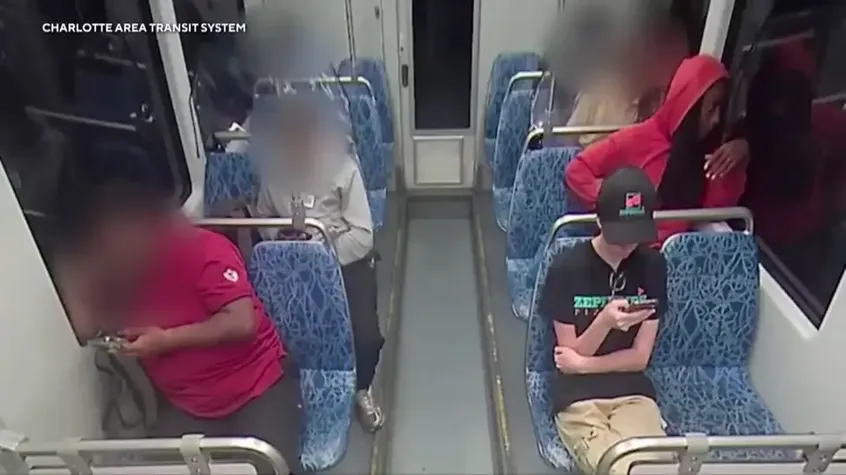
Particularly in the last few weeks, with footage of the murder of Iryna Zarutska in Charlotte, North Carolina, recently released; and then with the assassination of Charlie Kirk - political activist and committed Christian - while speaking at a campus event in Utah. We may be an ocean away, but we're connected enough for these tragedies to feature in our cultural conversation, not least when they are played and replayed on our screens.
What happens to our souls when we are forced to witness these horrors, and to do so on the same screens which normally show us all kinds of trivialities? We’re left with a deep sense of helplessness and irreparable loss: we are appalled by what we see, but are left passive and can never intervene. We feel an instinctive human solidarity with the victim, made in God’s image, their life so callously taken away - and horror at the perpetrator, as we reflect on the potential of a human life turned towards doing such evil. But most immediately, we find ourselves stunned. Violence always has that effect - and those who wield it, especially in public acts of violence, want it to have that effect on as many people as possible.

Salman Rushdie
This was evident in another moment of shocking public violence - one which the victim survived. In 2022, novelist Sir Salman Rushdie was about to give a lecture in Chautauqua when he was stabbed on stage. The attack left him with permanent and life-altering injuries. His survival and recovery meant he was able to reflect on what happened to him in his memoir, Knife (2024), and especially why, in the moment of the attack, he neither fought back nor tried to escape.
Why did he freeze? Rushdie writes: "This is as close to understanding my inaction as I’ve been able to get: the targets of violence experience a crisis in their understanding of the real. Children going to school, a congregation in a synagogue, shoppers in a supermarket, a man on the stage of an amphitheater [sic] are all, so to speak, inhabiting a stable picture of the world. A school is a place of education. A synagogue is a place of worship. A supermarket is a place to shop. A stage is a performance space. That’s the frame in which they see themselves. Violence smashes that picture. Suddenly they don’t know the rules—what to say, how to behave, what choices to make. They no longer know the shape of things. Reality dissolves and is replaced by the incomprehensible. Fear, panic, paralysis take over from rational thought."
Violence disrupts whatever had been the focus, and has a brutally disorienting effect. Violence imposes its own agenda, forces its point and wrecks our sense of reality. Nobody riding that subway train was expecting to see a fellow passenger suddenly attacked and killed, just as nobody listening to Charlie Kirk address students on campus was expecting the horror of what happened on 10 September.
In both cases, acts of profound evil smashed the stable picture of the world those on the scene inhabited; violence pressed its claim on the situation, and snuffed out a precious human life. In terms of the public conversation Kirk was seeking to conduct, violence sought to have the last word. No wonder we are left helpless, horrified and angry.
How do we respond?
What do Christians do, when confronted by moments like these - moments of terrible and public violence, calculated to shock those watching and to set the agenda - played and replayed on our screens? We take our helplessness, horror and anger to the cross of the Lord Jesus Christ. For His death was just such a moment: calculated to shock, humiliate and terrify, which sought to cut short whatever kind of movement Jesus was beginning to gather. At the cross, violence pressed its claim on Him, seeking to dissolve the reality of His identity, and disrupt His mission.
But the most astonishing thing happens at the cross. When violence presses its claim on the Lord Jesus, the reality of who He is doesn’t dissolve. His identity isn’t obscured at the cross: for those with eyes to see, it becomes clearer. All four Gospels make that clear, in their own ways: those crucifying Him opt for irony, sneering that this is the King of the Jews, and He really is. They scoff at His claim to save, but, even in His final hours, Jesus secures paradise for the condemned man next to Him.
In our anger, in our prayers for justice, in our intercession for those left grieving and bereft, this is where we must go: to the cross, where Jesus triumphs over violence, making it serve His agenda and making it a platform for the display of His grace, compassion and saving power.
To read more evangelical responses to the assassination of Charlie Kirk:
Truth, shame & the search for blame
There was a stream of articles and commentary in the weeks leading up to Jason Arday’s resignation as Professor of …