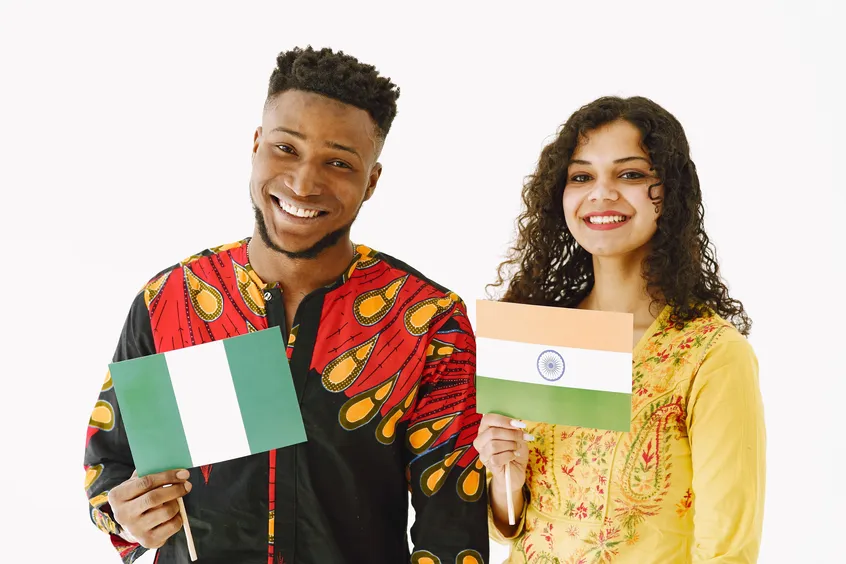
Britain is becoming more culturally and ethnically diverse.
Hard data from numerous sources demonstrates this trend. 1 In addition, soft data from numerous church leaders and Christians backs this up. This is how the conversation goes: “Our communities are becoming more diverse, as people from other parts of the world and other parts of the UK move and settle here”. 2
The change: A transitional dynamic
Furthermore, there has been a “transition” from mono-cultural to cross-cultural to inter-cultural. Let me explain.
Mono-cultural generally refers to first generation immigrants who move to the UK, whose mother tongue is not English. They may well be Christian or culturally Christian and, in a search to find a place and belonging, may settle in a mono-cultural church with a dominant culture that rules.
Then there is cross-cultural. Generally second generation, children of immigrants born in the UK. This is my experience. Take this quote: “Feeling part of British culture and feeling part of Asian culture and simultaneously feeling I belong to neither culture but instead a unique ‘third’ space culture”. 3 In the past, I have described it like this: “We live in a world of cultural tensions – being pulled by our upbringing but also Western secular thought”. 4
Last but not least, inter-cultural. Often third generation, potentially mixed-race, very British, a bigger gap with cultural roots and tradition. There is a complexity here, an infusion of different cultures, languages, traditions, schools of thought, that have shaped and nurtured them.
The Biblical mandate
God is the missional God who sent His Son into the world to redeem humanity. Jesus modelled reaching people of different cultures (cf. John 4, Mark 7v24–30, Luke 19v1–10) and commanded us “to go and make disciples of all nations”. This was modelled in the early church in Acts.
We (churches and Christians) are part of God’s plan, here in 21st century diverse Britain, called to fulfil this mandate – as we journey towards the future heavenly reality of every tribe, culture, people and language worshipping the Lamb (Revelation 7v9).
Is progress being made?
Yes. Progress is being made. The FIEC (Fellowship of Independent Evangelical Churches), for example, launched an intercultural ministry team back in 2024 to help and resource churches in this area so that churches are places where people from all cultures are welcomed, integrated and celebrated in the life of the church. (I attended the FIEC Intercultural Ministry Team consultation and will be a part of this new team.)
There is a long way to go. Key to this is understanding our own culture, cultural blind spots and the way we see the world, before we start to understand and see other cultures, so we can grow in cultural awareness, understanding and insight. Humility undergirds it all. For example, take a person who is late to church but always invites newcomers because they stop to have conversations on their way – is this wrong or is time seen differently in non-Western cultures? How much can we flex our rigid programme-based timekeeping structures and learn from the “relational” and “people focussed values” other cultures bring?
- See ONS and Census 2021.
- For example the FIEC Leaders' Conference 2025.
- Taken, adapted and developed from Saree and Chips, Gidamool, Ram, with Fearon, Mike. Monarch Books, 1993. Introductory chapter.
- A seminar I did with Co-Mission church planters, September 2024.
Churches, do you really know your communities?
Who is missing from your church?Who feels at home in your church? And who doesn’t?