
Back in the sultry, sunny days of the summer just gone, I spoke at an event that is an annual highlight of my year. It’s a bit of a niche gig, but it’s a weekend-long camp for Christian anglers.
From Friday evening until the middle of Sunday afternoon we live under canvas and pass the time sharing fellowship, eating together, fishing, and meeting for short Bible talks, times of prayer and worship, and an outdoor communion service on the Sunday morning. This year we took “Courage” as our theme and we began by looking at the first chapter of the book of Joshua.
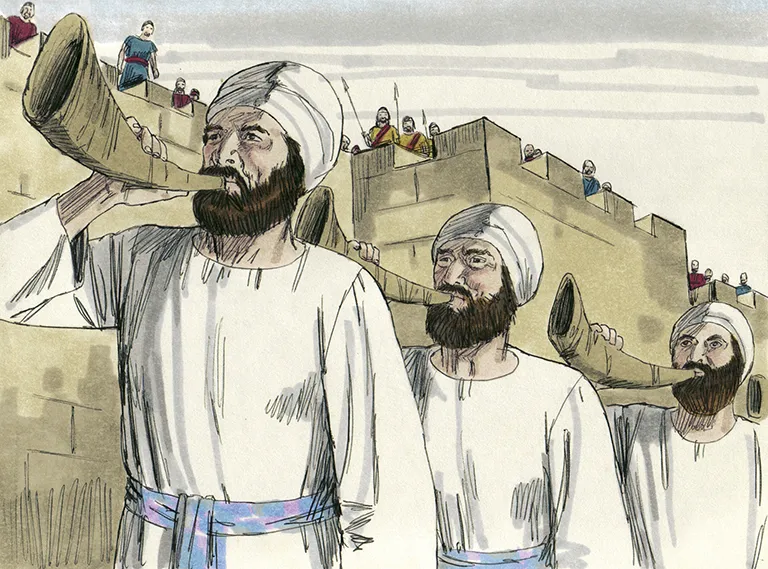
You’ll all be aware of the context. After 40 years of self-inflicted wandering in the desert and following Moses’ marathon sermon (aka the Book of Deuteronomy) with Joshua as their newbie leader, God’s people are on the verge of entering the Promised Land. It’s a time of transition, a time of unsettling, and a time, one assumes, of both excitement and high tension.
Joshua will lead the people into the Promised Land, but taking the land will be no picnic. There are plenty of nations and tribes already in the land who are unlikely to take kindly to an invasion into their space of an entire people group – so warfare, battles and difficulties lie inevitably around the corner. It’s with all this as the backdrop that God speaks to Joshua and that Joshua, in turn, speaks to the people.
If you’re of a certain generation you may remember M People’s 1994 chart hit that encouraged us to “search for the hero inside yourself” but, catchy little number though it was, the message of that dance track couldn’t be more different from the thrust of what God says to Joshua.
Three times in the first nine verses of Joshua 1, God exhorts him to be “strong and very courageous” but locates that courage not in some inner strength that Joshua has to somehow summon up or manufacture, but rather in His (God’s) strength and presence, Joshua (and the people’s) obedience, and His (God’s again) past track record.
In response to the question “How many battles did the ancient Israelites win?”, I’d suggest that the answer is “None.” If you trawl through the Old Testament you’ll repeatedly stumble across statements along the lines of “and on that day THE LORD won a great battle for them”. Not only does God promise (v5) “I will be with you as I was with Moses” and “I will never leave you or forsake you”, but He also makes it clear who’s going to be winning their battles and fighting for them, saying: “I will give you every place where you set your foot” (v3), leading to Joshua assuring the people that “the Lord your God” will give you the land (v10).
But no sooner has God promised His presence, protection and future victory, than He’s emphasising the importance of obedience. The repeated promise of His presence is immediately followed by a call to “obey all the law my servant Moses gave you; do not turn from it to the right or the left, that you may be successful wherever you go” (v7). The point is reiterated in the following verse, with God again linking His providential provision for them with their obedience to His commands.
Around 30 years ago I can remember being at a theological student’s conference at which the late J.I. Packer was speaking. There was the obligatory Q&A in which overly competitive young men tried to outdo each other by asking the cleverest question. One question though – less driven by fragile male ego than some – straightforwardly and honestly asked: “What would you say is the secret of the Christian life?” Dr Packer thought for a moment or two, and then with a twinkle in his eye (clearly visible through his ultra-thick glasses!) simply replied: “Trust and obey, for there’s no other way to be happy in Jesus, than to trust and obey.” I can’t help thinking that Joshua would have agreed.






‘The God who is’
In recent years I’ve discovered and learned to appreciate the Westminster Shorter Catechism. It’s a bit of a niche thing …