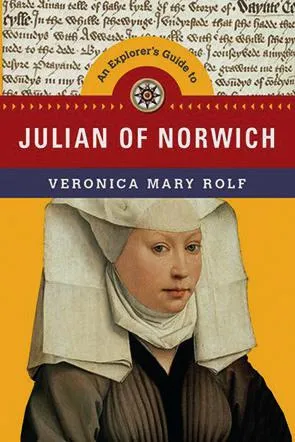
AN EXPLORER’S GUIDE TO JULIAN OF
NORWICH
By Veronica Mary Rolf
IVP Academic. 240 pages. £14.99
ISBN 978 0 830 850 884
Reading medieval texts has never been easy for evangelicals. The advocacy of certain theological positions – transubstantiation, the exaltation of the Virgin Mary, the works-oriented view of salvation, papal authoritarianism – by medieval authors makes many evangelicals cringe and write off the entire medieval world as an era of church history best forgot.
But it was a long era – at least 800 years if one dates the beginning of the Middle Ages to the rise of Islam, which destroyed the world of Late Antiquity.
In recent years, though, the medieval world has become more attractive for some evangelicals in search of a richer, deeper spirituality. For about 40 years now there has been a deep sense among evangelicals that their traditional piety was vacuous and shallow, and no longer adequate for the context of modernity.
One remedy proposed has been the retrieval of medieval spirituality, and topping the list of popular medieval spiritual writers has been Julian of Norwich (c.1342 – c.1416), the first authoress of an extant English work, Revelations of Divine Love.
In this fresh study of Julian’s thought, Veronica Mary Rolf, an independent scholar who has long taught about Julian in courses of mysticism, outlines her historical context and life, answers intriguing questions about Julian, and provides a helpful analysis of her mystical work, Revelations of Divine Love. There are some gems here, but also a number of areas of significant concern, for example, the denial of divine wrath.
It is noteworthy that Julian was a contemporary of John Wycliffe, which Rolf notes. And while Julian’s piety has something to teach us, overall Wycliffe’s spirituality is a better guide.