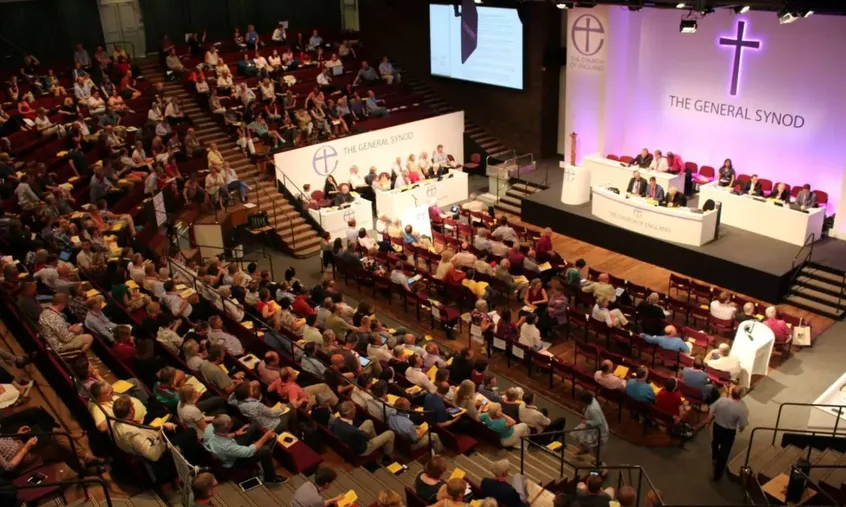
On Tuesday 15 July, the last day of its meeting, the General Synod approved an amended motion, which called for the removal of the 1991 document Issues in Human Sexuality, as part of the discernment and vocations process for ordinands in the Church of England. They asked for it to be replaced, in the interim, with Guidelines for the Professional Conduct of the Clergy.
Issues in Human Sexuality was originally designed to be a teaching document, but it had taken on a more significant role as part of the Church’s discernment and vocations process, setting out expectations for the conduct of clergy. It is seen by many (including most orthodox voices on General Synod) as inappropriate in tone and language, and outdated.
During the Synod debate, members received clear and public assurance from Bishop Mark Tanner (who is the Chair of the Church of England’s Ministry Development Board and co-wrote the amendment with Jenny Bridgman) that the canons, doctrine and policies of the Church of England would not be changed as a result of the amended motion.
John Dunnett, National Director, CEEC, and chair of the Evangelical Group on General Synod (EGGS) said: “CEEC, along with its constituent members, has long felt the need for Issues in Human Sexuality to be replaced with something more appropriate. At the same time, there has always been concern that it should be replaced with something that is both doctrinally clear and pastorally sensitive.
“We’re thankful to EGGS members for their contribution to General Synod and their role in ensuring that the House of Bishops positively replace Issues in Human Sexuality rather than leaving a vacuum.
“The assurances offered to General Synod underline the true reality – that the Canons, the doctrine and the 2014 Pastoral Guidance on Same Sex Marriage were not part of this particular discussion and remain fully intact.”
More broadly, however, CEEC and its members remain concerned that the Living in Love and Faith (LLF) process continues on a trajectory at odds with a Biblical and Anglican understanding of sex and marriage and that the interim measures, agreed to by General Synod, still leave the big questions unanswered.