Christianity is not a 'private hobby'

Krish Kandiah  |  UK & Ireland  |  politics & policy
Date posted:  21 Oct 2025
Share Add       
Christianity is not a 'private hobby'

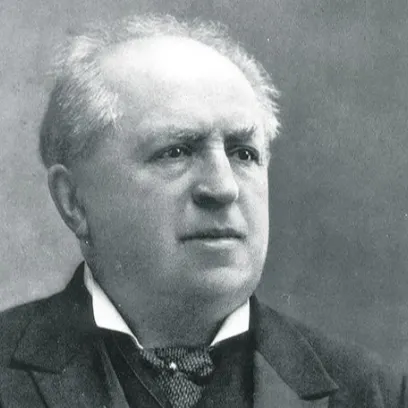
Abraham Kuyper 1905. Source: Wiki

“I’m a Christian. I enjoy the church, I believe in God. But the role of the archbishop is not actually to interfere with international migration policies.”

This remark – recently made by a political leader in response to an archbishop’s critique of immigration policy – reveals a common yet troubling misunderstanding of Christianity’s role in public life. Faith is increasingly being equated with a private therapeutic tool to help individuals get through hard times. Christian faith, while acceptable when quiet and compliant, is deemed unwelcome when it spills over into public debate and dares to speak into national issues.

But this understanding of faith is a far cry from Biblical Christianity. Dutch theologian Abraham Kuyper once wrote: “There is not a square inch in the whole domain of our human existence over which Christ, who is Sovereign over all, does not cry: ‘Mine!’”

Christianity is not, nor has it ever been, merely a personal lifestyle choice – it is a public commitment. Jesus Christ claims Lordship over every area of life, including politics, economics, and justice. To follow Him is not simply to attend church or pray privately; it is to live out a radical, public allegiance to truth, mercy, and righteousness.

To suggest that faith has no place in public discourse is to misunderstand democracy as well as Christianity. A healthy democracy depends on contributions from citizens of all backgrounds – religious or otherwise. This does not mean the church should dictate policy, but it does have a legitimate and necessary role in challenging or affirming it.

For Christians, this participation in public life is not optional. Scripture calls believers to seek the welfare of the society they live in, (Jer.29 ) to pursue justice (Isa.1) , and to be a voice for the vulnerable (Prov.29). Christian leaders, in particular, have a responsibility to raise their voices – not from a place of control, but from a place of conviction and concern for the common good.

Whether the issue is immigration, assisted dying, poverty or education, the church has long held a prophetic role in shaping the conscience of the nation. Our voice carries not only moral weight but also represents the convictions of the approximately 31 million people in the UK who identify as Christian.

These citizens are very valuable when it comes to electioneering. Many political parties actively seek to appeal to faithbased voters by invoking “Christian values” or referencing Britain’s “Judaeo-Christian heritage”, or highlighting hot-button issues aligned with traditional Christian views.

But cultural nods to Christianity and allegiance to Christian heritage are easily abandoned when the church speaks inconvenient truths – calling, for example, for the protection of the vulnerable, integrity from public leaders, or compassion toward asylum-seekers and migrants.

A recurring argument in public life is that immigration must be tightly controlled to protect Britain’s “Judaeo-Christian culture”. While, for some, this reflects a sincere desire to ensure, for example, the place of Christian values in our country’s institutions, for others, it becomes a coded way to define national identity in exclusionary terms – often, and notably, excluding Muslims.

Christianity is not a political prop. It is not a marketing strategy, or a tool to defend national borders. When any political party blends faith-friendly language with policies lacking in mercy, justice, or truth, it risks reducing Christianity to a brand – something to be marketed rather than lived. And in doing so, it betrays the very heart of the gospel.

Christianity is – and must remain – an offer of grace to all. It welcomes everyone to a Kingdom that transcends national and political boundaries. It is a living faith, one that calls us to serve, to reach out and welcome the marginalised, to comfort the disturbed and to disturb the comfortable.

Christianity is not a private hobby or a cultural relic. It is a truth claim that shapes all of life, In a world where spin is rewarded more than sincerity, where silence is preferred over conviction – Christians must listen carefully, live faithfully and speak clearly, not with anger or arrogance, but with grace, humility and courage – in private and in public.


Christian MPs and political figures contribute as believers not party politicians. en does not endorse any one particular party.

Share
< Previous article| UK & Ireland| Next article >
Read more articles on:   politics
Read more articles by Krish Kandiah >>
Comment
Re-examining the call to love the stranger

Re-examining the call to love the stranger

In 2015, one image of a three-year-old boy washed up on a beach in Turkey changed the way the world …

UK & Ireland
‘Why do the nations rage?’

‘Why do the nations rage?’

On 3 January, as part of what was described as his New Year’s resolution to pursue world peace, President Donald …

Need to advertise?

We can help you reach Christians across the country

Find out more

About en

Our vision, values and history

Read more