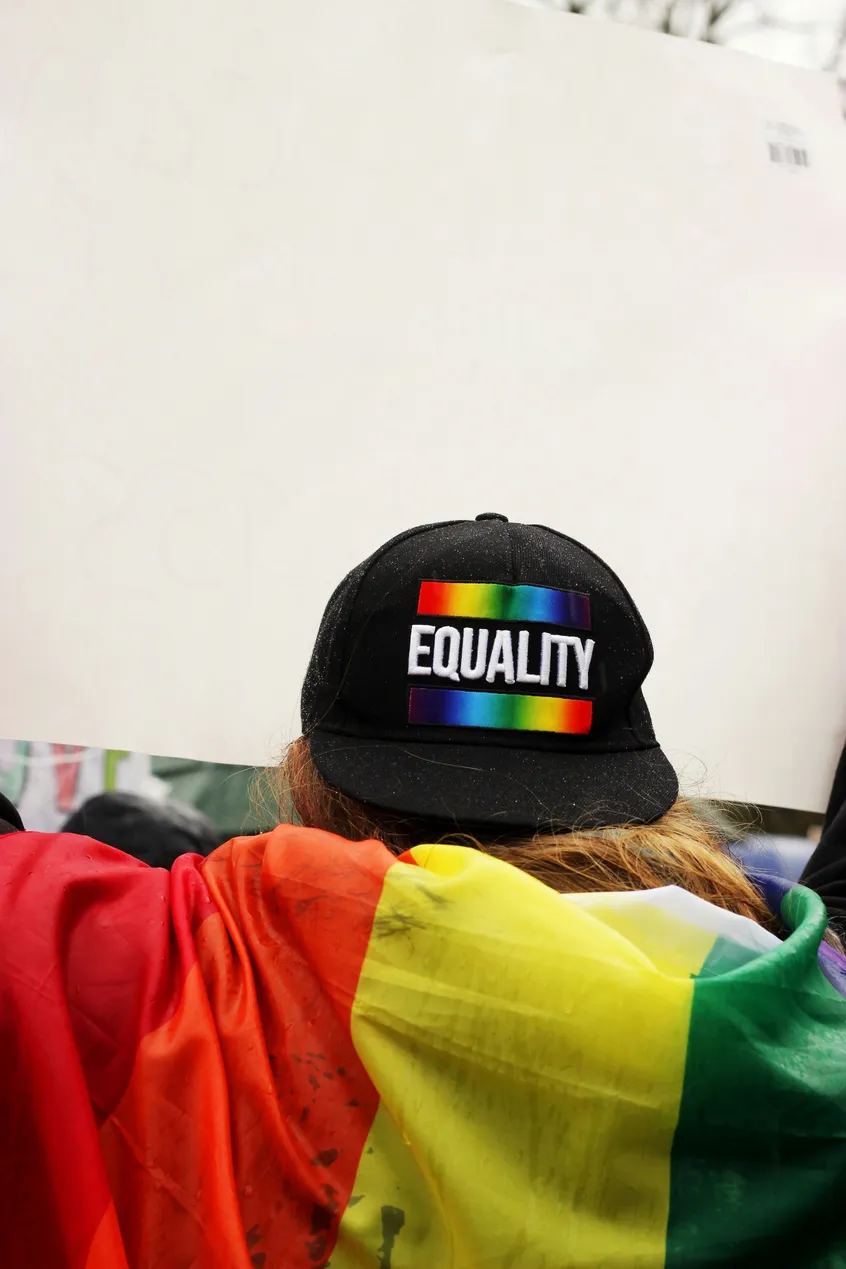
The Equality Act 2010 has been in the headlines throughout 2026.
Most notably, this was regarding the murder of Henry Nowak. Nowak was stabbed by Vickrum Digwa in an unprovoked attack in December 2025. Digwa and his family falsely told the police that Nowak had racially abused him. The police response, caught on body cam, showed a dangerous willingness to initially side with ethnic minorities in such situations.
What does this have to do with the Equality Act? The Act was a signature piece of New Labour legislation. Supposedly, it simply consolidated existing anti-discrimination laws. In reality, it enshrined a new definition of equality differing wildly from how ordinary people understand it.

Most people assume “equality” means “equality of opportunity”– that is, ensuring no one is denied opportunities because of their race, sex, or other factors where those things are immaterial.
But this is not what the Equality Act ultimately means by the term. A major part of the Act is the introduction of nine “protected characteristics”, those things on the basis of which one cannot discriminate (race, sex, etc). One of the Act’s other prominent features is the Public Sector Equality Duty. Although the Duty obliges public bodies to have “due regard” to “advance equality of opportunity” and “foster good relations” between “persons who share a relevant protected characteristic and persons who do not share it”, in practice the Duty pushes public bodies to treat differences in outcome as something requiring remediation. And so, rather than protecting equality of opportunity, it becomes about forcing equality of outcome.
This results in things such as police guidance teaching officers that “producing equality of policing outcomes … does not mean treating everyone ‘the same’ or being ‘colour blind’”. In practice, when police are told not to treat everyone the same, white men such as Henry Nowak are treated more harshly than ethnic minorities such as Vickrum Digwa.
This is a feature of the Act, not a bug. It has made Britain more divided and litigious as people learn or pretend to see discrimination in everything. For instance, we have seen an explosion of Employment Tribunal cases since 2010 on discrimination grounds. Most are dismissed, but even then, the time and money spent on them places huge costs and strains on businesses and public bodies, and the chilling effect on culture and speech is considerable.
And yet, it must be said, the Equality Act can be a help to Christians. One of the “protected characteristics” is “religion and belief”, and it was on this basis that Kirstie Higgs was recently vindicated after being sacked by her employer for voicing concerns about LGBT influence on sex education. Furthermore, Section 9 of the Act allows churches to make an “occupational requirement” of Christian beliefs when hiring staff.
However, some of the Act’s victories for Christians are quite fragile. For instance, although Kirstie Higgs was vindicated, the judge’s full comments were a thinly veiled warning against Christians ever expressing their views in stronger terms by comparing her case to a 2020 case in which an Icelandic man was convicted of hate speech.
Just because a law allows you to do some good does not make it a good law. The good afforded to Christians by the Equality Act could be better protected by tighter anti-discrimination laws or by rethinking equality law entirely.
It is easy to be fooled by the name of the Act, but it says “equality, equality!” where there is no equality (Jer.6v14). Certainly, the Bible exhorts rulers to ensure justice for the needy (Ps.72v4). But the image of God (Gen.1v26) demands equality before the law and that we treat people as individuals rather than as members of supposedly advantaged or disadvantaged groups.
Christians should of course seek to preserve and even strengthen genuine anti-discrimination laws. But the Equality Act is no such thing. Christians should welcome ongoing discussion about its repeal or replacement.
The UK's next PM: Being 'likeable' isn't enough...
It felt inevitable and perhaps it was: Sir Keir Starmer has resigned and looks very likely to be replaced by …