
I passed the ‘kill fence’, entered the prison and found grace...

Krish Kandiah
Around the perimeter of Jefferson City Correctional Centre, Missouri, one of North America’s maximum-security prisons, runs what they call a kill fence. It sits between two razor wire fences. It looks innocuous enough until you see the warnings informing you that it carries a lethal voltage. One touch, they say, and it’s lights out.
You have to wonder why it needs the razor wire fencing, let alone the numerous men with machine guns lurking in watchtowers. This seemed to me, as I was ushered through the metal detector, to be quite literally overkill.
politics & policy
‘Why do the nations rage?’
Krish Kandiah
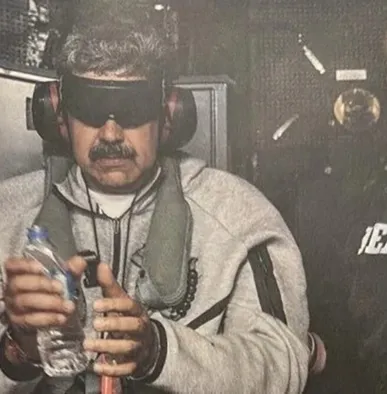
On 3 January, as part of what was described as his New Year’s resolution to pursue world peace, President Donald Trump, from his luxury Mar-a-Lago resort, oversaw the invasion of Venezuela and the extradition of its president, Nicolás Maduro, to the United States on charges of drug trafficking.
This alarming event does not stand alone. It comes amid a steady accumulation of brazen assertions of power by leaders from multiple continents, each one adding to the sense of global instability. While many nations express ongoing concern about the number of migrants crossing their borders, a far more pressing anxiety is emerging – the prospect of aggressors doing the same. As the world watches on in growing unease, I am reminded of the psalmist’s question: “Why do the nations rage?”








Re-examining the call to love the stranger
In 2015, one image of a three-year-old boy washed up on a beach in Turkey changed the way the world saw asylum seekers.
That terrible morning, every newspaper displayed Alan Kurdi’s body front and centre. His story was not only desperately sad, but intensely disturbing. No human being with a conscience could look at his picture for long - or, indeed, turn away from it.