everyday evangelism
Do you lack confidence in evangelism?

Gavin Matthews
Date posted: 1 Apr 2026
We prayed, read Scripture, gathered leaflets, and were sent off in twos. It was my first experience of evangelism and I was terrified! Ken, the mission leader, paired me with Sue – whose enormous confidence and relish at the thought of the task ahead compensated for my distinct lack of both.
We stepped out into the rainy Cardiff streets, with a list of doors to knock and people to invite to the church film night, youth event, and guest service. At the third door we knocked, a lovely Muslim lady invited us in to discuss questions of faith and how the Bible answered them differently than the Qur’an. It was hard.

everyday theology
Where is your hope today?

Michael Reeves
Date posted: 31 Mar 2026
At the very end of John Bunyan’s Pilgrim’s Progress, Christian looks back from the Celestial City and sees a man called Ignorance approaching the gate.
Ignorance began to knock, supposing that entrance should have been quickly administered to him; but he was asked by the men that looked over the top of the gate: “Whence came you, and what would you have?” He answered: “I have eat and drank in the presence of the King, and he has taught in our streets.” Then they asked him for his certificate, that they might go in and show it to the King; so he fumbled in his bosom for one, and found none.
en's 40th: Thanking God

en staff
Date posted: 30 Mar 2026
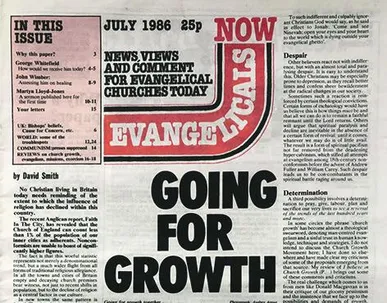
Evangelicals Now was first published in July 1986 and so, from Easter for the rest of this year, we will be celebrating the paper’s 40th anniversary with a series of events to mark the occasion.
It’s an excellent opportunity for regular readers to thank God for sustaining the publication for so long, to take stock of en’s current situation and assess future plans. You might say that this article is about Evangelicals Then, Evangelicals Now and Evangelicals to Come.

The link between 'right living' and joy in the Spirit

James Burnett
Date posted: 26 Mar 2026
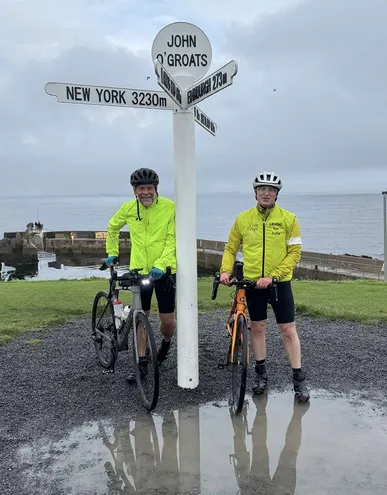
It’s marathon season. Could long-distance running get your life back on track with God? The Apostle Paul writes, “I have fought the good fight, I have finished the race, I have kept the faith" (2 Tim. 4v7).
Let’s start by exploring a link between method acting and Christians who run.

The missionary mouse: How God used a pest for His purposes

Josh Williamson
Date posted: 23 Mar 2026
It was the end of a long day. As the night deepened, all members of the family were tucked up in bed. Then my wife decided to go and get a drink of water from the kitchen. As I lay in bed, drifting off, I heard a scream – a scream that spoke of an intruder in the house: an intruder with a long tail, little ears, whiskers, and a small nose… a mouse!
At the time, I didn’t know this late-night visitor would set off an evangelistic encounter. All I could think about was, "How do I get rid of this mouse?"
Foreign aid: An open letter to David Lammy
James Burnett
Date posted: 21 Mar 2026
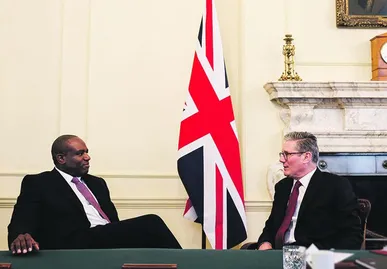
Dear David, I trust you are well. I am writing to you about foreign aid cuts.
Red Nose Day, 2019
In response to Stacy Dooley’s visit to Uganda in 2019, you sought to redress the Red Nose Day narrative which, in your words, promoted a “white saviour” colonial attitude to Africa. You opined on the Victoria Derbyshire show: “Comic Relief is a 20-year-old formula that asks comedians to perform and sends celebrities – most often white – out to Africa, and that image evokes for lots of ethnic minorities in Britain a colonial image of a white beautiful heroine holding a black child, with no agency, no parents in sight.”
everyday theology
Intellectualist faith?
Michael Reeves
Date posted: 10 Mar 2026
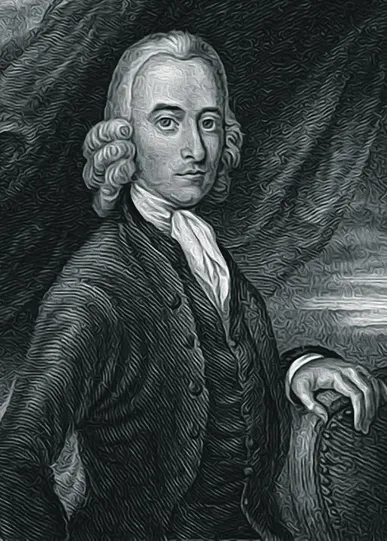
Normally, those who think of themselves as people of the gospel do not openly deny the necessity of the new birth. But what if we did? We do not have to imagine, for that is effectively what happened in the 18th and 19th centuries with the Sandemanian sect. As Andrew Fuller (1754–1815) put it, the Sandemanians believed that saving faith is nothing but “bare belief of the bare truth”.
This was an intellectualist view of faith that sat especially well with the rationalistic times of the Enlightenment, though Robert Sandeman himself had an apparently evangelical logic for his view. Seeking to uphold a salvation that is all of grace, he argued that faith is really a human work if it involves any active leaning of the heart upon God. Faith must, he concluded, be nothing more than the mind’s assent that the gospel is true. It is an acknowledgment, not trust.

Isaac and Rebekah: Narrative 'nesting' in Genesis 24

Stephen Moore
Date posted: 5 Dec 2025
It is a remarkable thing about the book of Genesis that it tells universal history by means of particulars – the small details.
"And before he had finished speaking, out came Rebekah – who had been borne to Bethuel son of Milcah the wife of Nahor the brother of Abraham – and her water jar was upon her shoulder. Now the young woman was very beautiful, a virgin whom no man had known. And she went down to the well and filled her water jar and came up. Then the servant ran to meet her and said, ‘Let me gulp a little water from your water jar’, and she said ‘Drink, my lord’ then hastily brought her water jar down onto her hand and gave him a drink. And when she had finished giving him a drink she said, ‘For your camels too I will draw water until they’ve finished drinking" (Genesis 24v15-19).

A message to those who are doubting

Alistair Chalmers
Date posted: 14 Jan 2026
There are moments in the Christian life when faith feels sturdy and sure, and others when it feels as thin as glass. Prayers seem to fall flat. Scripture feels dry. Christian music maybe doesn’t lift your heart as it once did.
For many Christians these seasons can be unsettling, even frightening. We can wonder whether something has gone wrong with our faith, or worse, with us.

What is faithful church ministry?
James Burnett
Date posted: 7 Dec 2025
Would you make a good "Traitor"? Have you got the mojo of a chameleon to hoodwink fellow contestants, like the comedian Alan Carr - this year’s winner of BBC’s The Celebrity Traitors?
Game show The Traitors was inspired by the sinking of the Dutch ship Batavia in 1629. When the Batavia sank off Australia, 250 survivors scrambled ashore an island archipelago. Mutinous traitors fought against a small band of faithful soldiers, culminating in a live-or-die boat race towards an oncoming rescue ship. Who would get there first - the "Traitors" or the "Faithful"? A true story!

A life faithfully given: The funeral of Richard Turnbull

Chris Sugden
Date posted: 5 Jan 2026
A packed and full-throated congregation of family, colleagues and friends of Rev Dr Richard Turnbull (who died on 26 November 2025) gathered at his funeral service at St Mary Magdalene, Woodstock on a very wet Friday 18 December.
Richard had known for some weeks that the recurrence of his breast cancer was terminal. His mother had died from the same condition when he was 18. He had carefully planned the details of the service.

everyday theology
A melting heart
Michael Reeves
Date posted: 7 Feb 2026
Today, many rightly bemoan the lovelessness, superficiality, and spiritual hollowness they see spread all too widely across the church. Yet in our longing for a cure, we must not be seduced into thinking that superficial, pragmatic answers are the solution. A moral campaign for better Christian behaviour will not touch the roots of the problem.
The church today is surely in great need of reformation, but reformation of lives happens from the inside out as the Spirit heals hearts with the balm of the gospel. The gospel of Christ’s redemption and the Spirit’s regeneration is not just a message for outsiders: it is our only hope if we are to see the renewal and reformation of the church in our day.
The little-known women who changed hundreds of army lives in Aldershot

Adrian Russell
Date posted: 29 Dec 2025
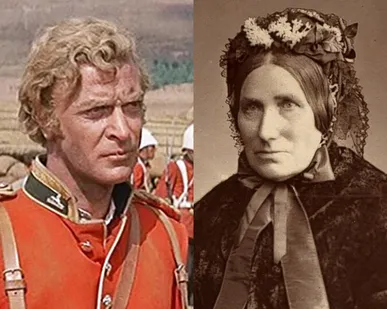
Amongst the tens of thousands of service personnel buried in the Aldershot military cemetery are the graves of the soldiers from the First and Second World Wars, the Boer War, the Battle of Rorke’s Drift in the Zulu War, and the Falklands War. Amongst the dead are recipients of the Victoria Cross and World War One flying aces. Alongside these brave service personnel is a civilian, an orphaned widow, a woman who suffered with sickness for most of her life, and yet she was given the honour of being the first civilian to be buried there. Her name is Louisa Daniell.
The name Louisa Daniell might be unfamiliar to you, but to many of the soldiers and officers of the British army her work was as important as the weapons they carried. Her care and compassion for individual soldiers was renowned throughout the land. Her Christian witness and love was enjoyed by all who visited the Miss Daniell’s Soldiers’ Home in Aldershot – a place visited by two British Queens.

the Bible in action
Death and money

Martin Horton
Date posted: 1 Feb 2026
“When he’d died, I didn’t like people saying ‘Oh, he’s passed’. Or ‘You’ve lost your dad,’ as though I’d let go of his hand in the supermarket.”
That was Simon Armitage, the Poet Laureate, speaking on Radio 4 about the sudden death of his father.

'A joyful Christmas is not a consumerist Christmas'
James Burnett
Date posted: 26 Dec 2025
My best Christmas Day celebration was a present-less gathering in Malawi.
The worship was full of percussion, al fresco, around a log fire, and everyone shared in the gift of Jesus.
Learning from Martyn Lloyd-Jones: a Biblical synthesis of Reformed and Charismatic faith for today?

Adam Ramsey
Date posted: 26 Jan 2026
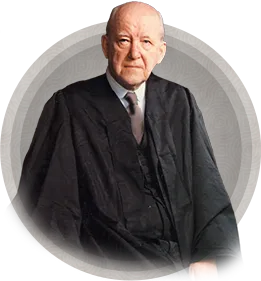
Over the next few months, en will be running a series of articles written by Adam Ramsey, of Liberti Church, Gold Coast, Australia, exploring what we can learn from Martyn Lloyd-Jones today about the questions set out in the headline. The essays, of which there are five in total, need to be taken together. They are taken from original, yet-to-be published research undertaken by Ramsey for his Doctor of Philosophy thesis. They also, we hope, represent something of the generous-hearted, thoughtful, Biblical approach that en was founded 40 years ago in 1986 to embody.
Introduction
During the 20th century, it was no secret that Calvinists and Charismatics frequently viewed one another with mutual suspicion. Rarely would those who affirmed a high view of God’s sovereignty in salvation in the Reformed tradition, and those with a high experiential expectation of the Holy Spirit’s direct and supernatural activity, find themselves worshipping in the same church. Or, for that matter, even cooperating outside of their respective churches.

‘A rising tide lifts all boats:’ Why your church should back this mission
Nick McQuaker
Date posted: 3 Apr 2025
Almost 40 years ago, I entered the workplace as a new Christian and soon formed a friendship with Richard, who had joined the company as part of the same intake of school-leavers.
I began to share my faith and witness as best I could. A few months later, my local church held a mission weekend. I invited Richard to one or more of the special events that were taking place. To my delight, he said yes and came along. To my far greater joy, Richard gave his life to the Lord that weekend. This was a wonderful introduction to God using a local church mission to bring someone to faith.

Is nostalgia fossilising your church's ministry?

Jonny Pollock
Date posted: 6 Nov 2025
The other week I watched the new Jurassic Park movie with our eldest son, and as soon as the movie finished (and it was ok by the way!) a curious thought entered my head. How many times has Jurassic Park been rebooted since the first movie in 1993?
There was the original, then the remake, now another reboot, and never mind the kids' Netflix series. I definitely think that velociraptors have now lost their sheen. I remember vividly watching that first movie and yet it has been rebooted more times than I have renewed my passport!

Review: 'Blue Letter Bible' versus 'Logos'

Paul Jackson
Date posted: 12 Jan 2026
I was inspired by Jordan Brown’s round-up of Bible apps (see en article here) and wanted to make a further, more specific, contribution to the debate in terms of Logos and Blue Letter Bible.
As a middle-aged Christian, I have been using Bible software since the days of CD-ROMs! Bible software has helped me craft numerous Bible studies and sermons.
‘The last two years have been the most encouraging... of the past 30 years’

John Woods
Date posted: 13 Nov 2025
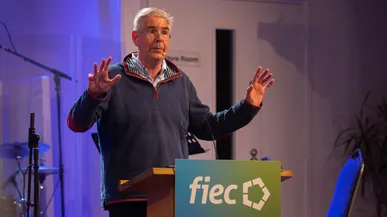
en Reviews Editor John Woods speaks to John Stevens about his time thus far serving with the FIEC.
en: You have been serving as National Director of the Fellowship of Evangelical Churches (FIEC) for 15 years. What was you first experience of the FIEC?

everyday theology
'Lord, help me...'
Michael Reeves
Date posted: 30 Dec 2025
In the gospel accounts of both Matthew and Mark, Jesus’s rebuke of the Pharisees for their neglect of their hearts (Matt.15v10-20; Mark7v14-23) is immediately followed by His encounter with the Canaanite/ Syrophoenician woman (Matt.15v21-28; Mark 7v24-30). The juxtaposition of the woman next to the Pharisees is telling, for she lacks the qualities they value – yet she has the qualities that Jesus values and they lack.
Not only is she a Gentile; she is a Canaanite, of the traditional enemies of Israel. “Cursed be Canaan,” declared Noah in Genesis 9v25. The book of Zechariah ends with the thundering denouncement that on the day of the Lord there will no longer be a Canaanite in the house of the Lord Almighty (Zech.14v21). Yet, having heard of Jesus, she seeks Him out for help, showing a startlingly perceptive appreciation of Jesus’s identity. “Lord, Son of David,” she calls Him (Matt.15v22).

a Jewish Christian perspective
Moments of grace in Jewish evangelism

Joseph Steinberg
Date posted: 1 Nov 2025
I am so thankful to God for what has been a very busy and fruitful summer of outreach to Jewish people.
In my last column I wrote about the plans our mission (IMJP.org) had for summer outreaches in Budapest, Paris, Rio de Janeiro, and London. Now, with these behind us, I am thrilled to share the fruit of those efforts. Once again, God is faithful!
In war’s shadow: Spiritual welfare on the frontlines
SASRA
Date posted: 11 Nov 2025
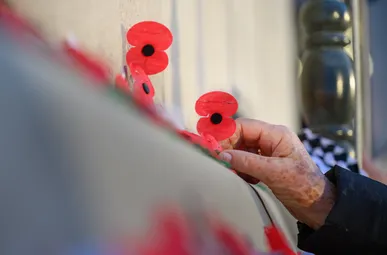
Up and down the country today, Tuesday November 11th, Remembrance Day, just as they did on Sunday, many people will honour those servicemen and women who sacrificed their lives in previous wars and conflicts so that we could be free and could live in peace.
Not only must we remember those who fought and died, but also those who brought the spiritual courage and hope necessary for victories, amidst the suffering.