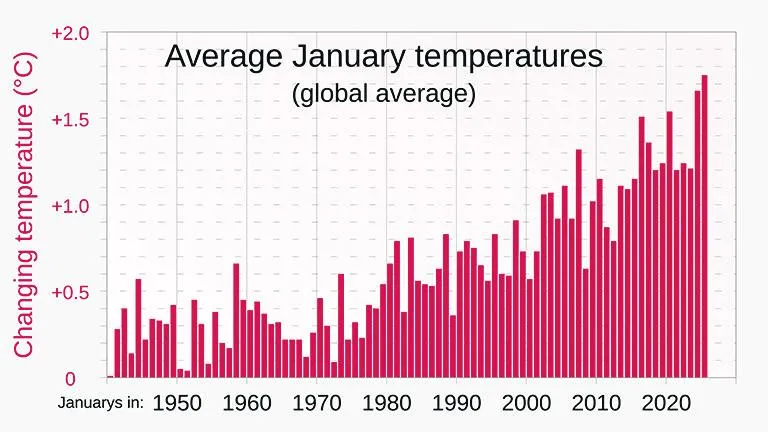
Is real change possible? That, for those who watch closely our heating world, is the crucial question. If we’re to avoid the worst effects of climate breakdown, we need actual real change.
Or to bring it into the Biblical narrative, if we’re to fulfil our first calling to rule and care for all creation as God’s agents, we’ll need actual real change. It sounds obvious but it’s not always easy to see.
A couple of years ago, I was running a Lent course for several churches in our south-east London suburb on the flourishing of creation. It was in week four that one of the participants had a light-bulb moment. She’s Biblically-minded, a church warden, active in her congregation’s eco-church team, and runs the church’s community outreach café. But, in the group discussion, she suddenly said: “I hadn’t really seen it before, but if we say we’re stewards of God’s creation, we have to make actual changes to our lives.” Saying we’re stewards is one thing, but being stewards – good stewards, that is – is another.

In the last six issues, in this column we’ve drawn out how God’s mission integrates salvation, justice and the flourishing of creation. God isn’t about to end the world but to renew it. Through His death and resurrection, Jesus has become king of heaven and earth, atoning for our sin, putting right, renewing and restoring all creation. God, in Christ and by His Spirit, is restoring in us our agency and purpose, to rule and care for one another and all creation, as He Himself does. Jesus’ summary of the law – to love God and neighbour – isn’t just a command, but prefigures the day when His rule is at last uncontested. And, as it was for Boaz, loving God and neighbour is expressed primarily in our everyday lives.
As evangelicals we can loudly affirm, perhaps more than any: “Yes, real change is possible!” We’ve seen it many times in the lives of those who turn to Jesus Christ. And we, also perhaps more than any, have a foundation to work, even in difficult times, for the flourishing of our neighbours and all creation. How then should we – in these times – live?
In my next few articles for Evangelicals Now, we’re going to look at the main areas – energy, food, water, clothing, plastics, chemicals – and we’re going to look at them through the lenses of discipleship, community and society. Or, in other words, what we can do individually in how we live, how we can influence and bring change in the places we live and work, and how we can influence our wider society.
But as we wrap up for this month, let’s start with how we see.
How do we see?
Leading evangelical moral philosopher, Oliver O’Donovan, in his highly-acclaimed Self, World and Time (SPCK, 2013) says we wake as from slumber to a network of moral obligation. We see as if with new eyes. Jesus indeed says that if we see clearly our whole being is full of light (Matt. 6v22). Now is the time, says the apostle, to wake from sleep (Rom.13v11).
In our modern, industrial, complex society much is hidden from us, opaque, out of sight. Few of us are farmers or fishermen, few work on the land. The world comes to us in the supermarket aisle, to our doors, in pipes and wires to our homes, and on our screens. But behind every shrink-wrapped burger, warm shower, pair of jeans, holiday flight and light bulb is a story of the prospering of neighbour, the flourishing of creation, a story of the mission of God. It takes effort today to see clearly, but it’s not impossible. We can’t always be thinking about everything. But we can begin to see everything – the water in our taps, electricity at the socket, the food in our fridge – as a precious resource. And, perhaps first of all, we can pray “Lord help us to see clearly”.
I'm a Christian, and I'm Green - here's why
en does not support any one particular party. However, we are interested in evangelicals within each of our political …